
Foods That Support Brain Function: 10 Science-Backed Foods for Focus, Memory & Mood
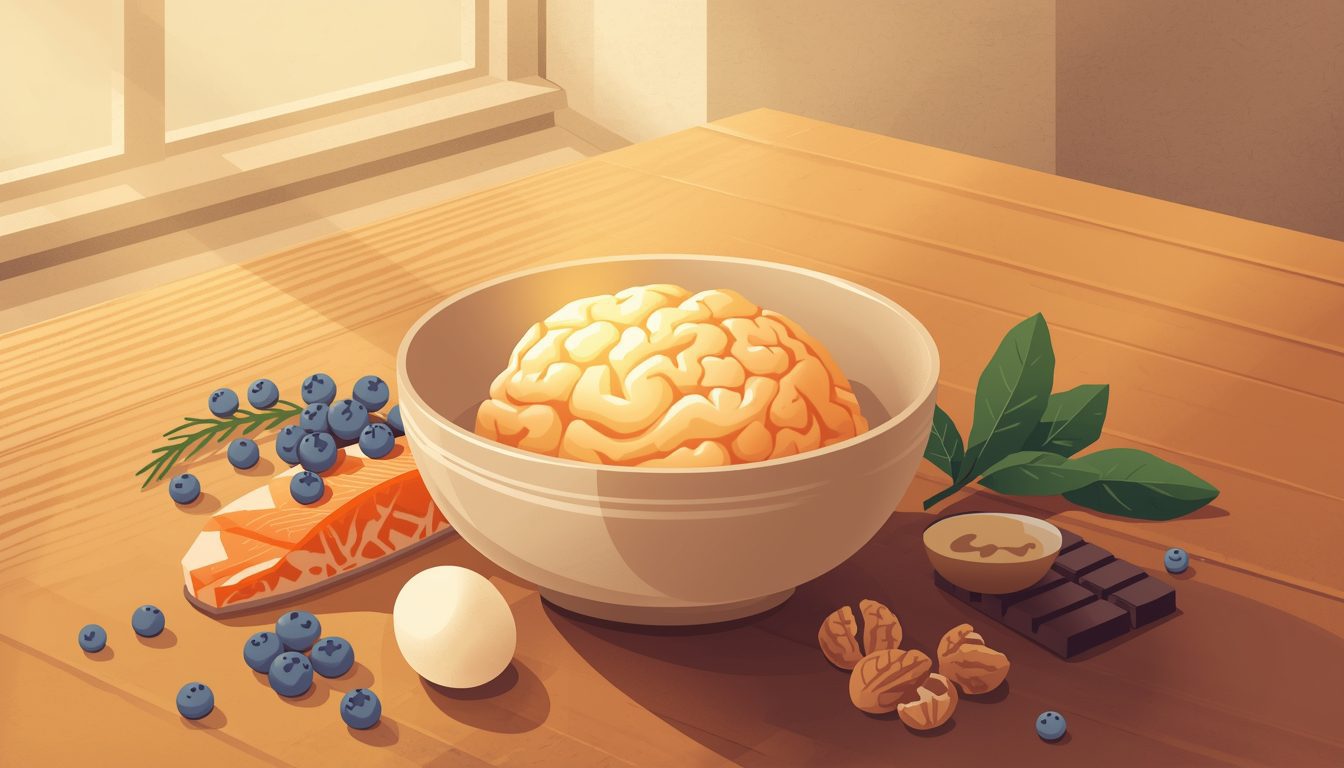
The foods that support brain function are not a wellness trend — they are one of the most well-researched, accessible tools you have for thinking more clearly, feeling more stable, and protecting your mind over time. And yet most people never think about their plate when their brain starts to struggle.
Have you ever had one of those days where every thought slips away before you can grab it — foggy, slow, irritable, and not quite sure why? There is a good chance your last few meals had more to do with it than you realize.
This is not about a perfect diet or a strict meal plan. It is about understanding the real connection between what you eat and how you feel — inside your head and in your heart.
Table of Contents
Why What You Eat Affects How You Think
Your brain is, quite literally, always working. Even when you are asleep, it is filing memories, repairing cells, and preparing you for tomorrow. To do all of that, it needs fuel — and not just any fuel. The brain runs on specific nutrients, and when those nutrients are missing, you feel it.
Research from Harvard Medical School describes this as nutritional psychiatry — the growing field that studies how the food we eat directly influences our mood, focus, and mental wellbeing. What you put on your plate affects your neurotransmitters (the chemical messengers that run your emotional life), your inflammation levels, and even the structure of your brain over time.
Think about it this way: your brain is about 60% fat. It is one of the most energy-hungry organs in your body, consuming roughly 20% of your daily calories despite being only about 2% of your body weight. It is constantly building and rebuilding itself — and it uses the raw materials you give it.
When those materials are whole, nutrient-rich foods, your brain gets what it needs. When they are mostly processed, sugary, or lacking in key nutrients, it starts to struggle. That struggle shows up as brain fog, low mood, poor memory, and the kind of mental exhaustion that sleep alone cannot fix.
10 Foods That Support Brain Function — And the Science Behind Each One
1. Fatty Fish: The Original Brain Food
If you have ever heard that fish is brain food, there is real science behind it. Fatty fish like salmon, sardines, mackerel, and trout are packed with omega-3 fatty acids — specifically DHA (docosahexaenoic acid), which is literally a building block of the brain.
Your brain cannot produce DHA on its own. It has to come from your diet. DHA supports the structure of brain cells, helps reduce inflammation, and plays a key role in learning and memory. According to the National Institutes of Health, low levels of omega-3s have been linked to depression, anxiety, and cognitive decline.
Relatable scenario: Maya, a 32-year-old teacher, had spent months feeling mentally drained — snapping at students, struggling through lesson planning, sleeping poorly. She started eating salmon twice a week mostly out of desperation, not conviction. A few weeks later, her concentration had noticeably improved and her sleep was more restful. She had not changed anything else. If that kind of low-effort shift sounds appealing, this is one of the most evidence-backed places to start.
You do not have to eat fish every day. Even two servings a week can make a meaningful difference. If you do not eat fish, flaxseeds, chia seeds, and walnuts offer plant-based omega-3s, though in a slightly different form (ALA, which the body partially converts to DHA).

2. Blueberries: Tiny Berries With a Big Brain Payoff
Blueberries are one of the most studied foods in brain health research — and the results are impressive. They are loaded with antioxidants called flavonoids, which protect the brain from oxidative stress and inflammation, two things that quietly speed up cognitive aging.
Studies published by the American Journal of Clinical Nutrition suggest that regular blueberry consumption is associated with improved memory and delayed cognitive aging. Some research even shows they may improve communication between brain cells.
Relatable scenario: Priya keeps a small container of blueberries on her desk. On busy mornings when she skips a proper breakfast, a handful of blueberries tossed over yogurt is her fallback. She jokes that it is her “brain starter kit.” She is probably more right than she realizes.
Fresh, frozen, or dried — blueberries are versatile and easy to work into almost any meal or snack.
3. Dark Leafy Greens: The Mental Clarity Powerhouse
Spinach, kale, collard greens, Swiss chard — these are some of the most nutrient-dense foods that support brain function, and yet they are the most consistently skipped.
Dark leafy greens are rich in folate, vitamin K, lutein, and beta-carotene. Research from Rush University Medical Center found that people who ate one serving of leafy greens per day had the cognitive ability of someone 11 years younger than those who rarely ate them. Eleven years. From one daily serving of greens.
Folate in particular is critical for brain health. It helps produce neurotransmitters like serotonin and dopamine — the ones most closely tied to mood and emotional regulation. Low folate has been linked to depression in several studies.
Relatable scenario: James, a 45-year-old accountant, started adding a handful of spinach to his morning smoothie — not because he loved it, but because he could not taste it. Three months later, his wife noticed he seemed less anxious, and he noticed he was making fewer errors at work. He credits the smoothie. His nutritionist credits the spinach.
4. Nuts and Seeds: Small Snacks With Serious Mental Benefits
Walnuts, almonds, pumpkin seeds, sunflower seeds — these little powerhouses are packed with nutrients the brain genuinely depends on.
Walnuts are particularly notable. Their high alpha-linolenic acid (ALA) content, combined with polyphenols and vitamin E, makes them one of the best plant-based foods for brain health. They look like tiny brains — coincidence? Perhaps. But their effect on the actual brain is not.
Pumpkin seeds are among the richest sources of zinc, a mineral crucial for nerve signaling and memory. Sunflower seeds are high in vitamin E, a fat-soluble antioxidant that protects brain cells from damage.
A small handful of mixed nuts as an afternoon snack is one of the simplest, most effective shifts you can make. And if you often hit that 3 PM slump where your concentration tanks? Swap the bag of chips for a small serving of walnuts. The difference in how you feel an hour later might genuinely surprise you.
Keeping your mind sharp is not just about what you eat — it is also about how you start your day. If you have been struggling with brain fog in the mornings, a calming, intentional morning routine can make an enormous difference in how clear and focused you feel before you even take your first bite.
5. Eggs: The Underrated Brain Builder
Eggs have had a complicated reputation over the years, but when it comes to brain health, they are close to perfect. They contain choline, a nutrient that your body uses to produce acetylcholine — a neurotransmitter essential for memory, learning, and mood regulation.
Most people do not get enough choline. The National Academy of Medicine recommends 425-550mg of choline per day, and one large egg contains about 147mg. Two eggs at breakfast gets you more than halfway there.
Eggs also contain B vitamins (B6, B12, and folate), which help reduce homocysteine — a compound associated with cognitive decline when levels run too high.
Relatable scenario: Nadia used to skip breakfast entirely, running on coffee until noon. She started eating two scrambled eggs before leaving for work. Within two weeks, she noticed she could get through her morning without the usual 10 AM crash and “can’t-think-straight” feeling. She had been unknowingly depriving her brain of a key building block every single day.
6. Fermented Foods: The Gut-Brain Connection
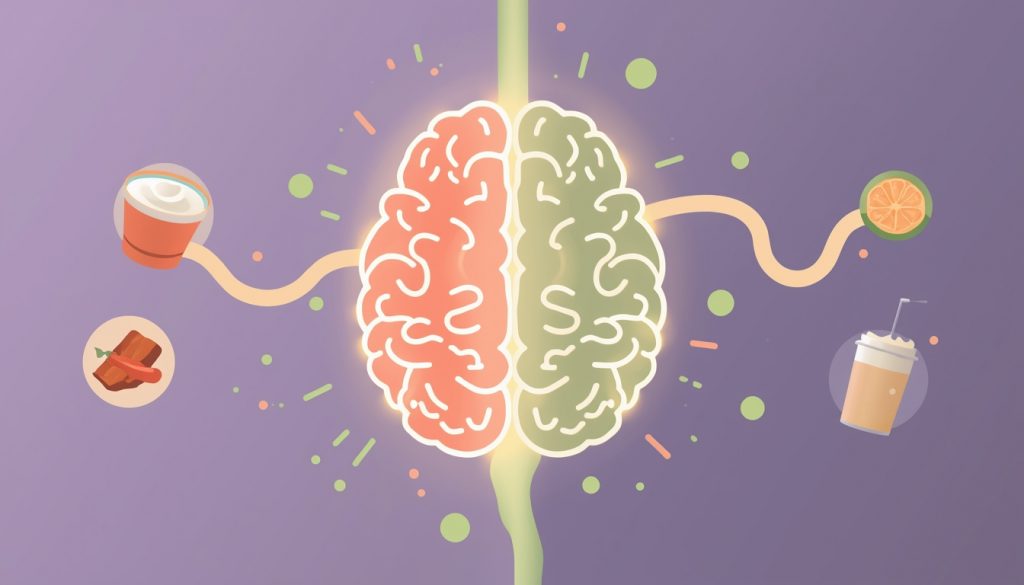
Here is something that might genuinely change how you think about mental clarity: your gut and your brain are in constant conversation. About 90% of your serotonin — the neurotransmitter most associated with happiness and emotional balance — is actually produced in your gut, not your brain.
This gut-brain connection, sometimes called the gut-brain axis, means that the health of your digestive system directly influences your mental and emotional state. Fermented foods like yogurt, kefir, kimchi, sauerkraut, miso, and kombucha feed your gut with beneficial bacteria (probiotics) that help keep this system running well.
Research published in Psychiatry Research found a significant link between fermented food consumption and reduced social anxiety. Other research suggests probiotics can reduce symptoms of depression.
This is also why protecting your body-mind connection matters so deeply. If you want to go deeper on how the physical and emotional are linked, the Body & Mind category here on Mindbloom explores this beautifully.
7. Dark Chocolate: Yes, Really
Before you close this tab in disbelief — this one is completely real, and the research backs it up.
Dark chocolate (70% cocoa or higher) contains three active compounds that benefit the brain: flavonoids, caffeine, and theobromine. Flavonoids accumulate in the regions of the brain associated with learning and memory, and research suggests they may increase blood flow to the brain, enhance neuroplasticity, and meaningfully improve mood. Theobromine provides a gentler, longer-lasting energy lift than caffeine alone, without the spike-and-crash pattern many people experience with coffee.
A 2018 study published in the journal FASEB found that consumption of high-flavonoid dark chocolate increased gamma frequency activity in the brain — associated with memory, attention, and sensory processing.
One small square (around 1 ounce) of quality dark chocolate in the afternoon is not indulgence. It is, quite genuinely, brain fuel — and one of the most enjoyable entries on this entire list.
8. Avocados: Healthy Fats for a Happy Brain
Avocados are rich in monounsaturated fats, the same heart-healthy fats that support blood flow — including blood flow to the brain. Good circulation to the brain means better oxygen delivery, sharper thinking, and more stable mood.
They are also high in folate and vitamin K, both of which play important roles in cognitive function and protecting the brain from free radical damage.
Half an avocado on whole-grain toast is not just a beautiful breakfast. It is a genuinely nourishing start for your brain.
9. Turmeric: The Anti-Inflammatory Spice Your Brain Loves
Curcumin, the active compound in turmeric, has received significant attention in neuroscience research. It crosses the blood-brain barrier — which many compounds cannot — and has demonstrated anti-inflammatory and antioxidant benefits that may directly support brain health.
Some research suggests curcumin may boost brain-derived neurotrophic factor (BDNF), a growth hormone that supports the creation of new brain cells. Low BDNF is linked to depression, Alzheimer’s, and various other brain conditions.
Adding a pinch of turmeric to your morning eggs, your soup, or your golden milk is one of the easiest, most low-effort brain health habits you can build.
10. Green Tea: Calm Focus in a Cup
Green tea contains two powerful compounds that work beautifully together: caffeine (for alertness and focus) and L-theanine (an amino acid that promotes calm, focused attention without the jitteriness coffee can bring).
The combination of these two compounds creates what many people describe as a state of “relaxed alertness” — energized but not anxious, focused but not frantic. For anyone dealing with anxious mental chatter, green tea is a gentle, science-backed option.
If your mind often feels like it cannot settle, you might also find comfort in exploring how to quiet mental chatter — one of Mindbloom’s most read articles on calming that inner noise.
What Hurts Brain Function (So You Can Be Aware)
Understanding foods that support brain function also means being honest about what works against it.
Ultra-processed foods and refined sugar — High sugar intake causes energy spikes and crashes that are felt emotionally as well as physically: irritability, brain fog, and that hard-to-think-through feeling that hits mid-afternoon. Processed foods high in trans fats and artificial additives drive inflammation throughout the body, including the brain.
Excess alcohol — Heavy or regular alcohol consumption depletes B vitamins and disrupts the neurotransmitter balance your brain depends on for emotional stability and clear thinking.
Chronic sleep deprivation — Poor dietary habits and disrupted sleep are deeply intertwined. Sleep deprivation impairs every cognitive function you have — memory, focus, emotional regulation, and decision-making — making it nearly impossible for even the best diet to fully compensate.
None of this is said to shame anyone. Life gets hard, routines fall apart, and fast food is sometimes the only option. But awareness is the first step. And you deserve the awareness.
If brain fog and poor focus are something you struggle with regularly, it is worth knowing that sleep plays just as large a role as food. Sleep and mental clarity is a piece that dives into how rest literally rebuilds your ability to think — and it pairs perfectly with everything you are reading here.
Practical Tips: How to Actually Add These Foods to Your Life
You do not need to overhaul your entire pantry. Here is how to start small and build genuinely:
Start with one meal. Choose breakfast and focus on adding one brain-supporting food per week. Eggs one week. Blueberries the next. Build slowly so it sticks.
Batch prep your greens. Wash and dry a bunch of spinach or kale at the start of the week. When it is ready to go, you will actually use it.
Swap your snacks first. This is the lowest-effort change with the highest daily impact. Replace chips or cookies with a small handful of walnuts and a square of dark chocolate. You will feel the difference within days.
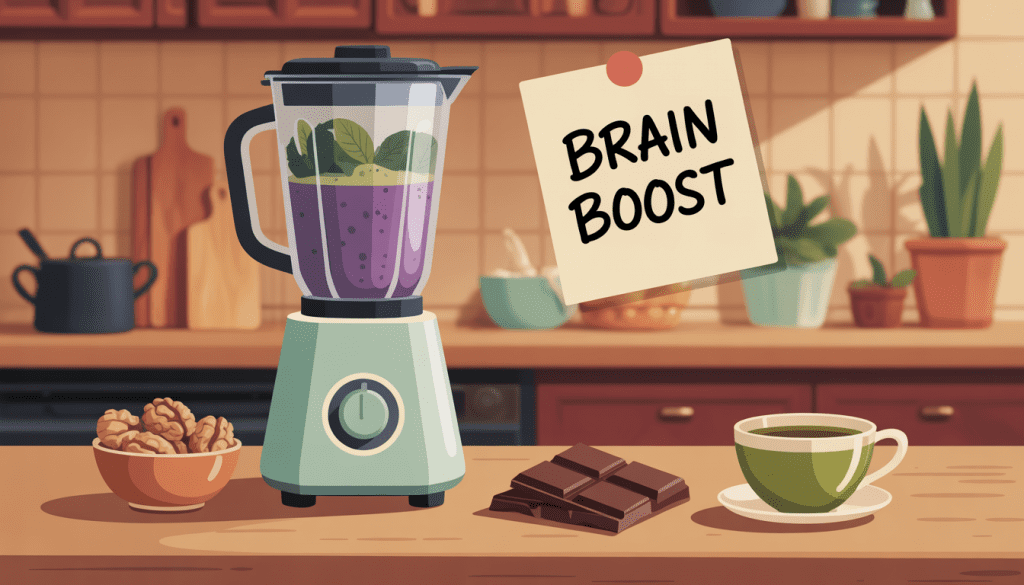
Smoothies are your friend. A handful of spinach, frozen blueberries, half a banana, a scoop of Greek yogurt, and some chia seeds blends into something that tastes nothing like a salad but delivers an extraordinary amount of brain-supporting nutrition in one glass.
Cook with turmeric. Add it to scrambled eggs, soups, lentils, or roasted vegetables. Pair it with black pepper — piperine in black pepper increases curcumin absorption by up to 2,000%, according to research from Planta Medica.
Make fermented foods a daily habit. A small serving of yogurt at lunch, a spoonful of kimchi at dinner — these micro-habits add up quickly for your gut and your mood.
Hydrate. The brain is about 75% water. Even mild dehydration impairs concentration, increases anxiety, and worsens mood. Most people are mildly dehydrated without knowing it. Drink water consistently throughout the day before reaching for coffee or snacks.
A Note About Mental Clarity and Emotional Wellbeing
Here is something worth sitting with: the way you nourish your body is an act of self-respect. When you are going through something emotionally heavy — anxiety, burnout, grief, a season of just barely holding it together — food often becomes an afterthought. You eat whatever is fastest. You forget to eat at all. Or you find yourself turning to sugar and comfort food as the only thing that feels manageable.
That is not weakness. That is a very human response to overwhelm.
But here is the gentle truth: during those hard seasons, your brain needs support more than ever. Nourishing it does not have to be complicated. It does not have to look like a perfect plate. It can look like a handful of blueberries with your coffee, a hard-boiled egg on the go, a spoonful of peanut butter before bed.
Small acts of nourishment, when life feels too big, are acts of resilience. And building resilience is something that happens not in grand gestures — but in the small, repeated choices we make for ourselves every single day.
Foods That Support Brain Function: A Simple Reference List
Here is a quick, easy-to-remember list of the top foods that support brain function:
- Fatty fish (salmon, sardines, mackerel)
- Blueberries (and other berries)
- Dark leafy greens (spinach, kale, collard greens)
- Walnuts, almonds, pumpkin seeds
- Eggs
- Fermented foods (yogurt, kefir, kimchi, sauerkraut)
- Dark chocolate (70%+ cocoa)
- Avocados
- Turmeric
- Green tea
Print it out. Stick it on your fridge. Use it as a gentle grocery list guide when you are not sure where to start.
You Are Not Behind. You Are Just Beginning.
The most powerful thing about nutrition and brain health is that it is never too late to start. Your brain is neuroplastic — it can change, adapt, and grow new connections at any age. Every positive change you make in what you eat is a message to your brain that says: I am taking care of you.
You do not have to do everything at once. You do not have to be perfect. You just have to begin — one meal, one swap, one small and loving choice at a time.
Your mind is worth that kind of care. So is the rest of you.
If you want to take this further, a great next step is understanding how sleep amplifies everything you eat — the connection between sleep and mental clarity is one of the most underrated levers for brain health, and it pairs naturally with everything you just read here.
Frequently Asked Questions
1. What are the best foods that support brain function for everyday people? The most accessible and impactful options include fatty fish (like salmon), blueberries, eggs, walnuts, spinach, and fermented foods like yogurt. These are widely available, affordable, and easy to incorporate into regular meals without major lifestyle changes.
2. Can food really improve my mood and mental clarity? Yes — significantly. The field of nutritional psychiatry has established strong links between diet and mental health. Nutrients like omega-3s, B vitamins, folate, and probiotics directly influence neurotransmitter production, inflammation levels, and cognitive function, all of which affect mood and clarity.
3. How quickly will I notice a difference after eating brain-supporting foods? Some changes, like improved focus after eating a nutrient-dense breakfast, can be felt the same day. More significant shifts in mood, memory, and energy typically take two to four weeks of consistent dietary changes to become noticeable. Long-term benefits accumulate over months.
4. Are there specific foods that help with anxiety and depression? Foods rich in omega-3s, magnesium (found in leafy greens and nuts), probiotics, and B vitamins have all shown positive effects on anxiety and depressive symptoms in research. Dark chocolate (in moderation) and green tea also support mood through their effect on brain chemistry.
5. What foods should I avoid for better brain health? Ultra-processed foods, refined sugar, excessive alcohol, and trans fats are the main dietary contributors to poor brain function, inflammation, and mood instability. That said, occasional indulgence is normal and fine — it is patterns over time that matter most.
6. Is the gut-brain connection real? Absolutely. Around 90% of serotonin is produced in the gut, and the vagus nerve creates a direct communication pathway between your digestive system and your brain. A healthy gut microbiome, supported by fermented foods and fiber, directly supports mental and emotional wellbeing.
7. Can children benefit from brain-supporting foods too? Yes. The same nutrients that support adult brain health — omega-3s, iron, zinc, B vitamins, antioxidants — are critical for developing brains. Encouraging children to eat fatty fish, eggs, berries, and leafy greens supports healthy cognitive and emotional development.
8. Do I need supplements if I eat these foods? Whole foods are always the preferred source because they deliver nutrients in their most bioavailable form alongside complementary compounds. However, some people — particularly those who do not eat fish — may benefit from an omega-3 supplement. Always consult with a healthcare provider before starting any supplement routine.
9. How does hydration affect brain function? The brain is approximately 75% water. Even mild dehydration of 1-2% body weight can impair concentration, short-term memory, mood, and reaction time. Prioritizing consistent water intake throughout the day is one of the simplest and most overlooked brain health habits.
10. What is the single most impactful dietary change for brain health? If there is one shift with the broadest and most evidence-backed benefit, it is reducing ultra-processed and high-sugar foods while increasing omega-3-rich foods and leafy greens. This combination reduces neuroinflammation and provides the raw materials the brain most needs to function at its best.
Have you ever noticed a clear connection between what you ate and how your brain felt that day? Tell me one food — good or bad — that you know affects your mind. Drop it in the comments below. I read every single one.
Disclaimer
The information in this article is written for general educational and informational purposes only. It is not intended as, and should not be taken as, medical or nutritional advice. The content shared here is based on general research and the author’s personal perspective, not clinical expertise. Always consult a qualified healthcare professional or registered dietitian before making significant changes to your diet, especially if you are managing a medical condition, taking medication, or dealing with a mental health diagnosis. Mindbloom is a personal blog for growth and support — not a substitute for professional help.