
Active Listening in Relationships: The Skill That Transforms How You Love and Connect

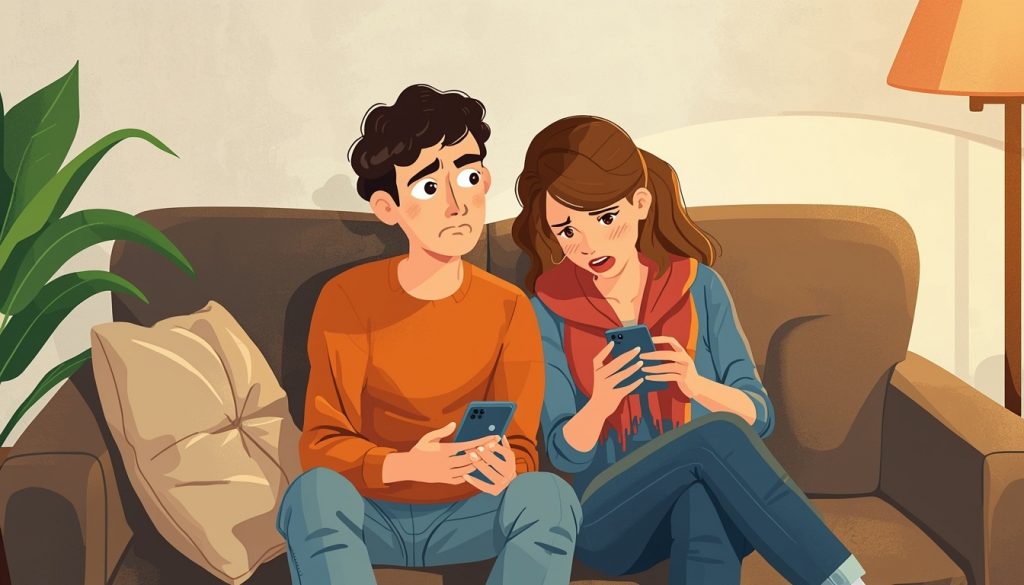
Have you ever been mid-sentence and suddenly realized the person across from you is not really there? Their eyes drift to their phone. They nod at the wrong moments. And when they respond, you feel it immediately — they heard the words, but missed the whole point.
That specific loneliness of not being heard by someone you love is one of the most quietly devastating experiences in any relationship. And the skill sitting at the center of almost every thriving connection — the one most of us were never taught — is active listening in relationships.
This is not about nodding more convincingly or faking attention. It is about a deeper, more human way of being present — and how practicing it can transform not just individual conversations, but the entire emotional climate of your closest relationships. By the end of this article, you will know exactly what active listening is, why most people struggle with it, and how to start practicing it today.
Table of Contents
What Active Listening Actually Means — And What It Isn’t
Most people think listening means being quiet while the other person talks. That is not listening — that is just waiting.
Active listening is a conscious, engaged way of paying attention to another person. It means tuning in not just to the words they are saying, but to what is underneath them: the emotion, the need, the vulnerability. It means putting your own thoughts on pause long enough to genuinely receive what someone is sharing with you.
The term was popularized by psychologists Carl Rogers and Richard Farson in the 1950s, and decades of relationship research have since confirmed what they intuitively understood: people who feel heard feel loved. And people who do not feel heard — even in otherwise stable relationships — eventually start to pull away.
Active listening is not:
- Waiting for your turn to speak
- Mentally preparing your rebuttal while they talk
- Giving advice before they have finished
- Half-listening while scrolling through your phone
- Assuming you already know what they are going to say
Active listening is:
- Being fully present — mentally and physically
- Reflecting back what you heard, not just the facts but the feeling
- Asking gentle, curious questions
- Tolerating silence without rushing to fill it
- Letting them feel understood before you respond
It sounds simple. It is not easy. But it is learnable.
Why Active Listening Is Harder Than It Looks (And Why That’s Not Your Fault)
Here is something worth sitting with: most of us genuinely believe we are decent listeners. Research in the field of interpersonal communication has consistently found that people dramatically overestimate their own listening skills — most of us believe we are paying close attention in conversations where we are, in reality, only partially present. We think we are present when we are actually miles away.
Part of this is neurological. The human brain processes information far faster than anyone speaks, which means there is always mental bandwidth left over — and our brains love to fill that space with planning, judging, remembering, and problem-solving. Staying fully with another person requires active effort, not passive reception.
Part of it is cultural. In a society that rewards confidence, quick answers, and strong opinions, listening has been quietly devalued. We celebrate the talker. We rarely celebrate the one who listened so well that someone else walked away feeling changed.
And part of it is emotional. Truly listening to someone — especially when they are in pain, or angry, or saying something that challenges us — requires a kind of emotional steadiness that is genuinely difficult. It is much easier to defend, deflect, or dismiss.
Knowing this does not excuse poor listening. But it does make it easier to approach the skill with compassion rather than shame.
What Happens to a Relationship When No One Is Really Listening
Picture this: Maya and Jordan have been together for four years. On the surface, their relationship looks fine. They share a home, they go on dates, they say “I love you.” But lately Maya has noticed something that she cannot quite name. Every time she tries to talk about something that is bothering her, Jordan nods, says “yeah, that sucks,” and then moves the conversation somewhere else. He is not mean about it. He is just… elsewhere.
Over time, Maya has stopped bringing up the things that matter most to her. She talks about errands and weekend plans. She keeps the deeper stuff to herself. And slowly, without either of them intending it, a distance has opened up between them that neither knows how to close.
This is one of the most common — and heartbreaking — patterns in modern relationships. The intimacy does not disappear in a dramatic argument. It quietly leaks out through hundreds of moments where one person tried to be heard and wasn’t.
Research published in the Journal of Social and Personal Relationships consistently identifies feeling heard as one of the strongest predictors of relationship satisfaction, for both partners. When people feel truly listened to, they report feeling more loved, more secure, and more willing to be vulnerable. When they do not, they withdraw — sometimes so gradually that neither person notices until the gap feels impossible to bridge.
Real-Life Scenarios: Recognizing the Difference Active Listening Makes
The following active listening examples are drawn from the kinds of everyday moments where the skill matters most — not dramatic fights or crises, but ordinary conversations that quietly shape how safe and seen people feel in our presence.
Scenario 1: The Partner Who Always Has a Solution
Sarah comes home exhausted after a brutal day at work. She starts talking about a difficult conversation with her manager. Before she has even finished the first sentence, her husband Mark jumps in: “Here’s what you should do — just send an email to HR and document everything.”
Sarah goes quiet. She was not looking for a solution. She was looking for someone to say, “That sounds really hard. I’m sorry.” Mark meant well. But she felt dismissed.
What active listening would look like: “That sounds really stressful. Do you want to talk through it, or do you just need me to listen right now?”
That one question changes everything.
Scenario 2: The Friend Who Is Always “Half There”
Two friends, Diego and Luis, grab coffee every few weeks. Diego notices that Luis is always on his phone during their catch-ups — texting, checking notifications, half-laughing at something on a screen. Diego keeps the conversation surface-level now. He stopped sharing anything real months ago because it never feels like it lands anywhere.
How active listening changes this: Phone face-down. Eyes up. “Tell me more about that.” Luis would never have to say a word about caring — Diego would simply feel it.
Scenario 3: The Parent Who “Listens” While Multitasking
Fourteen-year-old Priya tries to tell her mom about a falling out with her best friend. Her mom is unloading the dishwasher, saying “mm-hmm” at all the right pauses. Priya trails off mid-story and says, “Never mind, it’s not a big deal.”
It was a big deal. She just learned that her feelings do not warrant her mother’s full attention.
The moment active listening would have made: Setting down the dish. Making eye contact. “Wait, I want to hear this. What happened?”
Scenario 4: The Couple in Conflict
During a fight, Aaron says, “You never make time for me anymore.” His partner, Leila, immediately defends herself: “That’s not true, I literally planned our whole last weekend!” The argument escalates. Neither person feels heard. The original hurt — Aaron’s loneliness — never gets addressed.
If active listening had entered the room: Leila pauses. “It sounds like you’ve been feeling disconnected from me. Is that right?” That one moment of recognition could change the entire direction of the conversation.
Scenario 5: The Long-Distance Best Friend
Two friends who live in different cities text constantly but have not spoken on the phone in weeks. When they finally talk, one of them spends most of the call talking about her own updates. The other person hangs up feeling like she barely got a word in. Even though they “talked,” the connection feels thin.
What genuinely showing up sounds like: “Wait, I’ve been going on forever — what’s actually been going on with you? I really want to know.”
The Science Behind Active Listening and Emotional Connection
Active listening does something remarkable at a neurological level. When we feel genuinely heard, our bodies release oxytocin — sometimes called the bonding hormone — which creates a sense of safety, warmth, and trust. Cortisol, the stress hormone, decreases. We literally relax into the presence of someone who is truly listening to us.
The American Psychological Association notes that communication quality — and specifically the ability to listen empathetically — is one of the key factors that distinguishes couples in healthy, long-lasting relationships from those in distress.
Neuroscientist Dr. Daniel Siegel’s work on interpersonal neurobiology shows that being “felt” by another person — truly seen and understood — is one of the core human needs, as fundamental as food or shelter. This is not a metaphor. Poor listening doesn’t just strain relationships — according to interpersonal neurobiology, it affects how safe and regulated we feel in our own nervous systems. The science is clear: being truly heard is a biological need, not just an emotional preference.
How to Practice Active Listening in Relationships: 7 Steps That Actually Work
This is where the article becomes yours to use, not just read.
Step 1: Start with Your Body
Before you say a single word, let your body communicate that you are present. Put your phone down — not on the table, actually put it away. Turn toward the person. Make soft, natural eye contact. Uncross your arms. Your physical presence signals safety before you speak.
Step 2: Listen to Understand, Not to Respond
This is the heart of it. As the other person speaks, your only job is to understand them — not to evaluate, not to fix, not to wait for your moment. If you notice yourself formulating a response while they are still talking, gently bring your attention back to their words.
A useful internal question to hold while they speak: What is this person actually feeling right now? Am I here to understand them, or am I already preparing my reply?
Step 3: Reflect Back What You Hear
Once they have finished, reflect what you understood — both the content and the emotion.
“So it sounds like you felt really overlooked in that meeting, not just frustrated but kind of invisible. Is that right?”
This is called reflective listening, and it does two things: it shows the other person you were paying attention, and it gives them a chance to correct you if you misunderstood. Both are valuable.
Step 4: Ask Questions That Deepen, Not Redirect
Good listening questions open the conversation further, not narrow it.
Instead of: “Did you talk to your manager about it?” (redirects to solutions) Try: “How did that make you feel in the moment?” (deepens understanding)
Instead of: “Well, what did you expect?” (dismissive) Try: “That must have been really hard. What was going through your mind?” (curious, open)
Step 5: Tolerate Silence
Most people rush to fill silences because they feel uncomfortable. But silence after someone shares something emotional is often productive — it means they are processing, or finding the courage to say something deeper. Let it breathe. Count to five in your head before speaking. You will be surprised what comes next when you do.
Step 6: Validate Before You Advise
Before offering any solution or perspective, acknowledge the feeling. Always.
“That sounds really exhausting.” “I can understand why you felt that way.” “That makes complete sense.”
Validation is not agreement. You do not have to agree with what someone did or said to acknowledge that their feelings are real and understandable. And for most people, feeling validated is what they needed all along — not advice.
Step 7: Check In Before Giving Advice
Even after validating, ask before you advise: “Do you want my thoughts, or did you mainly need to get this out?”
This single question shows profound respect. And it prevents one of the most common relationship misfires: giving unsolicited advice to someone who just needed to feel heard.

Active Listening Is an Act of Love
Think about the last time someone gave you their complete, undivided attention. Not while glancing at a screen or mentally composing their reply — but genuinely, quietly, fully there. Do you remember how rare that felt?
Every time you choose to listen that way — to set down the noise and truly be with someone — you are telling them something no words could carry as clearly: You matter. You are worth my full attention. I am not going anywhere.
And in a world that is noisier, faster, and more distracted than ever before, that kind of presence is becoming increasingly rare. Increasingly precious.
If you have ever felt unseen in your relationships — by a partner, a parent, a friend — you know exactly how much it hurts. And because you know what it costs to not be heard, you also have the capacity to give someone something extraordinary: the experience of being truly listened to.
This connects deeply to the broader foundation of what makes romantic relationships healthy and lasting — and listening is arguably the cornerstone of everything else that makes love feel safe and lasting.
It is also worth remembering that the way we listen in relationships is often shaped by our early attachment experiences. If you find that truly listening to others feels emotionally overwhelming, or that being listened to feels unfamiliar or even uncomfortable, that is worth exploring gently. Understanding how resilience develops through connection can be a powerful companion to this work.
Active listening is also at the heart of how the five love languages actually work in practice. Understanding how your partner communicates love means nothing if you are not present enough to receive what they are showing you.
And if you find that the emotional heaviness in your relationships feels like more than communication can fix — if there is deep-seated pain, grief, or disconnection that listening alone cannot reach — it may be worth exploring what psychodynamic therapy can offer. Sometimes the most loving thing we can do is get the support that helps us become more available to the people we love.
A Note on Listening to Yourself
There is one more layer here that does not often get mentioned.
Active listening is not only for other people. Learning to listen to yourself — your actual feelings, your real needs, the quiet signals your body sends when something is wrong — is the foundation of all of this.
You cannot offer what you have never received. And you cannot give genuine presence to another person if you are perpetually disconnected from yourself. The emotional intelligence that active listening requires is built, in part, by practicing the same skills inward: pausing, noticing, not rushing to fix or dismiss.
If your inner voice tends to be harsh, dismissive, or loud with self-criticism, the work of becoming a better listener may begin in a quieter, more personal space — in how you are willing to listen to your own heart.
Closing: The Conversation That Could Change Everything
Every relationship you care about contains a conversation that has not happened yet — not because the words are not there, but because no one has been fully present enough to receive them.
Active listening in relationships is not a technique you perfect and move on from. It is a daily choice to show up — to put down the noise, to meet someone in the honest, unguarded space of being human together, and to say with your full attention: I hear you. You are not alone. You matter.
That choice, made again and again, is what love looks like in practice. And it is one of the most quietly revolutionary things you can do for the people in your life — and for yourself.
Frequently Asked Questions About Active Listening in Relationships
1. What is active listening in a relationship? Active listening in a relationship means being fully present and engaged when your partner or loved one is speaking — not just hearing the words, but tuning in to the emotion, need, and meaning behind them. It involves reflective listening, empathetic responses, and holding space without judgment or interruption.
2. Why is active listening important in relationships? Active listening creates emotional safety. When people feel genuinely heard, they feel more loved, more secure, and more willing to be vulnerable. Poor listening, even without any other conflict, can quietly erode intimacy and create emotional distance over time.
3. How can I become a better listener in my relationship? Start by eliminating physical distractions, especially your phone. Focus on understanding rather than responding. Reflect back what you heard before offering your perspective. Ask open-ended, curious questions. And always validate feelings before jumping to advice.
4. What is the difference between hearing and active listening? Hearing is passive — it is simply the physical reception of sound. Active listening is intentional and engaged. It means processing not just the content of what someone says but the emotional context, asking follow-up questions, and communicating that you are truly present.
5. What is the difference between active listening and passive listening? Passive listening is unconscious and effortless — you are physically present but mentally elsewhere, absorbing some information while missing much of the emotional context. Active listening is intentional. It requires focus, empathy, and deliberate engagement. In relationships, passive listening can feel just as dismissive as not listening at all — because the person speaking can sense when you are truly with them and when you are not.
6. Can poor listening really end a relationship? Yes — and more often than people realize. Many relationships do not end in dramatic fights. They quietly erode through accumulated moments of feeling unseen, unheard, and disconnected. Poor listening is one of the most common drivers of emotional withdrawal and relationship breakdown.
7. What are the signs of a bad listener? Signs include frequently interrupting, giving advice before being asked, checking your phone during conversations, bringing the topic back to yourself, minimizing the other person’s feelings, or responding in ways that show you missed the main point.
8. How do I practice active listening when I’m upset or triggered? This is one of the hardest parts. When you feel emotionally triggered, your capacity to listen shrinks. It helps to name it honestly: “I want to hear you, and I’m feeling reactive right now. Can we take a short break and come back to this?” That is far more respectful than pretending to listen while your walls are up.
9. Is active listening the same as therapy? No, but it borrows from therapeutic principles. Active listening is a skill used in everyday relationships. Therapy involves a trained professional using structured approaches to help you explore deeper patterns. That said, practicing active listening can have a genuinely therapeutic effect on your relationships.
10. What if my partner doesn’t listen to me, even when I bring it up? This is worth addressing directly but gently — not during a moment of conflict, but in a calm, connected moment. Share how it feels to not be heard using “I” statements: “When I’m talking and I feel like you’re elsewhere, I feel disconnected from you.” If the pattern continues and causes significant pain, couples therapy can offer a guided space to work through communication challenges.
11. Can you practice active listening with yourself? Absolutely — and this is often where the real work begins. Listening to yourself means pausing to acknowledge your own feelings rather than rushing past them, noticing your emotional needs, and responding to yourself with the same compassion you would offer someone you love.
Have you ever been in the middle of sharing something that really mattered to you — only to realize the other person wasn’t really there? What did that moment feel like? Tell me one thing below. This is a safe space.
And if this piece resonated with you, consider sharing it with someone who might need it. Sometimes the most powerful way to say “I hear you” is to hand someone the words that help them feel less alone.
Disclaimer
The content on Mindbloom is written from personal experience and is intended for general informational and support purposes only. It is not a substitute for professional mental health treatment, therapy, or medical advice. If you are experiencing a mental health crisis or have concerns about your wellbeing, please reach out to a qualified mental health professional or a crisis helpline in your area. You can find helplines near you at befrienders.org.