
Gender Norms and Mental Health: The Hidden Weight You Were Never Meant to Carry
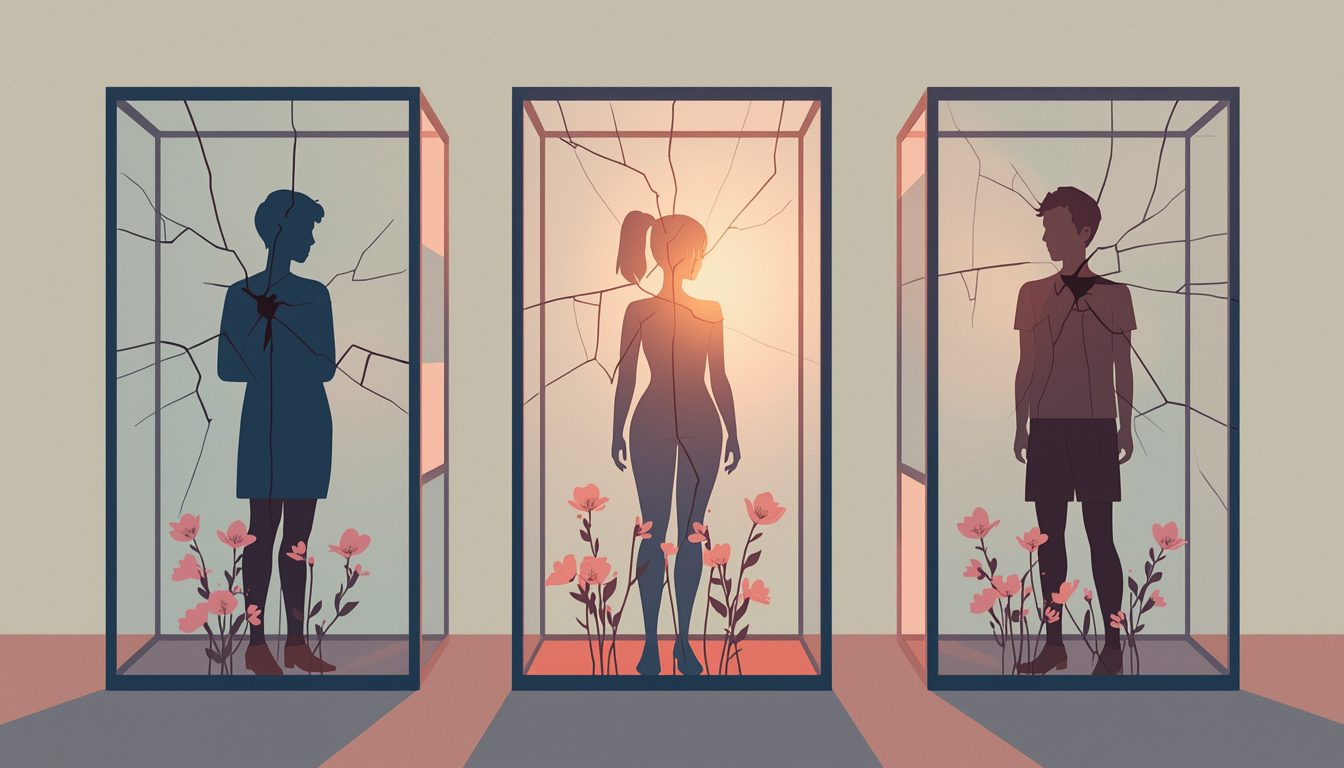
Have you ever been told to “man up,” “be more ladylike,” or to stop feeling so much?
If so, you already know — in your body — what research is only beginning to catch up to: gender norms affect mental health in ways that run deep, quiet, and largely unaddressed.
These invisible rules about how you’re supposed to look, feel, speak, cry, work, love, and exist don’t just shape your behavior. They shape your inner world, your sense of self-worth, and your capacity to heal. And for millions of people across the United States and around the world, they are a silent source of chronic emotional pain.
This article is for anyone who has ever felt like they were performing a version of themselves that didn’t quite fit. Whether you are a man who was never allowed to cry, a woman who was made to feel “too much,” someone who doesn’t fit neatly into the gender binary, or a parent watching these patterns play out in your children — this conversation matters deeply. And it’s long overdue.
Table of Contents
What Are Gender Norms, Really?
Gender norms are the unwritten rules that society assigns to people based on their perceived gender. They tell men to be strong, stoic, and self-sufficient. They tell women to be nurturing, agreeable, and emotionally available. They tell non-binary and gender-diverse people that they don’t quite fit anywhere at all.
These norms are not born with us. They are taught. They come from families, schools, religious communities, media, workplaces, and culture. And they are reinforced so constantly — through comments, reactions, rewards, and punishments — that most of us internalize them before we are old enough to question them.
The problem is not that these rules are always entirely wrong. Some expectations have roots in genuine social values like responsibility, compassion, and community care. The problem is that they are rigid. They don’t leave room for the full range of what it means to be a human being. And when people are forced to cut off parts of themselves to fit a mold, the emotional cost is enormous.
How Gender Norms Affect Mental Health: The Real Toll
When we talk about how gender norms affect mental health, we are talking about something very concrete. These are not abstract social theories — these are lived experiences that show up as anxiety, depression, shame, emotional numbness, and physical illness.
Here is how that pressure tends to manifest across different groups.
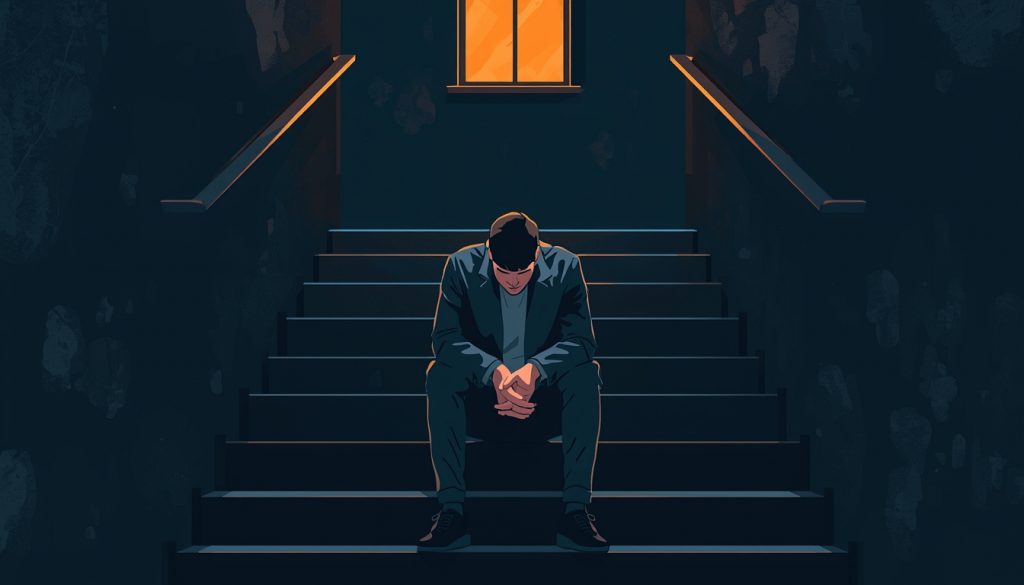
The Weight Men Carry in Silence
Think about Marcus. He is a 34-year-old teacher, father of two, and by every external measure, doing just fine. But he hasn’t slept properly in three years. He carries a low, constant hum of anxiety that he doesn’t talk about — not to his friends, not to his wife, not to anyone. Because men don’t do that, right?
Marcus grew up being told that talking about emotions was weakness. That needing help meant failing. That a real man handles things. So he handles things. Alone. Until the day his body gave out and his doctor told him his blood pressure was dangerously high.
Marcus’s story is not unusual. It is statistically common. According to the American Psychological Association, men are significantly less likely to seek mental health treatment than women — and traditional masculinity norms are one of the primary reasons why. In the United States, men are three to four times more likely to die by suicide than women, a pattern directly tied to cultural conditioning around emotional suppression and the stigma of asking for help.
The expectation that men must be self-reliant, emotionally controlled, and perpetually strong doesn’t protect men. It silences them. And silence, when it comes to mental health, can be lethal.
The Invisible Exhaustion of Women
On the other side, consider Priya. She is a 29-year-old woman who works full-time, manages most of the household, is always the one her friends call when they need support, and still somehow manages to feel guilty that she isn’t doing enough.
Priya has anxiety. She has had it since her teens. But she has never named it out loud, because she was raised to believe that women are supposed to hold everyone else together — not come apart themselves.
Women are socialized to prioritize others’ needs, to be agreeable, to minimize their own struggles, and to appear “put together.” The National Institute of Mental Health reports that women are nearly twice as likely as men to be diagnosed with depression and anxiety disorders. While biology plays some role, researchers consistently point to the social pressures and chronic emotional labor placed on women as a significant contributing factor.
Being expected to carry everyone else’s feelings while suppressing your own is not self-sacrifice. Over time, it is self-destruction.
The Compounding Burden on LGBTQ+ and Gender-Diverse Individuals
For people who are transgender, non-binary, gender-fluid, or otherwise gender-diverse, the impact of rigid gender norms is compounded in ways that are difficult to fully describe.
Sam is 22 years old and non-binary. They grew up in a community where gender was binary and fixed, and where stepping outside those lines was met with confusion, ridicule, or outright hostility. Sam didn’t just feel like they didn’t belong in their gender box — they felt like they didn’t belong at all.
This experience has a name: minority stress. The Trevor Project’s 2023 National Survey found that 41% of LGBTQ+ young people in the U.S. seriously considered attempting suicide in the past year, with transgender and non-binary youth reporting particularly high rates of depression and anxiety.
These numbers don’t exist because of something inherently broken in LGBTQ+ individuals. They exist because of the relentless pressure, rejection, and invalidation that comes from a world that enforces narrow gender rules. Understanding how gender norms affect mental health means facing this reality without looking away.
How Gender Norms and Mental Health Are Linked: The Specific Mechanisms
Beyond these three portraits, let’s look at the specific mechanisms at play.
Emotional Suppression and Chronic Stress
When you are not allowed to feel — or to express what you feel — those emotions don’t disappear. They go underground. They live in the body as tension, digestive problems, chronic headaches, or a persistent sense of dread that has no name.
The American Institute of Stress notes that prolonged emotional suppression is directly linked to elevated cortisol levels, disrupted sleep, weakened immune function, and a heightened risk of anxiety and depression. We don’t just process emotions in our minds. We process them through our whole nervous system.
Men who have been taught never to cry, women who have been taught never to rage, non-binary individuals who have been taught their experience doesn’t exist — all of them are carrying unprocessed emotion in ways that quietly erode their wellbeing every single day.
If you’ve ever felt that tight, hollow feeling in your chest that won’t quite go away, you might recognize what we’re talking about here. For a deeper look at what emotional suppression does physically, the article on effects of suppressed emotions on the body explores this connection in honest detail.
Identity Conflict and Low Self-Worth
When who you genuinely are doesn’t match who you are expected to be, the result is often a deep, underlying sense of not being enough. This isn’t low self-esteem in the ordinary sense. It is something more structural: a belief, built up over years of small corrections and large rejections, that your authentic self is somehow wrong.
Tanya grew up being called “too aggressive” when she was assertive, “too emotional” when she expressed feelings, and “too much” in almost every context. By the time she was an adult, she had learned to shrink herself so reflexively that she couldn’t tell anymore where the shrinking ended and she began.
This kind of identity conflict is one of the more insidious ways that gender norms affect mental health. It doesn’t announce itself as trauma. It just becomes the background noise of your life.
Barriers to Seeking Help
Gender norms don’t just create mental health challenges. They also actively prevent people from getting the help they need.
For men, seeking therapy often still carries the stigma of weakness or failure. For women, their legitimate distress is frequently minimized (“you’re just being emotional”). For gender-diverse individuals, finding a therapist who is both knowledgeable and affirming can feel like searching for a needle in a haystack.
These are not small barriers. They are significant. If you’ve been putting off reaching out for support, it may be worth exploring what stories about your gender are quietly talking you out of it. The Identity & Social Wellness section here at Mindbloom explores many of these barriers with warmth and without judgment.
Relationship Difficulties
Gender norms also distort how we connect with other people. When men are socialized to avoid vulnerability, intimacy becomes difficult. When women are socialized to be endlessly accommodating, they can lose themselves entirely in relationships. When any person feels they must perform a gender role rather than show up authentically, genuine connection is harder to reach.
James, 41, realized in couples therapy that he had never once, in a 12-year marriage, told his wife he was scared. Not because he didn’t feel fear — but because he had been so thoroughly trained that showing fear would undermine his role in the relationship. His wife had spent years feeling like she was married to a wall. He had spent years feeling profoundly alone.
Understanding how your gender conditioning shows up in relationships is some of the most valuable inner work you can do. The dynamics explored in codependency vs. healthy interdependence are closely tied to these same gender-based patterns of giving too much, taking too little, and struggling to find the balance.
Practical Steps: Healing the Mental Health Wounds of Gender Norms
Awareness matters. But what do you actually do with it? Here are some grounded, realistic steps that can begin to shift things.
1. Name the Rule Before You Follow It
The next time you hold back a feeling, silence a need, or perform a behavior you don’t fully believe in, pause and ask: whose rule is this? Is this truly how I want to show up? Just naming the rule — “this is a gender expectation, not a truth” — begins to loosen its grip.
2. Expand Your Emotional Vocabulary
Many people, especially those raised to suppress emotion, genuinely struggle to name what they are feeling. Practice getting specific. Instead of “I’m fine” or “I’m stressed,” try to identify whether you are disappointed, afraid, overwhelmed, lonely, or grieving. Emotional specificity is a powerful tool for healing.
3. Seek Out and Tell Your Own Story
Find communities, books, podcasts, and spaces where people are living outside rigid gender expectations. Seeing others live authentically is one of the most powerful things you can offer yourself. Your story, when told honestly, also becomes a lifeline for someone else.
4. Reconsider What Strength Really Means
For men especially: asking for help is not weakness. It takes more courage to say “I’m not okay” in a culture that tells you to pretend you are than to carry it alone. Strength is not the absence of need. Strength is dealing honestly with reality.
5. Let Yourself Receive
This one is particularly for those who have been socialized to be endlessly giving. Practice receiving care, help, and support without immediately deflecting or minimizing. You are allowed to need things. That is not a burden. That is being human.
6. Consider Therapy with a Culturally Aware Therapist
A therapist who understands gender dynamics can be transformative. If you’re not sure where to start, exploring different types of therapy can help you identify what kind of support might fit your needs best.
7. Talk to Children Differently
If you are a parent, an aunt or uncle, a teacher, or anyone who influences children: the language you use matters enormously. Letting boys feel and cry. Letting girls be brave and assertive. Letting all children know their feelings are valid regardless of gender. These conversations create a different kind of future.
The World Is Changing — But the Healing Still Has to Be Personal
Culturally, the conversation about gender and mental health is shifting. More men are going to therapy. More workplaces are acknowledging emotional wellbeing. More families are raising children with more flexibility around gender expression.
But social change is slow. And while we wait for the world to catch up, the healing work still has to happen inside each of us. That means looking honestly at the gender rules we absorbed, naming which ones have hurt us, grieving the parts of ourselves we were asked to leave behind, and — slowly, imperfectly, bravely — reclaiming them.
It also means understanding that you were not weak for being shaped by these norms. You were human. You were a child learning to survive in the world you were given. None of that is your fault. But how you choose to live from here? That part belongs to you.
The relationship between how we understand ourselves and our emotional wellbeing is explored beautifully in the emotional intelligence article — because so much of what gender norms take from us is precisely this: the full, free experience of our own inner life.
You Deserve to Be Your Whole Self
There is a version of you that has never been asked to perform anything. That has never been told to shrink, toughen up, be less, feel less, or pretend. That version of you is not weak or wrong or broken. That version of you is whole.
The way that gender norms affect mental health is real, measurable, and far too rarely spoken about. But knowing this gives you something extraordinary: the choice to stop letting rules you didn’t write define the life you are living.
You don’t have to fix all of it today. You just have to begin. And beginning with honesty, with self-compassion, and with the quiet, fierce belief that you are allowed to take up space — that is enough. That is everything.
Frequently Asked Questions
1. How do gender norms affect mental health in men specifically? Traditional masculinity norms discourage men from expressing vulnerability, seeking help, or acknowledging emotional pain. This leads to higher rates of untreated depression and anxiety, increased substance use as a coping mechanism, and significantly higher suicide rates compared to women.
2. Do gender norms affect women’s mental health differently than men’s? Yes. Women tend to internalize distress more, often developing anxiety and depression rooted in chronic people-pleasing, self-silencing, and the emotional labor of caring for others while neglecting themselves. The pressure to be endlessly accommodating takes a significant mental health toll.
3. Why are LGBTQ+ individuals more at risk for mental health challenges? LGBTQ+ individuals, and especially transgender and non-binary people, face minority stress: the chronic psychological burden of navigating a society with rigid gender expectations that frequently exclude or invalidate their identity. This significantly elevates rates of depression, anxiety, and suicidal ideation.
4. Can rigid gender norms lead to anxiety and depression? Yes. Research consistently shows that emotional suppression, identity conflict, and the chronic stress of performing a gender role that doesn’t fit are all strongly linked to the development and worsening of anxiety and depression.
5. What is emotional suppression and why is it harmful? Emotional suppression is the practice of consciously or unconsciously blocking, hiding, or ignoring feelings. It keeps emotions from being processed and resolved, leading to chronic stress, physical health problems, and increased psychological distress over time.
6. How do gender norms affect the way people seek mental health help? Gender norms create significant barriers. Men often avoid therapy due to stigma around weakness. Women may have their distress dismissed as “being emotional.” Gender-diverse individuals may struggle to find affirming care. All of these barriers mean that many people who need support don’t receive it.
7. Are gender norms harmful to children’s mental health? Yes. Children who are repeatedly told to suppress feelings, conform to gendered behavior expectations, or shame themselves for natural emotions are at increased risk of developing anxiety, low self-esteem, and emotional difficulties that can persist into adulthood.
8. What is minority stress and how does it relate to gender? Minority stress refers to the chronic, excess stress that people from marginalized groups experience due to discrimination, stigma, and social exclusion. For gender-diverse individuals, navigating a world with rigid binary gender norms creates ongoing stress that cumulatively damages mental health.
9. Can therapy help with issues related to gender norms? Absolutely. Working with a culturally aware or gender-affirming therapist can help you identify internalized gender expectations, process the emotional pain they have caused, and build a stronger, more authentic sense of self. Many people find this work profoundly liberating.
10. How can I start challenging gender norms in my own life? Start small. Name the moments when you are performing a gender expectation rather than being yourself. Practice expressing emotions you were told not to show. Seek out communities and stories that reflect a fuller, more flexible understanding of what it means to be human. And be patient with yourself — undoing decades of conditioning takes time.
If any of these questions felt personal — that’s not a coincidence. Most of them were written because someone, somewhere, needed to hear the answer.
A Final Word
You have been carrying a lot. Some of it is yours. But some of it was handed to you before you were old enough to say no. The weight of gender expectations, the silence they enforce, the parts of yourself you were asked to leave behind — none of that was deserved. And it is never too late to put some of that weight down.
I want to ask you something specific, and I want you to really sit with it:
Has there ever been a version of yourself — an emotion you swallowed, a need you silenced, a part of you that never quite fit the rules — that you wish someone had made space for?
You don’t have to write an essay. One sentence is enough. This is a safe place, and your words belong here.
Disclaimer
This article is written for informational and personal support purposes only. Mindbloom is a personal blog based on lived experience and is not a substitute for professional mental health treatment, diagnosis, or medical advice. If you are in crisis or experiencing severe mental health symptoms, please reach out to a qualified healthcare provider or contact a crisis helpline. You can find a helpline near you here.