
Sleep and Mental Clarity: Why Your Brain Needs Rest to Think at Its Best
You woke up this morning feeling like you were moving through wet cement.
Coffee in hand. Eyes half-open. You sat down to answer a simple email and stared at the screen for four minutes, unable to string a sentence together. By noon, you had forgotten three things in a row. By 3 PM, you were snapping at someone you love over something that would not have bothered you at all on a good day.
Sound familiar?
This is not a willpower problem. It is not a productivity problem. It is a sleep problem — and the relationship between sleep and mental clarity is one of the most powerful and underestimated forces shaping how you think, feel, and function every single day.
Because here is what most people do not realize: your brain does not rest when you sleep. It works. It cleans, it organizes, it restores, it processes. And when you cut that process short night after night, the cost shows up not just in how tired you feel — it shows up in how clearly you think, how calmly you feel, and how fully you show up in your own life.
This article is for anyone who has ever wondered why their brain feels foggy, scattered, or just… off. Let’s talk about what is actually happening inside you when you sleep — and what you can do to finally feel clear again.
Table of Contents
What “Mental Clarity” Actually Means (And Why It Feels So Rare)
Mental clarity is not just about being able to think. It is about thinking well — without effort, without static, without that low-grade mental hum that makes even simple decisions feel exhausting.
When you have mental clarity, you can focus. You can make decisions without second-guessing yourself into circles. You feel present in conversations instead of half-listening while your mind drifts. Ideas come to you more easily. You feel like yourself.
When you do not have it, everything costs more than it should. That fog is not imaginary. It is a real, measurable state — and sleep is one of its most powerful drivers.
According to the National Sleep Foundation, adults need between 7 and 9 hours of sleep per night for optimal brain function. Most Americans are getting significantly less. And the effects on cognitive performance — attention, memory, decision-making, emotional regulation — are not subtle.
They are profound.
What Your Brain Actually Does While You Sleep
This is the part that changes everything when you truly understand it.
The Brain’s Cleanup Crew: The Glymphatic System
Your brain has its own waste-disposal system called the glymphatic system. During sleep — specifically during deep, slow-wave sleep — this system flushes out toxic byproducts that accumulate throughout the day. One of those byproducts is beta-amyloid, a protein associated with cognitive decline.
Think of it like this: imagine your brain is a busy office. All day long, people are working, creating output, generating ideas — and leaving mess behind. Sleep is when the cleaning crew comes in. Without enough sleep, the mess keeps building. And you try to work the next day in a cluttered, chaotic space, wondering why everything feels so hard.
The National Institutes of Health has confirmed that this glymphatic cleaning process is dramatically more active during sleep than during wakefulness. When you short-change your sleep, you are essentially locking the cleaning crew out.
Memory Consolidation: How Sleep Turns Experiences Into Knowledge
Here is something beautifully fascinating: the things you learned and experienced today are not fully stored in your long-term memory yet. That process — called memory consolidation — happens during sleep, particularly during REM (rapid eye movement) sleep.
During REM sleep, your brain replays the day’s experiences, sorts what is important from what is not, and transfers key information from short-term to long-term memory. It is like your brain doing its own filing at the end of the day.
When you cut REM sleep short — by staying up late, by waking up abruptly, by drinking alcohol that suppresses REM — that filing does not happen properly. You wake up the next day feeling like yesterday barely registered. Information feels slippery. Learning new things feels twice as hard.
Emotional Processing: Why Everything Feels More Intense When You’re Tired
Sleep is also when your brain processes your emotions from the day. Research from UC Berkeley shows that just one night of poor sleep significantly amplifies emotional reactivity — meaning the same stressor that you would handle calmly on a good day can feel genuinely overwhelming when you are sleep-deprived.
This is why the argument you had with your partner at 11 PM felt catastrophic, but seemed manageable the next morning (after sleep). This is why everything feels harder, heavier, and more hopeless when you are running on empty.
Sleep is not a luxury for your emotional life. It is infrastructure.
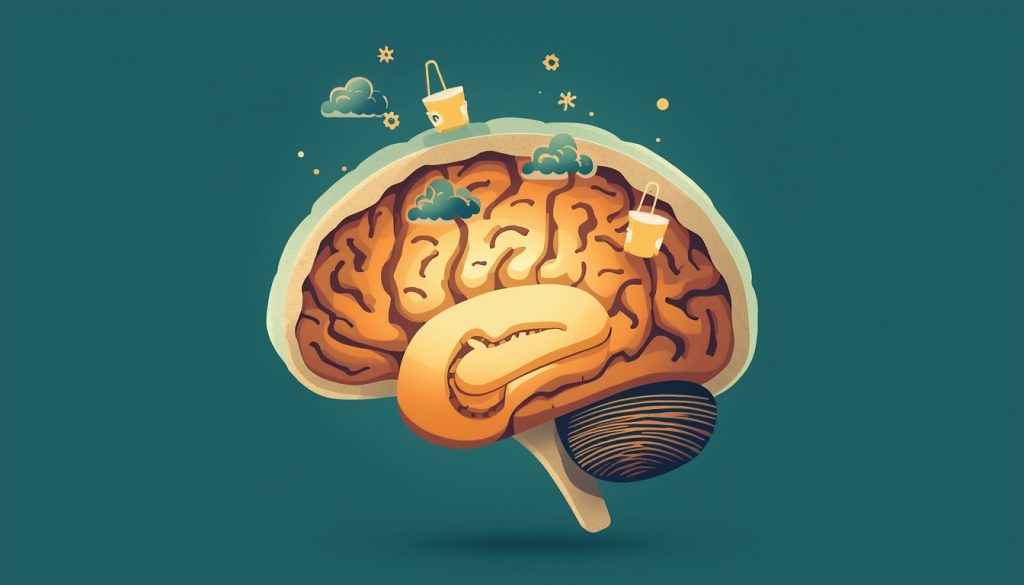
5 Signs Sleep Deprivation Is Affecting Your Mental Clarity (Real-Life Examples)
Let’s move away from science for a moment and into real, human experience.
Scenario 1: The Professional Struggling With Brain Fog and Focus Scenario
Sarah is a 34-year-old marketing manager. She is good at her job — she knows this. But lately, she cannot write a coherent brief without reading the same sentence five times. She sits in meetings and realizes she has retained almost nothing. She feels like she is falling behind, but she cannot figure out why.
She has been sleeping five to six hours a night for three months — telling herself she will catch up on the weekend. She hasn’t made the connection yet. Sleep is at the root of every problem she is describing.
Scenario 2: The Sleep-Deprived Parent Losing Emotional Control
James has a toddler. Sleep has not been consistent in two years. He loves his child fiercely, but he has noticed something troubling: he is not himself. He is reactive, quick to frustration, and struggling to remember things his wife tells him. He has started wondering if something is wrong with him.
Nothing is wrong with James. He is chronically sleep-deprived, and his mental clarity is paying the price.
Scenario 3: The Student Whose Sleep Deprivation Is Ruining Memory Retention
Priya pulls all-nighters before exams. She studies for six hours straight, pours the material into her brain — and then blanks in the exam room. She is convinced she is bad at studying. In reality, she is skipping the step that locks learning in: sleep.
Scenario 4: The Overthinker Whose Sleep Loss Is Impairing Decision-Making
Marcus cannot make a simple decision without spiraling. What to eat, what to say, whether to send that email — everything becomes a labyrinthine loop of anxiety. He calls himself indecisive. But what he is, actually, is profoundly sleep-deprived. The prefrontal cortex — the part of the brain responsible for rational decision-making — is one of the first regions to be impaired by poor sleep.
Scenario 5: The Person Experiencing Emotional Numbness From Poor Sleep
Elena has been feeling emotionally numb. Not sad exactly, just… blunted. Like there is a layer of glass between her and her own life. She has been sleeping irregularly for months. Sleep deprivation does not just create emotional reactivity — sometimes it creates emotional flatness, a kind of cognitive and emotional shutdown.
If you saw yourself in any of these stories, keep reading.
The Science Behind Sleep and Mental Clarity: What the Research Says
Understanding how sleep impacts mental clarity means understanding a few key processes — explained without any of the jargon.
Sleep Stages and Your Brain
Your sleep cycles through four stages roughly every 90 minutes:
Stage 1 and 2 (Light sleep): Your body begins to relax. Your brain produces sleep spindles — bursts of activity that play a role in memory and learning.
Stage 3 (Deep sleep / Slow-wave sleep): This is where physical restoration and the glymphatic cleaning happen. It is the hardest stage to get into and the most important for feeling refreshed.
REM sleep: This is where dreaming occurs, emotional processing happens, and memory consolidation does its most critical work.
Each stage matters. Losing even an hour of sleep tends to cut disproportionately into your deep sleep and REM — the two stages your brain needs most for clarity, emotional balance, and memory.
How Sleep Deprivation Shuts Down Your Brain’s Decision-Making Center
Your prefrontal cortex handles rational thinking, impulse control, decision-making, and emotional regulation. It is essentially the CEO of your brain.
Sleep deprivation hits the prefrontal cortex hardest. Studies published in the journal Sleep have shown that even mild sleep restriction (six hours per night for two weeks) produces cognitive impairment equivalent to two full nights of total sleep deprivation — yet most people do not realize how impaired they are.
Your brain adapts to dysfunction and starts calling it normal. You stop noticing the fog because you have been living inside it so long.
The Long-Term Effects of Chronic Poor Sleep on Mental Clarity and Brain Health
One bad night is recoverable. Chronic poor sleep is a different story entirely.
When poor sleep becomes your pattern — not a crisis, just a quiet, ongoing deficit — the effects compound. Your baseline clarity drops. What used to feel sharp starts to feel like effort. What used to come naturally now requires concentration.
The cruel irony? The more tired you are, the less aware you become of your own impairment. You start thinking your foggy brain is just who you are now.
It is not.
This is also where the connection between sleep and mental health becomes important. Chronic poor sleep is strongly associated with anxiety and depression — not just as a symptom but as a contributing cause. If you feel like your thoughts are heavier and harder to manage than they used to be, and your sleep has been inconsistent, those two things are almost certainly related.
You can read more about how nighttime anxiety and racing thoughts sabotage your sleep — and what actually helps — and explore the deep connection between sleep deprivation and depression for a closer look at how these two things feed each other.
10 Practical Ways to Improve Your Sleep for Better Mental Clarity
These are not generic sleep tips you have seen recycled across the internet. Each one comes with the why behind it — because when you understand what is actually happening in your brain, you stop seeing these habits as chores and start seeing them as investments in your own mind.
1. Protect Your Sleep Window Like an Appointment
Decide on a consistent sleep and wake time — and honor it even on weekends. Your brain’s sleep-wake cycle (your circadian rhythm) runs on consistency. Every time you stay up two hours later on a Friday, you are giving yourself social jet lag. Your internal clock gets confused, your sleep quality drops, and Monday morning feels like running through mud.
Understanding how your circadian rhythm controls your mood is one of the most clarifying things you can do for your mental health.
2. Create a 30-Minute Wind-Down Ritual
Your brain does not switch from “on” to “asleep” instantly. It needs a transition. Spend 30 minutes before bed doing something that signals safety and rest: reading a physical book, gentle stretching, journaling, or a warm shower. This ritual tells your nervous system that the day is over and it is safe to let go.
3. Dim Everything After 9 PM
Light — especially blue light from screens — suppresses melatonin, the hormone that makes you sleepy. Dimming your environment after 9 PM gives your brain permission to begin its sleep preparation. Use warm, low lighting. If you must use screens, use night mode.
4. Move Your Body During the Day
Exercise significantly improves sleep quality — particularly the deep, slow-wave sleep that is so essential for mental restoration. You do not need an intense workout. A 30-minute walk counts. Movement during the day is one of the most evidence-backed ways to deepen your sleep at night.
5. Watch What You Put in Your Body After 2 PM
Caffeine has a half-life of about five to seven hours. If you have a coffee at 3 PM, half of that caffeine is still in your system at 8 or 9 PM — making it harder for your brain to wind down. Alcohol is the other sneaky saboteur: it might make you feel drowsy initially, but it fragments sleep and suppresses REM, so you wake up feeling worse than if you had not drunk at all.
6. Keep Your Bedroom for Sleep (And Sleep Only)
Your brain is a powerful association machine. If you work in your bed, scroll social media in your bed, and watch stressful TV in your bed — your brain starts to associate your bed with alertness, not rest. Reserve your bedroom for sleep. Make it a sacred, screen-free space.
7. Journal Before Bed to Empty Your Mind
One of the biggest enemies of sleep is an unprocessed mind. If you go to bed with the weight of everything you did not finish, everything you are worried about, and every conversation you replayed — your brain stays activated. A five-minute brain dump before bed can be transformative.
Write down everything that is on your mind, tomorrow’s top three priorities, and one thing you are grateful for. This practice empties the mental cache so your brain can actually rest. You can explore brain dump exercises for clarity for more techniques that work beautifully as a pre-sleep ritual.
8. Get Morning Sunlight Within an Hour of Waking
Exposure to natural light in the morning anchors your circadian rhythm and boosts serotonin — which later converts to melatonin and helps you sleep more deeply that night. Even ten minutes outside, even on a cloudy day, makes a measurable difference.
9. Use Strategic Napping (Not Random Napping)
If you are sleep-deprived, a well-timed nap can restore some cognitive function. The sweet spot is 10 to 20 minutes, before 3 PM. Any longer or later and you risk disrupting your nighttime sleep. Learn how to nap the right way for maximum restoration without the groggy aftermath.
10. Address the Root of Your Sleeplessness — Not Just the Symptom
If stress, anxiety, or racing thoughts are what keep you awake, no amount of sleep hygiene tips will fully solve the problem. You have to address what is driving the wakefulness. That might mean therapy, a journaling practice, breathwork, or simply giving yourself permission to feel what you have been pushing down.
Deeper, more comprehensive guidance on building a sleep routine that actually holds lives in sleep hygiene habits that actually work.
What Happens to Your Mental Clarity When You Finally Start Sleeping Well
This part is important — because change does not happen overnight (no pun intended). It takes time, and knowing what to expect keeps you from giving up.
In the first few days of better sleep, you might not feel dramatically different. Your sleep debt has been building for a while. Give it time.
After one to two weeks of consistent, quality sleep, most people start noticing that their thoughts come more easily. Small decisions stop feeling like mountains. They remember conversations more clearly. The fog has a noticeable lift to it.
After a month, the shift feels more fundamental. People describe it as feeling like themselves again — like returning to a version of themselves they had forgotten existed.
Better sleep does not just make you less tired. It makes you more you — more present, more capable, more emotionally grounded. That is not a small thing. That is everything.
What to Do When You Can’t Sleep No Matter What You Try
If you are reading this at midnight, exhausted but unable to sleep — first, I want you to know that you are not alone. So many people are lying awake right now, minds racing, bodies tired, wondering why rest feels so impossibly far away.
You are not broken. Your brain is not broken. It is doing its best under conditions that were never designed for it — the relentless pace, the screens, the pressure, the noise.
Learning how sleep impacts mental clarity is not just about becoming more productive. It is about reclaiming the kind of presence and peace you deserve to feel every single day. You deserve to wake up and feel clear. You deserve to move through your life with your full mind intact.
That starts with tonight.
Frequently Asked Questions
1. How does sleep affect mental clarity? Sleep directly impacts mental clarity by allowing the brain to flush out toxins, consolidate memories, and process emotions. Without enough quality sleep, cognitive functions like focus, decision-making, and memory all suffer significantly.
2. Why do I feel mentally foggy even after sleeping 8 hours? Sleep quality matters as much as sleep quantity. If your sleep is fragmented, if you are not getting enough deep or REM sleep, or if an underlying issue like sleep apnea is disturbing your rest, you can still feel foggy even after 8 hours in bed.
3. How many hours of sleep do I need for mental clarity? Most adults need 7 to 9 hours of sleep per night for optimal cognitive function. Teenagers need 8 to 10 hours. Consistently sleeping fewer than 7 hours creates a measurable decline in mental performance.
4. Can lack of sleep cause brain fog? Yes. Sleep deprivation is one of the leading causes of brain fog. When the brain does not get sufficient rest, its waste-clearing system slows down, neurons become less efficient, and cognitive performance deteriorates — which presents as that familiar foggy, sluggish feeling.
5. Does poor sleep affect memory? Absolutely. Memory consolidation — the process by which your brain converts short-term memories into long-term ones — primarily occurs during sleep, especially REM sleep. Poor sleep disrupts this process, making it harder to retain and recall information.
6. Can improving sleep improve mental health? Yes. Sleep and mental health are deeply intertwined. Improving sleep quality is associated with reduced anxiety, fewer depressive episodes, improved emotional regulation, and better overall psychological wellbeing.
7. What is the best sleep schedule for mental clarity? Consistency is key. Going to sleep and waking up at the same time every day — even on weekends — supports your circadian rhythm and leads to deeper, more restorative sleep. Most sleep researchers recommend a bedtime between 10 PM and midnight for optimal alignment with natural light cycles.
8. How quickly does sleep deprivation affect the brain? Research shows that after just 17 to 19 hours of wakefulness, cognitive impairment becomes comparable to a blood alcohol level of 0.05%. After 24 hours without sleep, impairment reaches levels equivalent to being legally drunk. Even one night of poor sleep noticeably impairs concentration and emotional regulation.
9. What Foods and Drinks Improve Sleep Quality and Mental Clarity? Foods rich in magnesium (like leafy greens, nuts, and seeds), tryptophan (like turkey and dairy), and melatonin precursors (like tart cherries) may support better sleep. Avoiding caffeine after early afternoon and limiting alcohol are equally important for sleep quality and next-day clarity.
10. Can a Nap Restore Mental Clarity When You’re Sleep-Deprived? A short nap of 10 to 20 minutes (sometimes called a “power nap”) can partially restore cognitive function and alertness in sleep-deprived individuals. Longer naps can lead to sleep inertia — that groggy, disoriented feeling — and may disrupt nighttime sleep if taken too late in the day.
Tonight Is the Best Time to Start Reclaiming Your Mental Clarity
Every single night is an opportunity to give your brain what it needs to carry you through tomorrow with more grace, more focus, and more presence than today.
You do not have to overhaul your entire life at once. You just have to start honoring your need for rest as something real — something that is not laziness or weakness, but one of the most courageous acts of self-care you can choose.
Sleep is where healing happens. Sleep is where clarity is born.
Tonight, let yourself rest. And if you are ready to go deeper, explore how nighttime anxiety keeps your brain from switching off — and what you can do to finally quiet it. Your mind is worth the effort.
Disclaimer
This article is written from personal research and experience for general informational and wellness purposes only. It is not a substitute for professional medical advice, diagnosis, or treatment. If you are experiencing persistent sleep issues, cognitive difficulties, or mental health concerns, please consult a qualified healthcare provider. Mindbloom is a personal wellness blog, not a clinical resource. If you are in crisis or experiencing a mental health emergency, please contact the 988 Suicide & Crisis Lifeline by calling or texting 988 (US), or reach out to your local emergency services immediately.