
Building Resilience: What It Really Means and How to Develop It
There is a moment most of us know too well. The moment when life hits so hard that you wonder — quietly, maybe even in the middle of the night — whether you have what it takes to get back up. You look around and everyone else seems to be handling things just fine. They bounce back from loss, from failure, from heartbreak. And you wonder: what do they have that I don’t?
The answer, more often than not, comes down to building resilience — and here is what most people get wrong about it: it is not a personality type or a gift reserved for the naturally tough. It is not something you either have or do not have. Resilience is a skill. A living, breathable, learnable skill. And this article is going to show you exactly what it is, why it matters more than ever, and how you can start building it right now, wherever you are in life.
Table of Contents
What Resilience Actually Means (It’s Not What Most People Think)
Ask ten people what resilience means, and most of them will say something like, “bouncing back” or “staying strong.” And while those ideas aren’t completely wrong, they miss something important.
Real resilience is not about pretending you are fine. It is not about being unaffected by hard things or pushing through pain with a clenched jaw and a brave face. That is not resilience. That is suppression — and it tends to catch up with you.
According to the American Psychological Association, resilience is the process of adapting well in the face of adversity, trauma, tragedy, threats, or significant sources of stress. Notice the word process. Not a trait. Not a fixed quality. A process — something that unfolds over time, with practice, with support, and with self-awareness.
Resilient people still feel pain. They still grieve. They still have hard days. The difference is that they have developed certain ways of thinking and relating to difficulty that allow them to move through it rather than be swallowed by it.
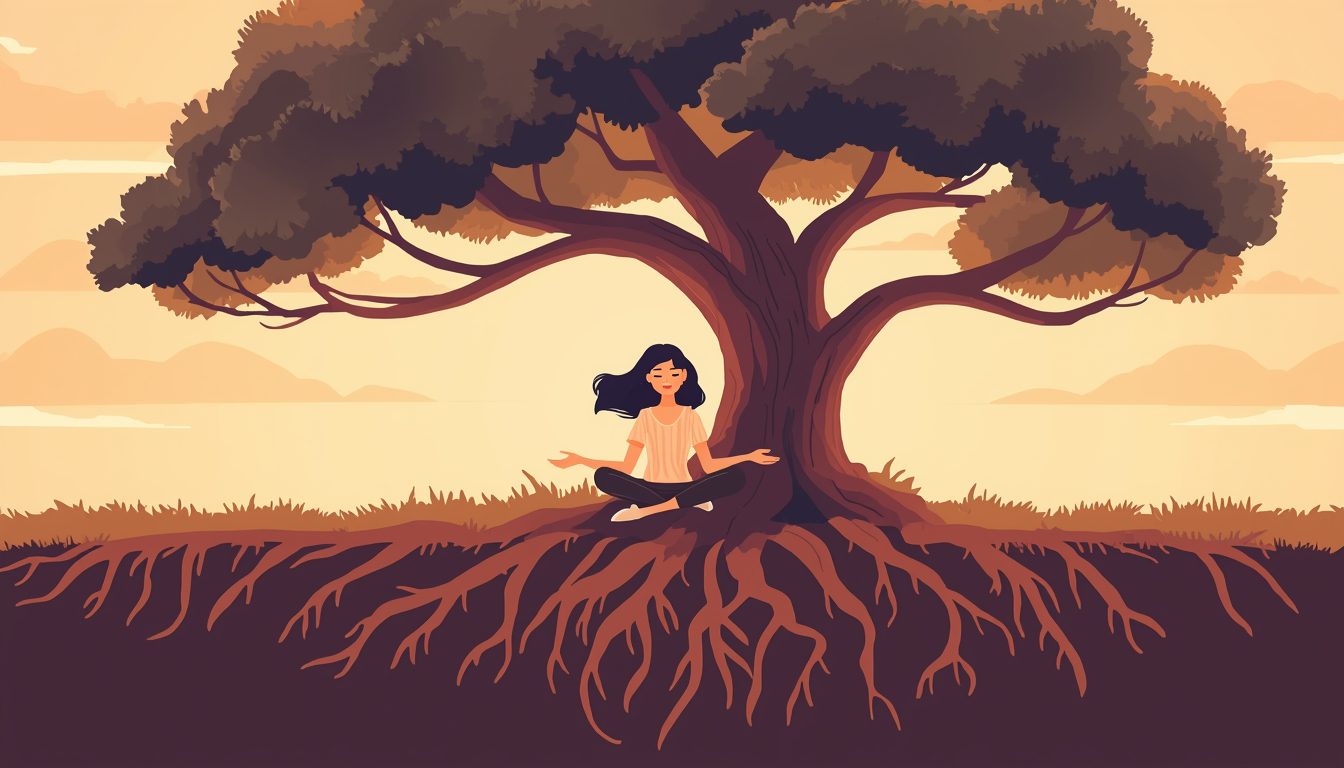
Think of it less like a wall that keeps hard things out, and more like roots on a tree. The storm still comes. The branches still bend. But the roots hold — and the tree grows stronger in the soil that the storm loosened.
Why Building Resilience Is Important (Especially Right Now)
We are living in genuinely difficult times. Between economic pressure, social comparison, the weight of the news cycle, and the very personal hardships of relationships, health, and purpose — most of us are being asked to carry more than feels manageable.
A 2023 report by the American Institute of Stress found that stress levels in the U.S. have remained at historically high levels in recent years, with younger adults reporting some of the highest rates of anxiety and emotional overwhelm.
In that environment, building resilience is not a nice-to-have. It is one of the most protective things you can do for your mental and emotional health.
When you strengthen your resilience, research shows you are more likely to:
- Recover from setbacks faster — instead of staying stuck in the aftermath, resilient people process difficulty and move forward with more clarity
- Build healthier relationships — when you are not emotionally flooded by stress, you show up with more patience, honesty, and presence for the people around you
- Find meaning in hard experiences — resilience does not erase pain, but it helps you extract something real and useful from it over time
- Reduce symptoms of anxiety and depression — research consistently links stronger resilience with lower rates of emotional disorders
- Feel more capable and in control — not because life becomes easier, but because you trust yourself more to handle what it brings
Resilience does not make your life easier. It makes you more capable of meeting it.
The Real-Life Faces of Resilience
Before we go any further, let’s talk about what building resilience actually looks like in everyday life — because it rarely looks the way we imagine it.
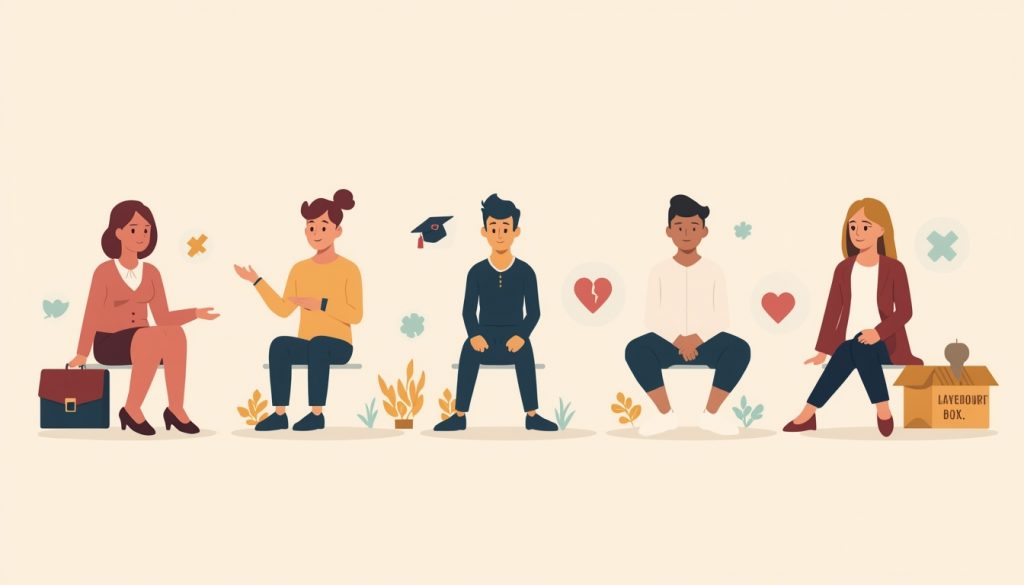
Sarah, 34, lost her job of eight years. Her first week at home was a blur of shock, crying on the bathroom floor, and doom-scrolling job boards at 2 a.m. She did not bounce back immediately. But over the following months, she leaned on a small circle of trusted friends, started therapy, and began to ask herself what she had actually wanted from her career all along. Eighteen months later, she was working in a field she genuinely loved — but the path there was not a straight line. It was messy, slow, and real.
Marcus, 28, grew up in a home where emotions were never discussed. He learned early to shut feelings down and push forward. For years, he called it resilience. It was not. When he finally began therapy in his late twenties, he realized that what he had mistaken for strength was actually a wall that was slowly suffocating his relationships. Learning to feel his feelings, to ask for help, and to be honest about his struggles — that was the beginning of real resilience for him.
Priya, 45, was diagnosed with a chronic illness. She grieved the life she had planned. She had days of rage, and days of quiet despair. But she also started connecting with a community of people living with the same condition. She found meaning in being honest about her experience. She restructured her life around what mattered most. She did not stop being sick — but she built a life that held both the illness and enormous joy.
Carlos, 22, failed his first year of college. The shame nearly broke him. He hid it from his family for months. But a counselor at his university helped him understand what had gone wrong — not just academically, but emotionally. He returned to school the following year with a clearer sense of himself and a support system he had never allowed himself to have. He graduated two years later.
Jenna, 39, went through a painful divorce after twelve years. She describes the first year afterward as walking through fog. But she made one commitment to herself: she would not numb out. She would feel it, process it, and eventually learn from it. Three years later, she says losing that marriage was the hardest and most transformative thing that ever happened to her.
None of these stories involve someone who never fell. They all involve someone who fell, stayed on the ground for a while, asked for help, found meaning, and eventually got back up — changed, but still standing.
How Resilience Actually Develops: The Science Behind the Strength
Here is something that genuine research confirms: resilience can be learned and strengthened at any age. It is not fixed. It grows. And it grows through a combination of factors, some internal, some external, and some relational.
1. Connection Is the Foundation
The single most consistent finding in resilience research is that strong, supportive relationships are the most powerful predictor of whether someone bounces back from adversity.
You are not designed to recover alone. Human beings are wired for connection, and isolation — especially during hard times — slows the healing process significantly. This is not a weakness. It is biology.
You do not need a huge social circle. You need a few people who truly know you and show up for you. People you can be honest with. That is the foundation that everything else builds on.
2. The Beliefs You Hold About Yourself
People with stronger resilience tend to carry certain core beliefs: that they are capable of influencing their circumstances, that hard things can be survived, and that they have worth even when they fail or struggle.
These beliefs are not always innate. Many of them are shaped by early experiences — which means if your early experiences gave you the opposite beliefs, those beliefs can be challenged and changed. This is much of what therapy helps with, and it is also something that practices like journaling, self-compassion work, and cognitive reframing can support over time.
3. Making Meaning Out of Difficulty
Resilient people have a tendency to ask not just “why did this happen to me?” but “what can I take from this?” That shift from victimhood to meaning-making does not happen overnight, and it is not always possible in the immediate aftermath of trauma. But over time, it becomes one of the most powerful tools for moving forward.
According to research from the Greater Good Science Center at UC Berkeley, finding meaning in difficult experiences is strongly associated with post-traumatic growth — the idea that people can emerge from adversity with a genuinely deeper and richer inner life.
4. Emotional Flexibility
This is the ability to feel your feelings without being overwhelmed by them — to sit with sadness without drowning in it, to acknowledge fear without letting it make every decision for you.
Emotional flexibility develops through practice. Journaling, therapy, mindfulness, and honest conversation all build this capacity. It is not about controlling your emotions. It is about having a relationship with them that is curious and open, rather than fearful or avoidant.
5. Physical Wellbeing as a Baseline
Sleep, movement, and nutrition are not “nice extras” when it comes to resilience. They are structural supports. When your body is depleted, your emotional capacity drops dramatically. When you are sleeping well and moving your body regularly, your brain has significantly more resources to draw on when adversity arrives.
If you are working on building resilience during a period of burnout or stress, tending to your physical foundations is one of the most honest and practical places to start.
The Stages of Resilience: What the Journey Looks Like
Building resilience is not a single event. It tends to move through recognizable stages, even if it does not always feel that way in the middle of it.
Stage 1: Survival Mode
This is the raw, immediate aftermath of difficulty. Your nervous system is in shock or overdrive. Your main job here is not to grow — it is to stabilize. Sleep. Eat. Let people in. Be gentle with yourself.
Stage 2: Processing and Feeling
This is where the real emotional work begins. Many people try to skip this stage — to jump straight to “lessons learned” before they have actually felt what happened. But the grief, the anger, the confusion — they need to be felt and expressed. You cannot think your way out of something you have not yet felt your way through.
Stage 3: Meaning-Making
With time and support, most people begin to find threads of meaning in what happened. This is not about saying it was “worth it” — some things are simply devastating, and there is no neat lesson. But it is about beginning to integrate the experience into a larger story of your life.
Stage 4: Integration and Growth
This is where you begin to live forward. Not the same as before — but often more yourself than before. More aware of your values, more honest about your needs, more connected to what actually matters.
Understanding the stages of grief can be incredibly helpful here, as grief and resilience-building are deeply intertwined processes. And if you are currently navigating burnout alongside all of this, the stress and burnout resources on Mindbloom offer a gentle next step.
How to Build Resilience: 8 Practical Steps That Actually Work
You do not need a dramatic life event to start building resilience. In fact, the best time to build it is during ordinary times — so that when the hard moments arrive, the foundation is already there.
1. Build One Real Connection
Reach out to one person this week who you trust. Not to perform or update them on your life — but to actually share how you are doing. Real connection requires honesty, and honesty requires practice.
2. Name Your Emotions
Start getting specific about what you are feeling. Not just “bad” or “stressed” — but curious, disappointed, ashamed, lonely, overwhelmed. The more precisely you can name an emotion, the less power it has over you. This is something researchers call emotional granularity, and it is consistently linked to better mental health outcomes.
3. Start a Reflection Practice
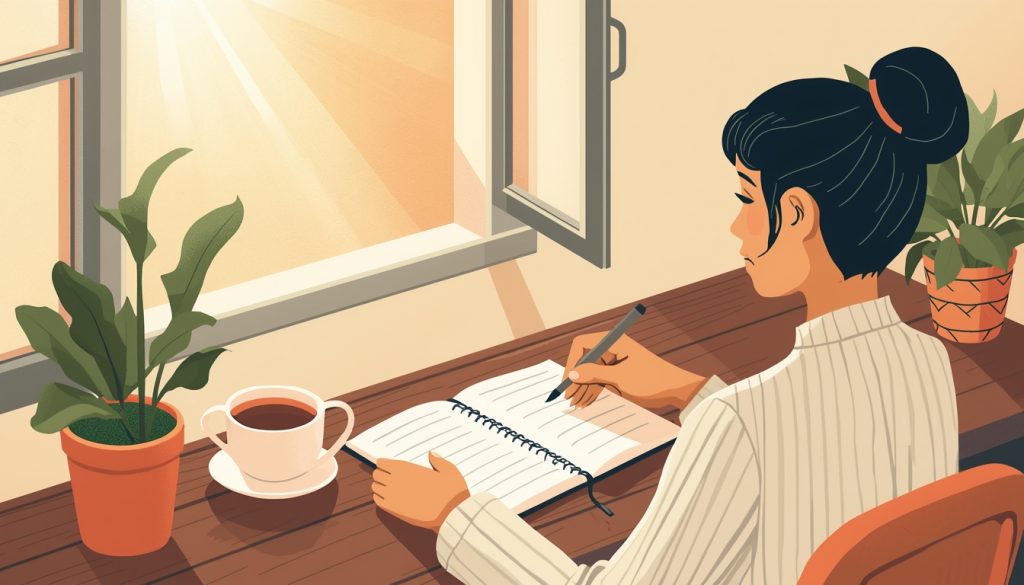
Even five minutes of journaling a day can help you begin to make sense of your experiences. You do not need prompts. You can simply start with: What happened today? How did I feel about it? What do I want to do with that feeling?
Consistent reflection is also one of the best ways to track your personal growth progress over time — because you will have a record of how far you have actually come.
4. Practice Self-Compassion
When you fail, when you struggle, when you fall short — speak to yourself the way you would speak to someone you love. Research by Dr. Kristin Neff consistently shows that self-compassion is more predictive of resilience and wellbeing than self-esteem. You can learn more about her work at self-compassion.org.
5. Limit What You Cannot Control (and Clarify What You Can)
Resilient people are not people who control everything. They are people who have learned to distinguish between what they can influence and what they cannot — and they direct their energy accordingly. When you feel overwhelmed, ask: What part of this is actually within my influence? Then focus there.
6. Get Physical
Commit to three things this week: a full night of sleep, one bout of physical movement (even a walk), and one nourishing meal. These are not glamorous. But they are foundational. Your nervous system needs fuel.
7. Seek Stories of Resilience
You are shaped by the stories you consume. Read memoirs, listen to podcasts, follow accounts of real people who have been through difficulty and come through it. Not to compare your journey, but to remind yourself that recovery is possible — and that it looks different for everyone.
8. Consider Professional Support
If you are navigating something that feels too big to carry alone, therapy is not a sign of failure. It is one of the most direct paths to building the inner resources resilience requires. If you are unsure how to take that first step, understanding what therapy involves can make the idea feel a lot less daunting.
Common Myths About Resilience That May Be Holding You Back
Myth #1: Resilient people don’t cry or fall apart. Completely false. Emotional expression is part of the process, not a failure of it. Allowing yourself to feel is one of the most resilient things you can do.
Myth #2: Resilience means going it alone. Also false. As we have seen, connection is the foundation of resilience. Asking for help is not weakness. It is one of the most important tools in the resilience toolkit.
Myth #3: You either have it or you don’t. Resilience is built, not born. Research overwhelmingly confirms this. Every step you take toward honest emotional engagement, meaningful connection, and self-awareness is a step toward greater resilience.
Myth #4: Resilience means things don’t affect you. Things will always affect you. Resilience means you have the resources to respond thoughtfully rather than react destructively — and to recover rather than stay down.
A Note on Resilience and Mental Health
Building resilience supports your mental health — but it is not a replacement for professional mental health care. If you are experiencing symptoms of depression, anxiety, trauma responses, or other mental health challenges, please reach out to a qualified professional.
Resilience is a support. A foundation. A set of practices that makes the whole journey more sustainable. But it works best alongside — not instead of — appropriate professional support when needed.
The Quiet Truth About Becoming Resilient
Here is the thing nobody tells you about resilience: it is not built in the moments when life is kind. It is built in the small, quiet, unglamorous choices you make when things are hard.
It is built in the moment you decide to call a friend instead of numbing out. In the moment you go to bed at a reasonable hour even when your anxiety wants you to stay up. In the moment you choose to feel the sadness rather than outrun it. In the journal entry that nobody sees. In the therapy session that felt like it went nowhere and was still worth showing up for.
Building resilience is not a transformation. It is a practice. It is the sum of hundreds of tiny choices, made imperfectly and honestly over time, by someone who decided that their inner life was worth tending.
That someone can be you. It already is.
You are not falling apart. You are being rebuilt — and there is a difference that matters more than you know.
Frequently Asked Questions About Building Resilience
1. What is the fastest way to build resilience? There is no overnight fix, but the single highest-impact step most people can take immediately is strengthening one honest relationship. Research consistently shows that social connection is the most powerful predictor of resilience — more than mindset, more than habits, more than anything else. Reach out to someone you trust today, not to update them, but to actually share how you are doing.
2. Is resilience something you are born with? No. While some people may have early experiences that made developing resilience easier, the research is very clear that resilience can be learned and built at any age. It is not a genetic gift. It is a set of skills and habits that grow with practice and support.
3. What are the main factors that build resilience? The biggest factors include strong social connections, a sense of meaning or purpose, emotional flexibility, positive self-belief, and good physical health. Of these, supportive relationships are consistently identified as the most powerful predictor of resilience.
4. How long does it take to build resilience? There is no fixed timeline. Building resilience is an ongoing process, not a destination. Some people notice meaningful changes within a few months of intentional effort. Others find it takes longer. The key is consistency, not speed.
5. Can resilience be damaged? Yes. Chronic stress, trauma, isolation, and prolonged adversity without support can erode resilience over time. This is why recovery and support matter — and why seeking help when you are depleted is so important.
6. What is the difference between resilience and suppression? Suppression is shutting feelings down and forcing yourself to keep going. Resilience involves actually feeling your emotions, processing them, and then moving through them. Suppression might look like strength in the short term, but it tends to create deeper problems over time.
7. Does resilience mean you won’t struggle? No. Resilient people still struggle. They still grieve, feel fear, and have hard days. The difference is in how they relate to those struggles — with more awareness, more support, and more capacity to keep going.
8. How do I know if I am becoming more resilient? Signs include: recovering from setbacks more quickly, feeling less defined by your worst moments, being more willing to ask for help, having a stronger sense of your own values, and finding it slightly easier to sit with uncertainty.
9. Is therapy helpful for building resilience? Absolutely. Therapy, particularly approaches like Cognitive Behavioral Therapy (CBT) and Acceptance and Commitment Therapy (ACT), directly builds many of the skills associated with resilience — emotional regulation, self-compassion, perspective-taking, and values clarity.
10. Can children learn resilience? Yes, and early life is actually one of the most important windows for building it. Children develop resilience through secure attachments, supportive relationships, age-appropriate challenges, and having adults in their lives who model healthy emotional responses. The same foundational principles apply at any age.
A Closing Thought
Somewhere along the way, the world taught most of us that struggle is shameful — that needing help is a weakness, that falling apart means something is fundamentally wrong with us. None of that is true.
Building resilience is not about becoming someone who never breaks. It is about becoming someone who knows — with every part of their being — that breaking is not the end. That they can be cracked open and still hold. That the roots go deeper than the storm does.
You are already more resilient than you know. Every difficult thing you have lived through is evidence of that. Every morning you got up when you did not want to. Every honest conversation you had when it felt impossible. Every time you reached for help instead of hiding.
That is resilience. And it is already growing in you — quietly, surely, one brave and imperfect step at a time.
What is one moment when you showed up for yourself — even when you barely had anything left? Drop it in the comments. I read every single one.
Disclaimer
This article is written for informational and personal reflection purposes only. It is not a substitute for professional mental health advice, diagnosis, or treatment. Mindbloom is a personal blog based on lived experience, not clinical expertise. If you are experiencing a mental health crisis or believe you may need professional support, please reach out to a qualified mental health provider or contact a crisis helpline in your area. You can find one at befrienders.org.