
Disenfranchised Grief: The Loss Nobody Acknowledges (But You Still Feel)
Disenfranchised grief is the kind of pain that arrives without a casserole on the doorstep, without a single “I’m so sorry for your loss,” without anyone even asking if you are okay. You are grieving — truly, deeply, completely grieving — and yet the world around you keeps moving as if nothing happened. As if what you lost didn’t count.
That silence has a name. And if you have ever felt it, you already know how lonely it is. It is not just the grief itself that hurts. It is the invisibility of it. The quiet shame that creeps in when you realize the world doesn’t think your loss is worth mourning.
This article is for anyone who has ever been told — in words or in the uncomfortable absence of them — that what they are feeling is too much, too dramatic, or simply not valid. You are not too much. Your grief is real. And you deserve to understand why it hurts the way it does.
Table of Contents
What Is Disenfranchised Grief? (Definition & Origin)
The term was first introduced by grief researcher Dr. Kenneth Doka in 1989. He used it to describe grief that occurs when a loss is not openly acknowledged, publicly mourned, or socially supported — sometimes called hidden grief or unacknowledged loss. In other words, it’s grief that society doesn’t give you permission to feel.
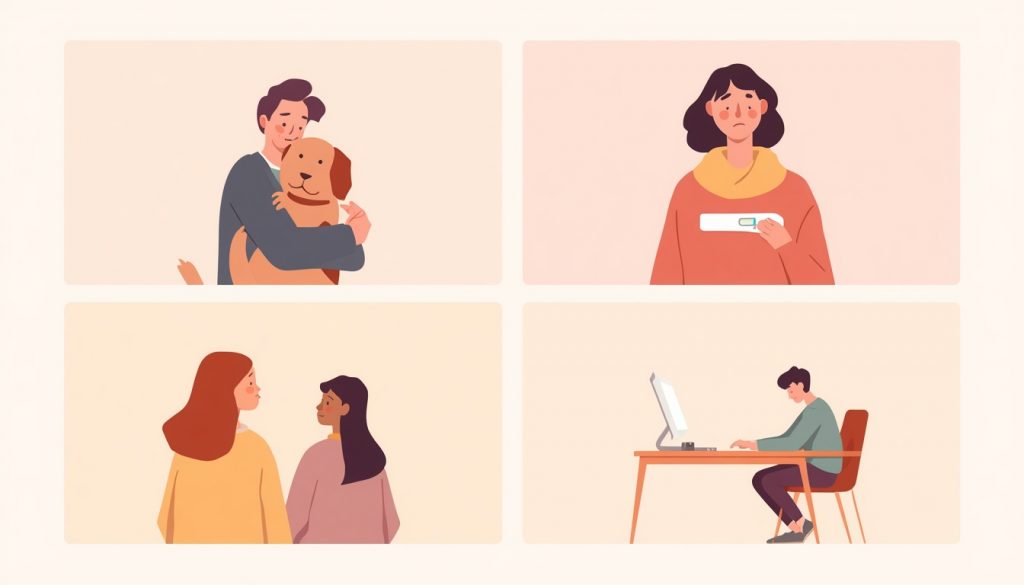
This happens in a few specific ways. Sometimes, the relationship isn’t recognized — like the grief of a close friend, a co-worker, or an ex-partner. Sometimes, the loss itself isn’t seen as significant enough — like losing a pet, a pregnancy, a job, or a friendship. And sometimes, the grieving person themselves isn’t acknowledged — like children who are told they’re “too young to understand,” or adults who are expected to “move on” quickly because the loss was “not that serious.”
What makes disenfranchised grief particularly painful is that it doesn’t just rob you of your loss — it robs you of the comfort that usually comes with loss. No one brings flowers. No one checks in. No one gives you space to fall apart. You grieve alone, often in secret, often convincing yourself that something is wrong with you for feeling this much.
Nothing is wrong with you.
The Many Faces of Disenfranchised Grief
One of the most important things to understand is that disenfranchised grief is far more common than most people realize. It can look very different from person to person.
Losing a Pet
Maya had her dog, Scout, for fourteen years. He slept at the foot of her bed, was there through two job losses, one divorce, and a cancer scare. When Scout passed, Maya took two days off work. A colleague told her it was “just a dog.” Her sister said, “At least you can get a new one.” Maya smiled and nodded and then went home and cried for three weeks in complete isolation, feeling embarrassed by the depth of her own pain.
The grief of losing a pet is one of the most common and most dismissed forms of disenfranchised grief. Research from the American Veterinary Medical Association confirms that the bond between humans and their animals is neurologically similar to human attachment bonds — meaning the loss can trigger genuine, significant grief.
Pregnancy Loss and Infertility
Sarah miscarried at eight weeks. She and her husband had already chosen a name. When she returned to work, one well-meaning coworker told her, “Well, at least it was early.” Another said, “You can always try again.” No one talked about it afterward. Sarah went back to her desk and felt like she was grieving a ghost — a life that existed fully in her heart but that the world hadn’t made room for yet.
Pregnancy loss, including miscarriage, stillbirth, and the grief of infertility, is one of the most deeply disenfranchised losses. Because the pregnancy often wasn’t widely known, neither is the loss. The American College of Obstetricians and Gynecologists acknowledges the profound emotional impact of pregnancy loss, yet social support often remains absent.
The End of a Friendship
James and his best friend of twelve years had a falling out. No dramatic ending — just a slow drifting that eventually became silence. James found himself grieving the friendship the way he imagined people grieve a death, but he couldn’t say that out loud. “It’s not like anyone died,” he kept telling himself. He couldn’t call in sick. He couldn’t post about it. He just… carried it.
If you have ever lost a close friendship and felt like you had no right to be devastated, you know exactly what James felt. You can read more about the emotional weight of this kind of loss in our piece on grieving a relationship, which explores how non-romantic losses can hit just as hard.
Grief After Estrangement
When Priya cut off contact with her mother after years of emotional abuse, she thought she would feel relief. She did, for a while. But grief came too — grief for the mother she never had, for the relationship that could never be repaired, for the childhood she deserved but didn’t receive. No one offered condolences. Her mother was still alive. But Priya was mourning something very real.
Estrangement grief is one of the loneliest kinds. The person you’re grieving is still alive, which makes the loss feel somehow invalid. But the absence of the relationship — the absence of what it should have been — is a genuine loss.
Grieving a Lost Career or Dream
David had worked his way up to a position he had dreamed of for twenty years. When the company restructured and his role was eliminated, he didn’t just lose a job. He lost his identity, his sense of purpose, and his daily community. Friends told him to “look on the bright side” and that “this could be a blessing in disguise.” David felt invisible in his grief. Our article on grieving a lost career explores exactly how this kind of loss can strip away more than just a paycheck.
Why Society Dismisses Certain Kinds of Grief
Understanding why disenfranchised grief happens doesn’t make the pain go away, but it does something important: it helps you stop blaming yourself.
We live in a culture that has very narrow ideas about what counts as “real” grief. For most people, grief means death. And even then, there are unspoken rules about how long you’re allowed to feel it and how visibly you’re allowed to show it.
When your loss doesn’t fit that narrow box, people often don’t know what to say. And when they don’t know what to say, they say the wrong thing. Or nothing at all.
There’s also a tendency in our culture to rank suffering — to decide that some pain is “worse” than others and to respond accordingly. This is not malicious, most of the time. People are doing their best. But the result is that certain grieving people are left without the support they desperately need.
Dr. Doka’s research suggests that disenfranchisement can actually intensify grief by adding layers of shame and isolation on top of the original loss. You are not just grieving what you lost. You are also grieving the support you never received.
For a deeper look at how grief unfolds and why it rarely follows a clean path, you might find our article on the 5 stages of grief grounding — it explores how grief actually feels from the inside and why the traditional stages don’t always apply.
The Emotional Toll of Disenfranchised Grief: What Happens When Loss Goes Unwitnessed
When grief isn’t witnessed, something specific happens emotionally. The grieving person begins to internalize the world’s silence as a message: What you’re feeling isn’t real. You don’t have the right to hurt this much.
This internalized message can lead to:
Shame and self-doubt. You feel embarrassed by the intensity of your own feelings. You minimize your pain to others — and eventually to yourself.
Isolation and loneliness. Because the loss isn’t acknowledged, you can’t talk about it. You grieve in private, which amplifies the loneliness that often comes with any loss.
Prolonged, unresolved grief. When grief is suppressed rather than expressed, it doesn’t disappear. Research from Harvard Health Publishing suggests that unresolved grief can contribute to depression, anxiety, physical health symptoms, and difficulty functioning.
Complicated grief responses. Some people begin to feel numb, disconnected, or angry without understanding why. Others develop a persistent low-grade sadness that they can’t quite name or explain.
Difficulty asking for help. If you’ve already been told — implicitly or explicitly — that your grief isn’t valid, asking for help with it feels even harder. You may tell yourself you don’t deserve support, which keeps you stuck.
The toll is real, and it’s worth taking seriously.
How to Cope With Disenfranchised Grief: 6 Ways to Heal When Others Don’t Acknowledge Your Loss
This is the most important section of this article. Because when the world won’t give you permission to grieve, you have to give it to yourself.
Name It Out Loud
There is something quietly powerful about saying, “I am grieving.” Not “I’m sad about it” or “I miss it a little.” Grief. Let yourself use the word. It matters.
Stop Comparing Your Pain
The moment you say, “Well, it’s not like someone died,” you are disenfranchising yourself. Pain is not a competition. Your loss doesn’t have to be the worst thing that has ever happened to anyone to deserve to be felt.
Find One Person Who Gets It
You don’t need the whole world to understand. You need one person — a friend, a therapist, a journal, a community — that will hold space for your grief without judgment. Even one witness can change everything.
Give Your Loss a Ritual
One of the reasons traditional grief feels more bearable is the structure of rituals: funerals, memorials, gatherings. When your loss doesn’t come with these, you can create your own. Write a letter to what you lost. Light a candle. Plant something. Mark the loss in some small, intentional way.
Allow Yourself to Grieve Without a Timeline
There is no correct amount of time to grieve a pet, a pregnancy, a friendship, or a dream. Ignore anyone who implies there is. Grief moves at its own pace, and your only job is to stay honest with yourself about where you are.
Consider Professional Support
Therapy can be a profound gift when you’re carrying grief that the world won’t acknowledge. A good therapist creates the kind of safe, non-judgmental space that allows you to fully grieve — without minimizing, without rushing, without comparing. Our guide on different types of therapy can help you figure out what kind of support might feel right for you.
For those navigating loss and aging — where multiple disenfranchised losses often stack on top of each other — the article on grief and aging explores this layered experience with honesty and care.
What to Say to Someone Who Is Grieving a Loss You Don’t Understand
If you’re reading this because someone you love is going through a loss that you’re not sure how to respond to, this section is for you.
You don’t have to understand the depth of their grief to honor it. Here is what helps:
Say something, even if it’s imperfect. “I’m so sorry. I don’t fully understand what you’re going through, but I want you to know I see you.” That is enough.
Don’t rank their pain. Resist any impulse to say “at least” or “you can always.” These phrases, however well-intentioned, minimize the loss.
Ask how they are feeling — and mean it. Not in passing. Sit down. Give them space to actually answer.
Follow their lead. Some people want to talk about the loss; others want distraction. Ask what they need. Then do that.
Check in later. Grief doesn’t end after a week. A text three weeks after the loss that says, “Still thinking of you. How are you really doing?” can mean everything.
You Are Allowed to Grieve This
Here is what I want you to take away from this article, above everything else:
Your grief is legitimate, even if no one else has said so. The loss you experienced was real, even if the world didn’t hand you a card for it. The pain you feel is not a sign of weakness or emotional excess. It is a sign of how deeply you loved, how much you cared, how human you are.
Disenfranchised grief is one of the loneliest experiences a person can go through. But the antidote to that loneliness starts with one small, brave act: telling yourself the truth. What you lost mattered. What you feel makes sense. And healing, as quiet and non-linear as it may be, is available to you.
You don’t need the world’s permission to grieve. You never did.
Frequently Asked Questions About Disenfranchised Grief
1. What is disenfranchised grief in simple terms? Disenfranchised grief is grief that isn’t openly acknowledged or supported by society. It happens when your loss — whether it’s a pet, a friendship, a pregnancy, or a dream — isn’t considered “significant enough” for others to recognize, leaving you to grieve in silence and isolation.
2. What are examples of disenfranchised grief? Common examples include grieving the loss of a pet, mourning a miscarriage or pregnancy loss, grieving a friendship that ended, mourning a job or career, grieving an estrangement from a living family member, and experiencing grief after the end of a romantic relationship that others didn’t take seriously.
3. Why does disenfranchised grief hurt so much? It hurts not only because of the original loss, but because the lack of social acknowledgment removes the support systems that normally help people heal. When your grief goes unwitnessed, it can intensify feelings of shame, isolation, and self-doubt.
4. Is disenfranchised grief a clinical term? Yes. The concept was formally developed by grief researcher and author Dr. Kenneth Doka in 1989. It is widely recognized in the field of psychology and grief counseling and has been the subject of extensive academic research.
5. How do I cope with disenfranchised grief? Key steps include naming your loss as grief, resisting the urge to minimize your pain, finding at least one safe person to talk to, creating personal rituals to mark your loss, and considering therapy with a grief-informed counselor.
6. Can you get therapy specifically for disenfranchised grief? Yes, and it is often very helpful. Many therapists specialize in grief and are skilled at helping people process losses that society has dismissed. A therapist provides the validation and non-judgmental space that disenfranchised grievers are often denied.
7. Is pet loss really considered disenfranchised grief? Absolutely. Pet loss is one of the most commonly disenfranchised forms of grief. Research consistently shows that the human-animal bond is neurologically significant, and the loss of a pet can trigger a grief response as intense as any other major loss.
8. How long does disenfranchised grief last? There is no fixed timeline for any kind of grief. Disenfranchised grief can sometimes last longer than acknowledged grief because it is often suppressed rather than processed. With support, validation, and healthy coping strategies, healing is absolutely possible.
9. Can disenfranchised grief lead to depression? Yes. Unprocessed and unwitnessed grief can contribute to depression, anxiety, and other mental health challenges. This is one of the reasons it is so important to seek support rather than suppress or minimize the experience.
10. How can I support someone going through disenfranchised grief? Simply acknowledge their loss, resist the urge to minimize it, and ask how they are really doing. You don’t need to fully understand their grief to honor it. Your presence and your willingness to listen can be profoundly healing.
11. What is the difference between disenfranchised grief and complicated grief? Disenfranchised grief refers to grief that society fails to acknowledge or support. Complicated grief (also called prolonged grief disorder) is a clinical condition where grief becomes stuck and doesn’t ease with time. The two can overlap — when grief is disenfranchised, it is more likely to become complicated because it lacks the social support that helps people heal.
12. Can children experience disenfranchised grief? Yes. Children are one of the most commonly overlooked grieving populations. Adults often tell children they are “too young to understand” or shield them from loss entirely, which denies them the chance to grieve. Children who experience disenfranchised grief may show it through behavioral changes, withdrawal, or physical complaints rather than visible sadness.
Before you go — I want to ask you something.
Has there been a loss in your life that the world simply didn’t make space for? A pet, a friendship, a pregnancy, a dream — something you carried quietly because you thought no one would understand? You don’t have to share the whole story. Just leave one sentence in the comments below. This space was built for exactly that. Your grief belongs here.
Disclaimer
This article is written for informational and supportive purposes only. It is not a substitute for professional mental health advice, diagnosis, or treatment. Mindbloom is a personal blog based on lived experience, not clinical expertise. If you are experiencing prolonged grief, depression, or a mental health crisis, please seek support from a qualified mental health professional. If you are in crisis, please contact a helpline near you at befrienders.org.