
Women’s Mental Health Unique Challenges: The Honest Guide You Actually Need
Women’s mental health comes with a particular kind of weight that’s hard to name and even harder to explain to someone who hasn’t felt it. It’s not just exhaustion from a long day — it’s the layered pressure of being everything to everyone: the caretaker, the professional, the partner, the daughter, the friend. If you’ve wondered why managing your mental health as a woman feels so much more complicated, you’re not imagining it. Women face a unique set of mental health challenges shaped by hormones, social roles, cultural expectations, and lived experiences that most mainstream conversations still don’t fully address.
This article is for every woman who has been told she’s “too emotional,” who has pushed through pain because she had to, or who can’t figure out why she still doesn’t feel okay even when life looks fine from the outside. What follows covers the real reasons — from PMDD and postpartum depression to invisible labor and trauma — so you can finally have language for what you’ve been feeling. You deserve more than a checklist. You deserve to be understood.
Table of Contents
Why Women’s Mental Health Is Different — and Why That Matters
Women are diagnosed with anxiety and depression at roughly twice the rate of men. But that number alone doesn’t tell the full story. It doesn’t explain why those rates are higher, or what’s actually driving them. And it certainly doesn’t capture all the ways women’s emotional lives are shaped by forces outside of their control.
The truth is, women’s mental health is influenced by a powerful combination of things: hormonal shifts across a lifetime, the invisible labor that society quietly assigns to women, the pressure to look a certain way, trauma that disproportionately affects women, and a healthcare system that has historically dismissed women’s pain as “hormonal” or “hysterical.”
Understanding this isn’t about playing victim. It’s about finally having language for something you’ve been feeling for years.
How Hormones Affect Women’s Mental Health at Every Life Stage
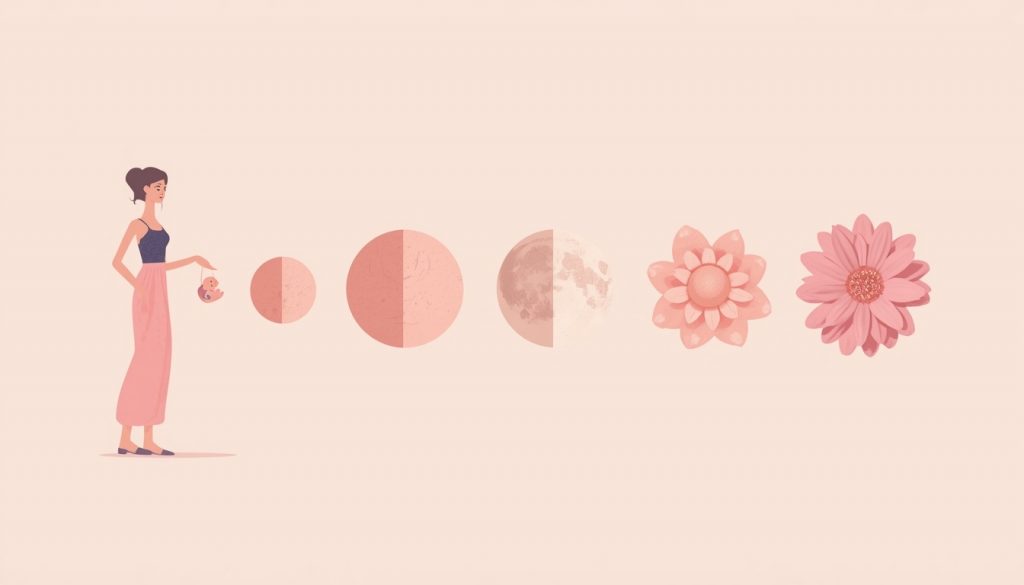
One of the most significant — and least talked about — aspects of women’s mental health is the role of hormones. From puberty to pregnancy to perimenopause, women’s bodies move through seismic hormonal shifts that can directly affect mood, anxiety levels, sleep, and emotional resilience.
Premenstrual Dysphoric Disorder (PMDD) and the Monthly Weight
Most people have heard of PMS, but far fewer know about PMDD — a severe form of premenstrual syndrome that causes intense depression, anxiety, and emotional dysregulation in the days before a period. For women with PMDD, this isn’t just “feeling a bit moody.” It can mean days of hopelessness, rage, or an inability to function that disappears almost immediately once their period begins.
Imagine this: Maya, a 29-year-old teacher, has learned to warn her closest friends when her “bad week” is coming. She cancels plans. She avoids decisions. She tries to ride it out every single month. For years she thought she was just “bad at being a woman.” Finding out PMDD was a real, recognized condition — and that she wasn’t alone — changed everything for her.
Postpartum Mental Health: More Than Just the “Baby Blues”
Pregnancy and childbirth are culturally framed as joyful, transformative experiences. And for many women, they are. But they can also be periods of profound mental health vulnerability. Postpartum depression affects approximately 1 in 7 new mothers, and postpartum anxiety is estimated to affect up to 1 in 5 — yet both remain vastly under-discussed and undertreated. According to the American Psychological Association, many women never seek help due to stigma and the fear of being labeled a “bad mother.”
The pressure to feel grateful, to bond instantly, to look like you’re thriving while you’re actually drowning in sleep deprivation and self-doubt is something millions of women navigate in silence. According to the American Psychological Association, many women don’t seek help because of stigma and the fear of being seen as a “bad mother.”
Perimenopause and Menopause: The Mental Health Conversation We Skip
When women reach their 40s and 50s, conversations around menopause typically focus on hot flashes and sleep disruption. Rarely do they focus on the significant psychological changes that hormonal decline can bring — including increased risk of depression, anxiety, brain fog, and a disorienting loss of identity.
If this transition has left you questioning who you are beneath the roles you’ve held, this piece on identity and self-discovery explores exactly that.
Diane, 51, put it this way: “I felt like I was disappearing inside my own life. I had done all the right things. And yet I felt more lost than I had in my twenties. Nobody told me this could happen.”
The National Institute of Mental Health acknowledges that women are at significantly higher risk for depression during perimenopause — yet this is still rarely part of standard healthcare conversations.
The Mental Load and Invisible Labor Quietly Draining Women’s Mental Health
Here’s something that doesn’t get talked about enough in conversations about women’s mental health: the sheer cognitive and emotional load that most women carry every single day.
It’s called “invisible labor” — and it includes things like:
- Remembering everyone’s schedules, doctor’s appointments, and social obligations
- Managing the emotional temperature of a household
- Anticipating the needs of partners, children, parents, and friends before they even ask
- Being the one who remembers to buy the birthday card, check on the grieving friend, and organize the family gathering
This labor is real. It is exhausting. And because it often goes unacknowledged — even by the women doing it — it can build into deep resentment, chronic stress, and burnout that is mistaken for personal weakness rather than systemic overload.
Research published by the American Sociological Association has consistently shown that women perform a disproportionate share of unpaid domestic and emotional labor, even in households where both partners work full-time. This isn’t a small thing. It is a direct contributor to the mental health gap between men and women.
If you’re someone who has ever felt guilty for being exhausted — even when you “haven’t done anything” — please hear this: you have been carrying more than most people can see. That is not nothing. That is everything.
If you’re curious about how burnout builds and what it actually does to you, the articles in Stress & Burnout on Mindbloom explore this in depth, including how to recognize it before you hit the wall.
Trauma and Women’s Mental Health: The Connection We Can’t Ignore
Women experience certain types of trauma at significantly higher rates than men. Sexual assault, domestic violence, childhood sexual abuse, and intimate partner violence disproportionately affect women — and the mental health consequences of these experiences are profound and long-lasting.
Trauma doesn’t always look like PTSD in the way movies portray it. It can look like difficulty trusting people. Difficulty setting boundaries. Hypervigilance in relationships. Chronic pain that has no obvious physical cause. A persistent feeling that you are fundamentally unsafe in the world.
When Healing Feels Like Starting Over
Priya, 35, spent years describing herself as “just anxious” before a therapist helped her connect her anxiety to experiences of sexual harassment she had minimized, told herself weren’t “that bad,” and tried to move on from without ever fully processing.
“I kept thinking, why can’t I just be okay? Other people go through worse things,” she said. “But it wasn’t about comparison. It was about what happened to me, and what I never let myself feel about it.”
The National Alliance on Mental Illness (NAMI) notes that women with histories of trauma are at significantly elevated risk for depression, anxiety disorders, and substance use — and that trauma-informed care is essential, not optional.
If you’re in the process of working through something painful, the Emotions & Healing section of Mindbloom is a space that honors exactly that journey, without rushing you toward resolution.
How Cultural Expectations and Social Pressure Affect Women’s Mental Health
Beyond biology and trauma, there is the social dimension of women’s mental health — the quiet, relentless pressure that comes from living in a world that has very specific ideas about what women should look like, how they should behave, and how much space they are allowed to take up.
The Perfectionism Trap
From a young age, many girls are socialized to be “good” — to be helpful, quiet, agreeable, and high-achieving without appearing to try too hard. This training ground for perfectionism follows women into adulthood, where the pressure multiplies: be a good employee, be a good mother, be a good partner, be healthy, be fit, be put-together, be kind even when you’re breaking.
Perfectionism is not a personality trait. It is a coping mechanism. And it is one of the most common drivers of anxiety and burnout that women experience.
Body Image and the Mental Health Cost
The relationship between how women feel about their bodies and how they feel about themselves is something the mental health conversation still doesn’t fully honor. Women are bombarded with messages about how they should look — messages that have only intensified with social media — and the mental health toll is real and measurable.
Body dissatisfaction is consistently linked to higher rates of depression, anxiety, and disordered eating in women. The pressure is not imagined. It is engineered — and understanding that can begin to loosen its grip.
Feeling Like You Have to Earn Rest
One of the quietest wounds in women’s mental health is the deep-seated belief that rest must be earned. That you can only stop and breathe when everything is done — and since everything is never done, there is always one more thing to push through.
This belief keeps many women locked in cycles of overextension, self-abandonment, and eventual collapse. If this resonates with you, you are not broken. You have been shaped by systems that benefit from your constant availability.
Women, Identity, and the Question of “Who Am I Now?”
Women often face identity-related mental health challenges at specific life transitions: leaving a career to raise children (or returning to work after), surviving a difficult relationship, entering menopause, becoming a caregiver for aging parents. These transitions ask a question many women find terrifying: Who am I when I’m not defined by what I do for others?
This kind of identity disruption is real, significant, and deserving of genuine support — not dismissal. It connects deeply to the broader themes of self-discovery covered in Mindbloom’s Identity & Social Wellness space.
Women who have built their sense of self around relationships, roles, or achievements often find that when those things shift — as they inevitably do — there is a hollowness underneath that can feel terrifying. That hollowness isn’t emptiness. It is an invitation to meet yourself in a new way.
Understanding how early experiences shape identity and self-perception can also shed light on patterns that show up in adulthood — the Mental Health in Childhood and Early Development article on Mindbloom explores this thread with real depth.
The Relationship Between Relationships and Women’s Mental Health
The quality of a woman’s close relationships — romantic, familial, and social — has an outsized effect on her mental health. This isn’t sentimentality. Research consistently shows that social connection is one of the strongest protective factors against depression and anxiety. But for many women, relationships are also a primary source of emotional strain.
Women in relationships where their emotional needs are minimized, where conflict is avoided at all costs, or where they are the primary emotional caregiver often describe a creeping loneliness that coexists with being surrounded by people. This loneliness — the feeling of not being truly known — is one of the least-discussed contributors to depression in women.
Friendships matter too. Female friendships can be enormously healing, but they can also become another arena for invisible labor: being the friend who checks in, listens, organizes, and holds space — sometimes without ever receiving the same in return.
If your relationships are part of what’s wearing you down, that is worth naming — and worth addressing with a professional who can help you understand your patterns without judgment.
Practical Steps: How Women Can Start Prioritizing Their Mental Health
Understanding all of this is the first step. But what do you actually do with it? Here are some real, actionable things that can make a meaningful difference.
1. Name What You’re Carrying
Before you can put anything down, you have to see it. Take ten minutes this week to write down everything you are managing — not just tasks, but emotional responsibilities, worries, and roles. Seeing it on paper is often the first time women realize how much they have been carrying alone.
2. Track Your Hormonal Patterns
If you notice that your mood, anxiety, or energy changes significantly at certain points in your cycle, start tracking it. A cycle-tracking app or a simple daily journal can help you identify patterns over time. Even two weeks of notes — rating your mood, energy, and anxiety each day — can reveal connections you’d never notice otherwise. Understanding your biology is not weakness — it is intelligence.
3. Say the Hard Thing Out Loud to Someone Safe
Isolation makes everything heavier. Find one person — a friend, a therapist, a support group — and tell them something true about how you’re actually doing. Not the edited version. The real one.
4. Renegotiate the Labor
This one takes courage. Have an honest conversation with your partner, family, or household about the invisible labor you’ve been carrying. Use language like “I’ve realized I’ve been managing X without asking for help, and I need that to change.”
5. Seek Trauma-Informed Support
If you suspect that past experiences are affecting how you feel today, look specifically for a therapist who is trained in trauma-informed care. This approach understands that your reactions make sense given what you’ve been through — and it won’t ask you to just “think differently” without addressing the deeper roots.
6. Give Yourself Permission to Not Be Fine
This might be the most radical thing on this list. You do not have to perform wellness. You do not have to be okay. Giving yourself permission to not be fine — without immediately trying to fix it — is the beginning of honest healing.
The Therapy & Professional Help section on Mindbloom has real guidance on finding the right support, what different types of therapy actually feel like, and how to take that first step without fear.
You Were Never “Too Much” — You Were Under-Supported
Here is what the research, the stories, and the lived experience all point to: women are not more fragile than men. They are not more emotional in a problematic way. They are not struggling because something is fundamentally wrong with them.
Women are navigating a unique convergence of biological complexity, social expectation, cultural pressure, and historical dismissal — often without adequate support, often in silence, often while simultaneously supporting everyone around them.
The women’s mental health conversation is slowly changing. More women are speaking openly. More researchers are taking women’s experiences seriously. More spaces — like this one — are being built to hold these truths without judgment.
But the most important shift is the one that happens inside you: the moment you decide that your wellbeing matters as much as everyone else’s. Not after everyone else is okay. Not when you’ve earned it. Now.
You are not too much. You have simply been given too little.
Frequently Asked Questions About Women’s Mental Health
1. Why do women experience higher rates of anxiety and depression than men?
Women experience higher rates due to a combination of factors including hormonal fluctuations across the lifespan, higher rates of trauma exposure (especially sexual violence), the burden of invisible labor, and societal pressures around appearance and performance. Biology and environment work together to create this disparity.
2. What is PMDD and how is it different from PMS?
PMDD (Premenstrual Dysphoric Disorder) is a severe condition involving intense emotional symptoms — including depression, anxiety, and mood swings — in the days before menstruation. Unlike typical PMS, PMDD significantly disrupts daily functioning and is recognized as a serious mental health condition requiring treatment.
3. How do hormones affect women’s mental health?
Hormones like estrogen and progesterone directly influence serotonin and other brain chemicals tied to mood. Hormonal shifts during puberty, the menstrual cycle, pregnancy, postpartum, and menopause can all significantly affect emotional wellbeing, sleep, and anxiety levels.
4. Is postpartum depression common?
Yes. Postpartum depression affects approximately 1 in 7 women after childbirth. Postpartum anxiety is also very common. Both are treatable, and seeking help is a sign of strength, not failure. It is important to speak to a doctor or mental health professional if symptoms arise.
5. What does invisible labor have to do with women’s mental health?
Invisible labor refers to the unpaid cognitive and emotional work — planning, caregiving, anticipating needs — that women disproportionately perform. Chronically carrying this unseen load without recognition or support is a major contributor to stress, burnout, and depression in women.
6. How does trauma affect women’s mental health differently?
Women experience sexual violence and intimate partner violence at higher rates, and the mental health effects can include depression, PTSD, anxiety, difficulty trusting others, and chronic physical symptoms. Trauma-informed care is especially important for women navigating these experiences.
7. What is women’s mental health during menopause like?
Perimenopause and menopause can bring increased risk of depression, anxiety, brain fog, sleep disturbances, and identity disruption. These are legitimate mental health concerns linked to hormonal change — not just “normal aging” to push through without support.
8. How can women find the right therapist for their mental health needs?
Look for therapists who specialize in women’s issues, trauma-informed care, or specific concerns like perinatal mental health or identity transitions. Organizations like Psychology Today’s therapist finder allow you to filter by specialty, insurance, and location.
9. What is the connection between body image and women’s mental health?
Research consistently links body dissatisfaction to higher rates of depression, anxiety, and eating disorders in women. Societal and media pressures contribute significantly. Addressing body image is an important part of comprehensive mental health care for many women.
10. When should a woman seek professional mental health support?
If emotional struggles are affecting daily functioning, relationships, sleep, or sense of self — for more than a few weeks — it is worth speaking with a mental health professional. You do not need to be “sick enough” to deserve support. If something feels wrong, that is reason enough.
A Closing Thought: Your Healing Is Not Selfish
Every woman reading this deserves a life that doesn’t require her to earn the right to breathe. The journey toward better mental health is not always linear, not always tidy, and not always understood by the people around you. But it is always worth it.
You showing up for yourself — choosing to understand, to feel, to ask for help, to rest — is not a luxury. It is a revolution. One quiet, courageous act at a time.
The world is a better place when women are well. And that starts with you deciding that your inner life matters.
Which part of this resonated most with you? Whether it’s the hormonal piece, the invisible labor, or something else entirely — I’d love to hear what finally felt like it named something real. Drop it in the comments. This is a judgment-free space.
Disclaimer
This article is written for informational and supportive purposes only. It is not a substitute for professional mental health advice, diagnosis, or treatment. If you are experiencing a mental health crisis or have concerns about your wellbeing, please reach out to a qualified healthcare provider or call a mental health helpline. Mindbloom is a personal blog, not a clinical resource.