
How to Start Difficult Conversations Without Ruining the Relationship

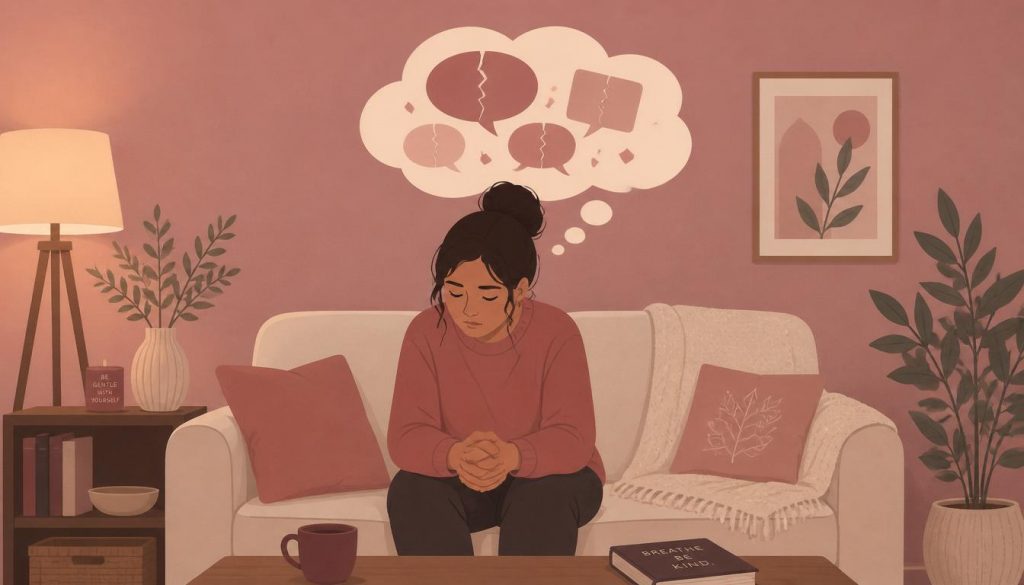
There is a conversation sitting in your chest right now. You can feel it. Maybe it has been there for days, maybe for months. You keep rehearsing it in your head, then talking yourself out of it. It’s not the right time. It might make things worse. What if they get upset? What if I cry? If you’re searching for how to start difficult conversations — the real, honest, relationship-altering kind — you’re already doing something brave.
Learning how to start difficult conversations is one of the most quietly powerful things you can do for your relationships and your own mental peace. Because avoiding them does not make them disappear. It just lets them grow heavier, sitting between you and the person you love, quietly doing damage you cannot always see.
This guide is for you if you are the person who swallows hard things to keep the peace. The one who rehearses speeches in the shower but never says them out loud. The one who is exhausted from carrying something that deserves to be spoken.
You are not bad at communication. You are just scared. And that is completely, entirely human.
Table of Contents
Why Difficult Conversations Feel So Impossible
Before we talk about how to start them, let’s talk about why we don’t.
It is not weakness. It is not laziness. Most of the time, avoiding a hard conversation comes from something very real: a deep fear that honesty will cost you the relationship.
And that fear is not irrational. Many of us grew up in homes where expressing a hard truth led to punishment, withdrawal, or explosive reactions. So we learned, early, that keeping quiet was safer than being honest. We learned to manage other people’s emotions at the expense of our own.
That survival skill may have protected you once. But now it is keeping you from the intimacy, resolution, and peace you actually deserve.
The Real Cost of Staying Silent
When you avoid a difficult conversation long enough, something quietly shifts. You start building resentment without realizing it. Small frustrations pile up. You stop bringing your full self to the relationship because you have edited so much of it away.
According to research from the American Psychological Association, unexpressed frustration and emotional suppression are strongly linked to both relationship dissatisfaction and personal stress. Silence has a price.
And here is the thing most people never say out loud: the version of the relationship you are protecting by staying silent? It is not the real one. It is a carefully managed performance of a relationship. The real one only gets to exist when both people are honest.
What Counts as a Difficult Conversation? (More Than You Think)
Let’s be clear about what we are actually talking about, because difficult conversations come in many shapes.
- Telling a partner that something they do hurts you
- Asking for more emotional support and feeling needy for needing it
- Addressing a pattern of behavior that has been bothering you for months
- Telling a friend that their words crossed a line
- Bringing up a need your partner consistently overlooks
- Setting a boundary you have never set before
- Expressing a feeling you have been ashamed of having
They all have one thing in common: they feel risky. They all carry the quiet fear that saying the true thing might break something.
But the conversations that scare us the most are usually the ones our relationships need the most.
Real-Life Scenarios: Do Any of These Sound Familiar?
Scenario 1: The Unspoken Resentment
Maya has been with her partner for three years. He is a good person, she knows that. But every time they visit his family, she leaves feeling invisible and he never seems to notice. She has hinted at it. She has gone quiet on the drive home. But she has never just said it plainly: “I feel like I don’t matter when we are with your family, and I need you to stand up for me.” Instead, she has started dreading those visits. The resentment is growing, and she does not know how much longer she can hold it.
Scenario 2: The Friendship That Crossed a Line
Daniel’s closest friend made a joke at his expense in front of a group of people. It was the kind of joke that lands like a punch disguised as a laugh. Everyone moved on. But Daniel has not. He has been pulling away, texting less, finding reasons not to hang out. His friend does not know why. Daniel has not said a word, because he does not want to seem sensitive. But the friendship is quietly fracturing because of a conversation that has not happened yet.
Scenario 3: The Relationship Needs Talk
Priya and her boyfriend have been together for two years. She wants to talk about the future. He deflects every time she brings it up. So she has stopped bringing it up. But the silence around that topic is starting to feel like an answer she does not want to accept. She needs to say it out loud, clearly, even if it is scary: “I need to know where we are heading.”
Scenario 4: The Burnout Boundary
Carlos has been picking up extra responsibilities at home while his partner recovers from a stressful period at work. That was months ago. Things have not changed. He is exhausted, but every time he thinks about saying something, he tells himself his partner is still struggling. He has started feeling invisible. And that invisibility is slowly turning into something angrier. A conversation about a more balanced split could save both of them.
Scenario 5: The Long-Overdue Apology
Some difficult conversations run in the other direction: you are the one who has done something hurtful, and you owe someone an honest accounting of it. Not a defensive non-apology. A real one. Those conversations are perhaps the hardest of all, because they require you to sit with your own discomfort rather than someone else’s.

How to Start Difficult Conversations: A Step-by-Step Guide
Let’s get practical. Here is what actually helps.
Step 1: Get Clear on What You Actually Want to Say
Most difficult conversations fail before they start because the person initiating them is not actually clear on what they need the other person to hear.
Before you say a single word, sit with these questions:
- What is the core feeling I am experiencing?
- What specific behavior or situation triggered it?
- What do I actually need from this conversation — understanding, change, an apology, or just to be heard?
- What outcome would feel like resolution to me?
Write it down if you need to. Not a script you will read from, but a clarity exercise for yourself. When you know what you actually need, you are far less likely to get lost in the emotion of the moment.
Step 2: Choose the Right Time and Place
A difficult conversation started in the heat of a fight, or squeezed into the three minutes before someone leaves for work, is almost never going to go the way you need it to.
Timing matters enormously. Look for a moment when:
- Both of you are calm and not in the middle of something else
- There is enough time for the conversation to breathe, not be rushed
- You are in a private, comfortable setting where neither of you feels on display
- Neither of you is already depleted, hungry, or stressed about something unrelated
A simple approach: “Hey, there is something I have been wanting to talk to you about. Can we find some time this weekend when things are quiet?” That simple act of setting an intention gives the other person time to prepare emotionally too.
Step 3: When Starting a Difficult Conversation, Lead with Feelings — Not Accusations
This is one of the most researched tools in communication science, and for good reason: it works.
Instead of starting with an accusation (“You always dismiss me”), start with your own experience (“I have been feeling dismissed lately, and I want to share that with you”).
The difference sounds small. But the first version puts the other person immediately on the defensive. The second version invites them into your world. According to The Gottman Institute, one of the strongest predictors of relationship health is whether partners can express their needs without blame or contempt.
A simple structure to remember: “When [situation], I feel [emotion], and what I need is [need].”
- “When our plans change at the last minute without warning, I feel anxious and unimportant. What I need is a little more notice.”
- “When I share something hard and you try to fix it right away, I feel like you are not hearing me. What I need is for you to just listen first.”
This is also where understanding love languages can be incredibly helpful. Sometimes what feels dismissive to one person is genuinely not intended that way — knowing how each of you gives and receives love can add important context to these kinds of conversations.
Step 4: Expect Discomfort and Let It Be There
Here is something nobody tells you: a productive difficult conversation is not a comfortable one. Discomfort is not a sign that things are going wrong. It is a sign that something real is happening.
You might cry. They might get quiet. There might be a long, uncomfortable pause. That is okay. Sit in it. You do not have to rescue the conversation from every awkward silence.
What you do need to manage is escalation. If things start to heat up and feel like they are heading toward a fight rather than a conversation, it is completely appropriate to say: “I want to keep talking about this, but I need to take a few minutes first.” That is not running away. That is keeping the door open.
According to Psychology Today, regulating your own nervous system during high-stakes conversations is one of the most important skills in healthy communication. Deep breathing, slowing your pace, and reminding yourself of the goal can all help keep you grounded.
Step 5: After You Start the Conversation, Listen — Really Listen
One of the most common traps in difficult conversations is spending the other person’s speaking time planning your response instead of actually listening to theirs.
Real listening means letting their words land. It means asking clarifying questions instead of immediately defending. It means sitting with the possibility that their perspective has something in it you had not considered.
“Can you help me understand what you mean by that?” “That is not how I intended it. Can you tell me more about how it felt for you?” “I hear you saying [this]. Did I get that right?”
This kind of listening does not mean you agree with everything they say. It means you are treating them as someone whose experience matters. That distinction is what separates a conversation from a confrontation.
Step 6: Focus on the Relationship, Not Winning
The goal of a difficult conversation is never to win. It is to get to a place of mutual understanding, or at least mutual clarity. Sometimes resolution looks like finding a compromise. Sometimes it looks like agreeing that you see things differently but committing to handle it with more care. Sometimes it looks like a real apology.
None of those things happen when one or both people are trying to be right instead of trying to be heard.
Remind yourself before you start: I am doing this because I care about this relationship. The goal is closeness, not victory.
What to Do When the Conversation Does Not Go Well
Not every difficult conversation resolves cleanly. Sometimes the other person gets defensive. Sometimes they shut down. Sometimes things escalate in ways you did not expect. That is painful, but it does not mean the conversation was a failure.
A few things that help in those moments:
Give it time. Sometimes people need to sit with what you said before they can respond to it honestly. A conversation that feels like a wall one day can open up significantly after the other person has processed their reaction.
Return to it. If things escalated, it is worth revisiting once both of you are calm. “I don’t think that went the way either of us wanted. Can we try again?”
Know what you can and cannot control. You cannot control how someone receives your truth. You can only control how honestly and kindly you deliver it. Sometimes, the most empowering realization is that you did your part.
Consider the health of the relationship as a whole. If every attempt at an honest conversation is met with defensiveness, stonewalling, or punishment, that pattern itself is something worth looking at. Understanding the foundations of a healthy romantic relationship can help you see whether the dynamic between you is actually working.
The Connection Between Difficult Conversations and Emotional Healing
There is something important that is rarely discussed: the conversations you avoid are not neutral. They accumulate inside you. Each unspoken thing becomes a small weight. Over time, those weights become something heavier — grief, resentment, loneliness, or a quiet numbness toward the relationship itself.
Learning to speak honestly is not just a communication skill. It is an act of self-care. Every time you say the true thing with courage and kindness, you are telling yourself that your feelings matter. That your needs are worth voicing. That you are worth the discomfort of honesty.
That is deeply connected to healing. Many of us carry old wounds that taught us our voice was not safe. Reclaiming that voice, one difficult conversation at a time, is a genuinely healing act.
If you have noticed that avoiding conflict is a pattern for you across multiple relationships, it might be worth exploring more about emotional healing and where that pattern might come from. Often, the difficulty is not really about the current conversation at all. It is about old ones that never happened.
When to Seek Help
Sometimes a difficult conversation is simply beyond what two people can navigate alone — and that is not a failure. That is just honesty about human limitation.
Consider reaching out to a couples therapist or individual therapist if:
- The same conversation keeps ending in the same unresolved way
- You feel consistently unsafe or shut down when you try to express yourself
- The avoidance has been going on long enough that resentment has built significantly
- The relationship is at a crossroads and the stakes feel high
The American Association for Marriage and Family Therapy is a good place to start if you are looking for a qualified couples therapist. For individual support around communication anxiety or relationship patterns, the National Alliance on Mental Illness offers resources to help you find the right professional support.
And if therapy feels like a big step right now, even beginning to understand the landscape of therapy and professional help can help you move toward it without pressure.
Difficult Conversation Starters: What to Say (and What to Avoid)
Say These
- “I have been feeling… and I wanted to share that with you.”
- “This is hard for me to say, but I care about us too much not to.”
- “Help me understand your perspective.”
- “I don’t need you to fix this. I just need you to hear me.”
- “I want us to get through this together.”
Avoid These
- “You always…” or “You never…” (absolute language almost always escalates)
- “You are being too sensitive.” (it shuts people down immediately)
- “Forget it, it doesn’t matter.” (when it does)
- “I shouldn’t have to tell you this.” (it shifts blame before the conversation has started)
- Starting the conversation mid-conflict when emotions are already high
You Are Allowed to Ask for What You Need
One of the quietest but most damaging beliefs many people carry is that needing something from someone they love is a burden. That having feelings that need to be heard is too much. That asking for honesty or change or closeness is somehow selfish.
It is not.
You are allowed to ask for what you need. You are allowed to say the true thing even when your voice shakes. You are allowed to have conversations that are uncomfortable, because something in you knows they matter.
The relationships worth keeping are the ones that can hold the honest version of you. Not just the edited, easier, quieter version. All of you.
Learning how to start difficult conversations is ultimately not just about communication technique. It is about believing, on a bone-deep level, that you deserve to be heard. That your inner world is worth speaking out loud. That love and truth can coexist.
They can. They must. And every conversation you find the courage to have is proof of that.

Frequently Asked Questions
1. How do I start a difficult conversation without it turning into a fight? Start by choosing a calm moment, not the height of a conflict. Use language that centers your feelings rather than the other person’s actions. Say “I feel…” instead of “You did…” This reduces defensiveness and opens the door to real dialogue.
2. What if I start crying during the conversation? Crying during a hard conversation is not weakness. It is your body honoring the weight of what you are saying. You can say, “Give me a second,” breathe, and continue. Or acknowledge it: “This means a lot to me, which is why it’s emotional.” Most people respond with more empathy when they see genuine feeling.
3. Is it better to have difficult conversations in person or over text? In person is almost always better for anything emotionally significant. Text removes tone, facial expression, and the ability to respond dynamically. It is very easy for words to be misread. If distance is an issue, a video call is a strong second option.
4. What if the other person refuses to engage? If someone consistently shuts down or refuses to engage with honest conversation, that itself is important information about the relationship dynamic. You can try again at a different time, or express that their willingness to talk matters to you. But you cannot force someone to show up in the conversation.
5. How do I bring up something that happened a long time ago? Start by acknowledging the time gap: “I know this happened a while ago, but it has stayed with me and I need to talk about it.” Do not frame it as an attack. Frame it as something you have been carrying that you need to put down together.
6. What if I am terrified of the other person’s reaction? Fear of a reaction is worth examining. Is it based on past experience with that person? That is valid data about the safety of the relationship. If the fear is more about general conflict anxiety, know that sitting with that discomfort and talking anyway is exactly how it gradually gets smaller.
7. How do I know if a conversation is worth having? Ask yourself: if nothing changes, how will I feel about this in six months? In a year? If the answer is “worse,” the conversation is worth having. Avoiding it only delays the discomfort while letting it compound.
8. Can I write it out first and read it to them? Yes, absolutely. Some people communicate better in writing, and that is valid. You might write it out to get clear on your thoughts, then decide whether to read it, paraphrase it, or use it as private preparation before speaking. It is not a weakness to prepare.
9. How do difficult conversations affect mental health? Ongoing avoidance of important conversations is linked to chronic stress, anxiety, emotional suppression, and relationship dissatisfaction. Having hard conversations, while temporarily stressful, often produces significant relief and a sense of empowerment that benefits your mental health long term.
10. What if I say it wrong? You will not say it perfectly. Nobody does. What matters is that you say it honestly, with the intention of connection rather than harm. If something comes out wrong, you are allowed to course-correct: “That did not come out the way I meant it. Let me try again.” Imperfect honesty still counts. It still matters. It is still enough.
A Closing Word for the Brave Soul Reading This
If you made it all the way here, there is already something in you that knows: this conversation needs to happen.
You are not looking for a reason to stay silent. You are looking for the courage and the words to say what has been waiting inside you. That courage is already there. You are already brave enough. You always were.
So go have that conversation. Not because it will be easy. Because you and the relationship you care about deserve more than the careful, edited silence you have been living in.
Say the true thing. Even if your voice shakes. Especially then.
Have you been carrying a conversation you haven’t been able to start yet? I’d love to hear from you — drop a comment below with where you’re at, even if it’s just one word. And if this helped you, consider sharing it with someone who might need it too. You might be giving them exactly the permission they needed. You don’t have to say anything more than that. Just that one word. Let’s start there.
Disclaimer
This article is written for general informational and emotional support purposes only. It is not a substitute for professional mental health advice, diagnosis, or treatment. If you are experiencing serious relationship difficulties, emotional distress, or mental health concerns, please seek support from a qualified therapist or mental health professional. In a crisis, please contact a helpline in your country. You can find one at befrienders.org.