
Toxic Work Environment: How to Recognize It, Protect Yourself, and Actually Heal

A toxic work environment doesn’t always announce itself with a dramatic incident. Sometimes it sneaks in slowly — in the Sunday dread that won’t lift, the flinch when your phone buzzes, or the version of yourself that walks through that office door tighter and smaller than the one who exists everywhere else.
If this sounds familiar, you are not imagining it. And you are not alone.
This article won’t hand you a corporate checklist or a recycled pep talk. It will sit beside you, name what you are going through, and give you something real: clarity on what is happening, tools to protect yourself while you are still in it, and an honest path toward healing.
Table of Contents
What Is a Toxic Work Environment, Really?
A toxic work environment is any workplace where the culture, behavior, or leadership consistently damages the emotional, psychological, or physical wellbeing of its employees. It is chronic rather than occasional, systemic rather than isolated — and over time, it leaves a mark that follows people far beyond the office doors.
The American Psychological Association identifies workplace stress as a primary driver of burnout, anxiety, and depression in working adults. A Surgeon General’s Advisory on workplace mental health has also named harmful work environments a significant — and still underreported — public health concern. But no report fully captures the quieter damage: the way a toxic job makes you question your own perception, shrink your ambitions, and start to wonder if you are simply too sensitive to function.
You are not. That is what sustained emotional harm does to a person.
Signs You Are in a Toxic Work Environment
Not every uncomfortable workplace is toxic. But there are patterns that, when they show up consistently, tell you something important. Here are the ones most worth paying attention to.
Chronic Disrespect and Humiliation
This might look like a manager who cuts you off mid-sentence in meetings, a colleague who takes credit for your work without blinking, or a culture where people are ridiculed rather than mentored when they make mistakes.
Maya, a marketing coordinator in her late twenties who spent three years in a high-pressure agency environment, described it this way:
“My manager used to email my mistakes to the entire team. Never privately. Always publicly. I started triple-checking everything until I was too afraid to try anything creative at all.”
That is not management. That is control through shame — and it is one of the most common forms toxic leadership takes.
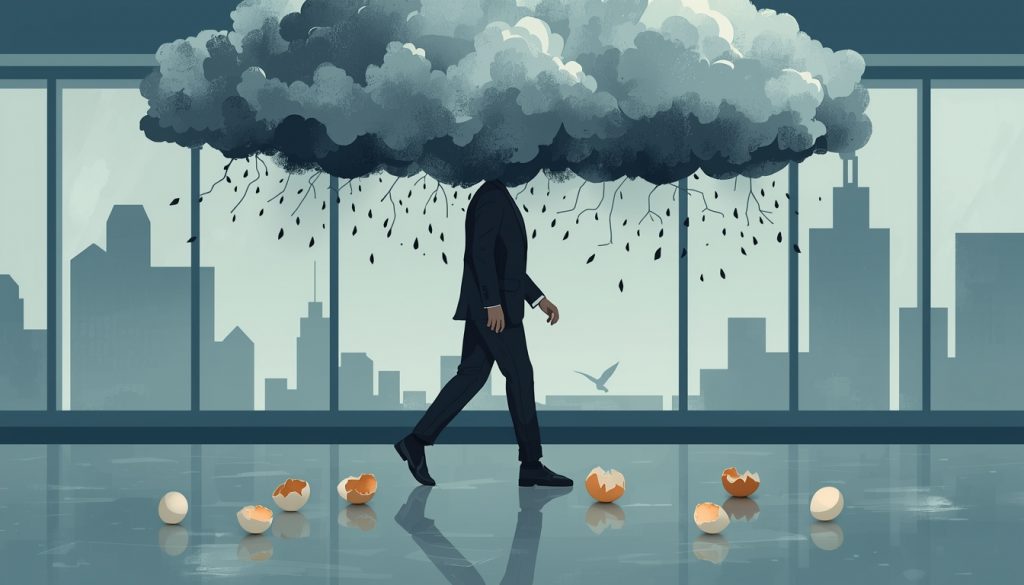
Constant Fear and Walking on Eggshells
When you spend your day monitoring someone else’s mood to decide how safe it is to speak, ask a question, or share an idea, you are not working. You are surviving. This kind of hypervigilance is exhausting in a way that is hard to explain unless you have lived it.
Gossip, Cliques, and Exclusion
A toxic culture often thrives on division. There is always a group that is “in” and someone who is out. Information is weaponized. Alliances shift. Trust is hard to find. And if you are on the outside of those social dynamics, every day can feel isolating and unstable.
Unrealistic Expectations Without Support
Working hard is one thing. Being expected to produce twice the work with half the resources, never acknowledged, never thanked, and threatened with consequences if you push back — that is something else. When impossible standards are treated as baseline, burnout is not a risk. It is a certainty.
Your Health Is Declining
This one is the signal most people ignore the longest. Headaches that will not go away. Trouble sleeping. Skin breaking out. Stomach issues that appeared around the same time you started this job. Your body is trying to tell you something. The Mayo Clinic has documented clearly how chronic workplace stress manifests physically — and how long-term exposure to that stress leads to serious health consequences.
If your job is making you physically sick, that is not a coincidence.
Gaslighting and Emotional Manipulation
This is one of the hardest signs to name, because it is designed to make you doubt your own perception. You bring a concern to HR and are told it never happened. You raise a problem and are called “dramatic.” You are blamed for situations that were clearly not your fault. Over time, this erodes your ability to trust your own judgment — and that damage runs deep.
The Different Types of Toxic Work Environments
Not all toxic workplaces look the same. Knowing which type you are dealing with matters — because it changes what you can actually do about it.
The Chaotic Workplace — Leadership is inconsistent, expectations shift constantly, and nobody really knows what the rules are. The anxiety here comes from unpredictability.
The Cutthroat Workplace — Competition is encouraged at the expense of collaboration. Credit-stealing, backstabbing, and gossip are not just tolerated — they are rewarded.
The Micromanaged Workplace — You are trusted with a role but not with the autonomy to do it. Every decision is second-guessed, every email is monitored, and the message underneath it all is: we do not believe in you.
The Discriminatory or Exclusionary Workplace — Certain people are systematically passed over, talked over, or pushed out based on who they are rather than what they contribute.
The Burnout-as-Badge Workplace — Overwork is the culture. “Busy” is treated as a personality trait and a proof of worth. Rest is weakness. Sustainability is for people who do not really care.
Many toxic environments combine more than one of these. And in all of them, the common thread is the same: the people inside them pay a price they should never have been asked to pay.
The Real Impact of a Toxic Work Environment on Your Mental Health
Sustained exposure to a toxic work environment does not just make your days harder — it rewires how you see yourself.
Research published in the Journal of Occupational Health Psychology links prolonged toxic workplace experiences to significantly elevated rates of anxiety, depression, and post-traumatic stress symptoms. People who leave toxic jobs often describe recovery that feels less like bouncing back and more like healing from emotional harm — because in many ways, it is exactly that.
James, a former software engineer, put it this way: “I quit my job eight months ago and I am still working through the way it made me feel about myself. I used to be confident. I walked into that office a different person and walked out someone I did not recognize.”
The effects spill into everything: your relationships, your sleep, your sense of self-worth, your willingness to trust new people. Understanding that the damage is real — and that it is not your fault — is the first step toward healing.
If you are finding it harder to recover than you expected, you might want to read about the difference between stress and burnout so you can better name what you are going through and get the right kind of support.
How to Protect Yourself While You Are Still in It
Leaving is not always immediately possible. Mortgages, dependents, healthcare, visa sponsorships, financial obligations — the reasons people stay in painful jobs are real, and they are valid. So before we talk about exit strategies, let us talk about what you can do right now to protect yourself while you are still showing up every day.
1. Name What Is Happening
One of the most powerful things you can do is simply stop minimizing what you are experiencing. Stop calling it “difficult.” Stop saying “it is probably just me.” Give it its real name. You are in a toxic work environment. That naming matters. It shifts you from self-blame to clarity.
2. Keep a Private Record
Document incidents. Dates, times, what was said, who was present. This serves two purposes: it gives you evidence if you ever need it formally, and it keeps you from gaslighting yourself into forgetting what actually happened. A simple notes app on your personal phone works fine. Keep it off work devices.
3. Set Firm Internal Boundaries
You may not be able to control your environment, but you can control how much of it you absorb. This means not checking work emails after a certain hour. Not engaging with office drama. Having a mental “clock-out” ritual that signals to your nervous system that work is done for today.
For practical guidance on how to do this without guilt, this piece on setting boundaries at work walks through it in a way that is honest and human.
4. Build a Support System Outside of Work
Isolation makes everything worse. Make sure you have people in your life who know what you are going through — even if just one or two. Toxic environments often isolate people by design. Counter that by deliberately investing in the relationships that exist outside those walls.
5. Take Your Physical Symptoms Seriously
If work stress is showing up in your body, treat it like the health issue it is. Sleep, movement, nutrition, and time outdoors are not luxuries — they are infrastructure for coping. The National Institute of Mental Health has clear guidance on the physical management of chronic stress, and it is worth reading.
6. Talk to Someone Professionally
If what you are experiencing has crossed into territory that feels like anxiety, depression, or emotional exhaustion that sleep alone cannot touch, please consider speaking with a therapist. You do not have to be in crisis to deserve support. Therapy during a toxic job period can be the difference between barely surviving and actually healing as you navigate it.

When Your Body Starts Sending Warnings You Cannot Ignore
There is a particular kind of exhaustion that comes from a toxic workplace that is different from being tired. It is the exhaustion of constantly being on guard. Of managing your emotions so tightly all day that by evening you have nothing left. Of performing calm when you feel terrified.
Sarah, a teacher at a school with a deeply dysfunctional administration, described driving to work and having her hands shake on the steering wheel. Not because she was afraid of teaching — she loved her students. But because she never knew what version of her principal she would encounter, or whose fault it would be that day.
Her body knew before her mind had given itself permission to say: this is not okay.
Nighttime anxiety is a common side effect of workplace toxicity — your brain processes threats while you try to sleep. If you find your thoughts spiraling at night, this guide on nighttime anxiety and racing thoughts might help you understand what is happening and find some relief.
Practical Steps to Start Moving Toward the Exit
If you are at the point where you know leaving is the right answer but feel stuck, here is a gentle, realistic path forward.
Assess Your Finances Honestly
Fear of financial instability keeps many people in harmful jobs far longer than necessary. Sit down and do the real math. How long could you manage with savings? What is the minimum you need to cover essentials? Sometimes the gap is smaller than your fear suggests.
Start Quietly Updating Everything
Resume, LinkedIn, portfolio. You do not have to announce anything. Just start quietly making yourself ready. Even this small act of preparing can shift your sense of agency enormously.
Reach Out to Your Network
Most jobs are found through people, not postings. Let trusted contacts know you are open to opportunities. You do not need to explain why. “I am exploring what else might be out there” is enough.
Use PTO and Mental Health Days Strategically
If you have paid time off, use it. Not just for job searching, but for genuine recovery. A day away from the toxic environment can give your nervous system the breathing room it needs to think more clearly.
Consider Going to HR — But Know What You Are Walking Into
HR exists to protect the company, not you. That is not cynicism; it is simply how it works. Before going to HR with a complaint, consider: What outcome do I want? What evidence do I have? What are the likely consequences? In some cases, filing a formal complaint is the right move. In others, it can escalate harm. Know your situation.
Do Not Leave Without a Plan If You Can Help It
Leaving without something lined up creates a different kind of stress. If at all possible, do not quit in a moment of emotion. Give yourself a timeline — say, 90 days to actively pursue something new — and hold to it with intention, not desperation.
How to Start Healing After Leaving a Toxic Job
Leaving does not automatically make you feel better. In fact, many people feel a confusing mix of relief, grief, anger, and a strange emptiness once the constant threat is removed.
This is normal. You spent months or years in a state of emotional survival. Your nervous system does not just switch off because you submitted a resignation letter.
Give yourself real time. Not “a week and then get back out there” time. Real time. Time to sleep. To do nothing. To feel the grief of what you lost — the version of yourself that existed before that place got to you, the years you gave to something that hurt you, the career momentum that maybe stalled.
Allow yourself to feel angry. You are allowed. The anger is honest and it is appropriate. Just do not let it be the only thing.
Reconnect with who you were before. What did you enjoy? What made you feel capable and alive? Sometimes a toxic job cuts us off from those parts of ourselves so gradually that we forget they were ever there. Reintroduce yourself to them gently.
And if you are struggling to understand why you stayed as long as you did, or finding it hard to trust a new workplace — please talk to someone. What you experienced was genuinely harmful. You deserve support in processing it, not just in surviving it.
Understanding how identifying the signs of work stress works can also help you recognize early warning signs in your next role, so you never miss them again.
A Note on Toxic Work Culture vs. One Difficult Person
It is worth making a distinction. Sometimes the toxicity is cultural — it runs through the entire organization, is modeled from the top, and is treated as normal. Sometimes it is localized in one manager or one department.
The distinction matters because the solutions differ. If it is one person and the broader organization has integrity, there may be a path forward through HR, a transfer, or a direct conversation. If the toxicity is baked into the culture — if leadership enables it, if HR protects it, if “this is just how things are here” is the answer you keep getting — then no amount of coping strategy will make it livable long-term.
You cannot heal in the same environment that keeps hurting you.
You Are Not Broken. The Environment Was.
There is a moment in healing from a toxic workplace when something important shifts. You stop asking “What is wrong with me that I let this happen?” and start asking “What was wrong with that place — and how do I protect myself going forward?”
That shift is everything.
You did not fail. You survived something genuinely difficult. The anxiety you carry, the hypervigilance, the way you flinch when someone raises their voice — those are not character flaws. They are the natural result of prolonged exposure to an unsafe environment.
A toxic work environment does not have the final word on who you are or what you are worth. It never did. Whatever version of yourself it dimmed is still in there, waiting. The work is not rebuilding something broken. It is returning to something whole.
And that is absolutely within your reach.
Frequently Asked Questions About Toxic Work Environments
1. How do I know if my workplace is truly toxic or if I am misreading the situation? If the patterns are consistent, affect your wellbeing daily, and are echoed by colleagues, they are likely real. A toxic environment involves repeated behavior — not isolated incidents — that systematically undermines your dignity, safety, or mental health. Gaslighting frequently makes people question their own perceptions, so if you are regularly told your concerns are exaggerated while the same dynamics keep repeating, that itself is a sign worth trusting.
2. Can a toxic work environment cause anxiety and depression? Yes, absolutely. Research consistently shows that prolonged exposure to toxic workplace dynamics significantly increases the risk of anxiety, depression, and burnout. If you are experiencing persistent low mood, constant worry, physical symptoms, or a loss of sense of self, please speak with a healthcare professional.
3. What should I do if my boss is the toxic person? Document incidents carefully. Understand your HR policies and what protections exist. If possible, build relationships with other leaders in the organization who may offer some buffer. Ultimately, if your direct manager is the problem and leadership supports their behavior, your best protection is often an exit plan.
4. Is it worth reporting toxic behavior to HR? It depends on the organization. HR is there to manage risk for the company, not to advocate for employees. That said, documenting formally can protect you legally and may initiate processes that lead to change. Know the culture before you decide. If in doubt, consult an employment attorney — many offer free initial consultations.
5. How do I explain leaving a toxic job in interviews? Keep it simple, honest, and forward-facing. Something like: “I was looking for an environment that better aligned with my values and approach to collaboration.” You do not owe a new employer the full story. Focus on what you are moving toward, not what you are leaving behind.
6. What are the long-term effects of working in a toxic environment? Long-term exposure can lead to chronic anxiety, depression, PTSD-like symptoms, eroded self-confidence, difficulty trusting new workplaces, and physical health problems including cardiovascular issues and immune suppression. This is why addressing the impact — ideally with professional support — matters even after you leave.
7. Can I sue my employer for a toxic work environment? In the United States, there are legal protections against workplace harassment, discrimination, and retaliation. However, “toxic” alone is not always a legal standard. If the toxicity involves harassment based on protected characteristics (race, gender, religion, disability, etc.), you may have legal recourse. An employment attorney can help you evaluate your specific situation.
8. How do I cope with a toxic job when I cannot afford to quit right now? Focus on radical boundary-setting, emotional detachment as a survival skill, and building your exit plan simultaneously. Invest in your life outside of work. Seek therapy or counseling if accessible. Give yourself a realistic timeline for leaving and hold to it. You are not trapped — you are in transition.
9. How long does it take to recover from a toxic workplace? Recovery timelines vary widely depending on how long you were in the environment, how severe the harm was, and what support you have. Some people feel noticeably better within weeks of leaving. Others take months or even a couple of years to fully decompress. Be patient and compassionate with yourself. There is no “supposed to” timeline for healing.
10. What is the difference between a stressful job and a toxic work environment? A stressful job has high demands but still operates with respect, fairness, and care for people. A toxic work environment involves behavior or culture that actively harms those within it — disrespect, manipulation, exclusion, fear, or abuse of power. Stress can coexist with wellbeing; toxicity cannot.
Closing: You Deserve a Place That Lets You Breathe
Here is something I want you to carry with you today: you were not put on this earth to endure. You were not born to white-knuckle your way through Sunday evenings or hold your breath every time someone walks into the room.
You deserve a place to work that does not cost you yourself. That does not ask you to shrink. That does not make you feel lucky just to be tolerated.
Leaving a toxic work environment — or surviving one while you build your way out — is one of the hardest and bravest things you can do. It requires you to trust your own perception in a place that may have done everything it could to make you doubt it.
But you are still here. Still reading. Still looking for a way forward. That says everything about who you are.
You are not what that job told you you were. You never were.
If you are ready to take the next step, here are a few places to continue:
- 📖 Setting Boundaries at Work Without Guilt — for those still showing up every day
- 📖 The Difference Between Stress and Burnout — because naming it correctly changes everything
- 📖 Nighttime Anxiety and Racing Thoughts — if your mind won’t quiet down at night
You do not have to figure this out alone. Take it one honest step at a time.
Have you ever felt like a toxic job was quietly changing who you were as a person? Tell me one thing below — something it took from you, something it taught you, or something you are still trying to get back. This is a safe place to say it.
Disclaimer
This article is written from personal research and lived experience and is intended for informational and supportive purposes only. It is not a substitute for professional mental health advice, diagnosis, or treatment. If you are experiencing serious mental health concerns, please reach out to a qualified mental health professional. If you are in crisis, contact a helpline — you can find one near you here.