
How to Stop Getting Distracted at Work: 10 Strategies That Actually Work

You sat down to work an hour ago. You had a plan. And then your phone lit up. A colleague stopped by. Your mind drifted to something embarrassing you said in 2019. You opened one “quick” tab that turned into eleven. And now here you are — reading an article about how to stop getting distracted at work.
That’s both the problem and the solution, and it’s a very human place to be.
Learning how to stop getting distracted at work is one of the most searched, most struggled-with challenges of modern professional life — not because people are lazy or undisciplined, but because we were never designed to sit still in front of a screen for eight hours while the entire internet lives in our pocket.
Here’s the thing: you are not broken. Your brain is doing exactly what it evolved to do. But there are gentle, practical ways to work with your mind instead of constantly fighting it — and that’s what this article is here to show you.
Table of Contents
What You’ll Learn in This Article
- Why distraction is a brain-wiring issue — not a willpower problem
- The 3 types of distractions that quietly steal your most productive hours
- 5 real-life focus scenarios you’ll almost certainly recognize
- 10 practical strategies to reduce distraction and rebuild concentration
- Why stress is the hidden amplifier of every distraction you face
- Answers to the most common questions about focus, attention, and working smarter
Why Your Brain Is Wired to Get Distracted
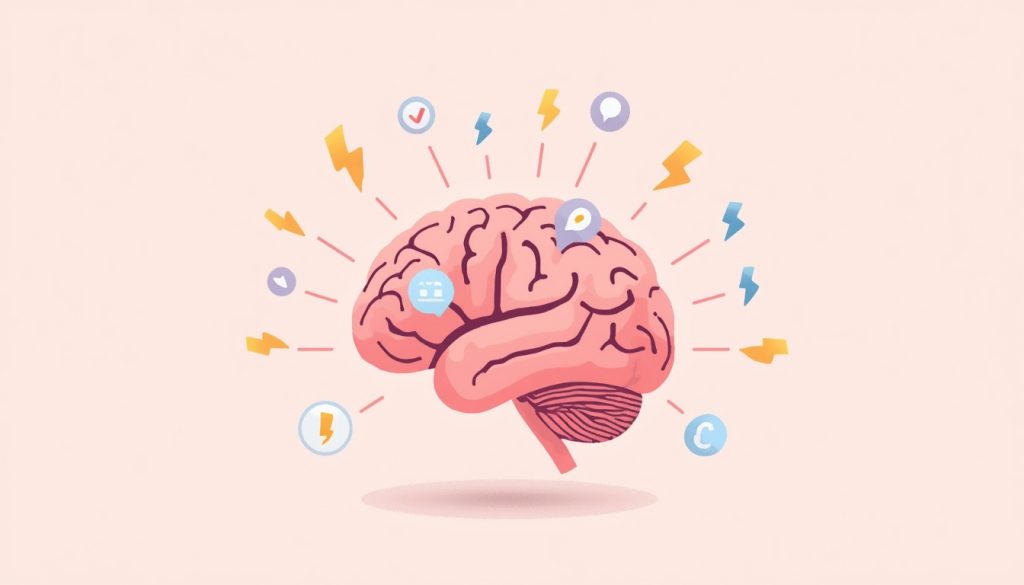
Here’s something nobody says enough: distraction is a feature, not a bug.
Your brain evolved to scan for novelty, threat, and change. That ping? Your nervous system treats it as potential information worth checking. That sudden noise outside? Worth a glance, just in case. The pull to check social media when you’re stuck on something hard? That’s your brain looking for a dopamine escape route.
This doesn’t mean you have no control. It means you’re starting from an honest place. When you understand why distraction happens, you can stop blaming yourself and start building systems that actually help.
Research consistently shows that the brain’s attentional system is not built for prolonged single-task focus — and that constant task-switching significantly reduces cognitive performance, even when it feels productive. (Gloria Mark, UC Irvine). Multitasking and constant switching actually reduce cognitive performance significantly, even when it feels productive.
The Types of Distractions That Steal Your Day
Not all distractions look the same. Some are loud and obvious. Others are quiet and surprisingly sneaky.
External Distractions
These are the ones you can see and hear: notification pings, chatty coworkers, a messy desk, background noise, your phone screen lighting up every few minutes. These are the easiest to spot and, with the right setup, often the easiest to reduce.
Internal Distractions
These are the ones that live inside your head: racing thoughts, anxiety about a task, boredom, hunger, the urge to check something “just quickly.” Internal distractions are trickier because you can’t turn them off with airplane mode.
Understanding how to quiet mental chatter is one of the most important skills for managing internal distractions, and it’s something a lot of people overlook entirely.
Task-Switching Distractions
These happen when you’re technically working, but bouncing between too many things at once. You’re writing a report, then answering an email, then switching to a Slack message, then back to the report. Each switch costs your brain time and energy to refocus — researchers call this “attention residue,” and it adds up fast.
5 Real-Life Scenarios You’ll Probably Recognize
Scenario 1: The Vanishing Morning
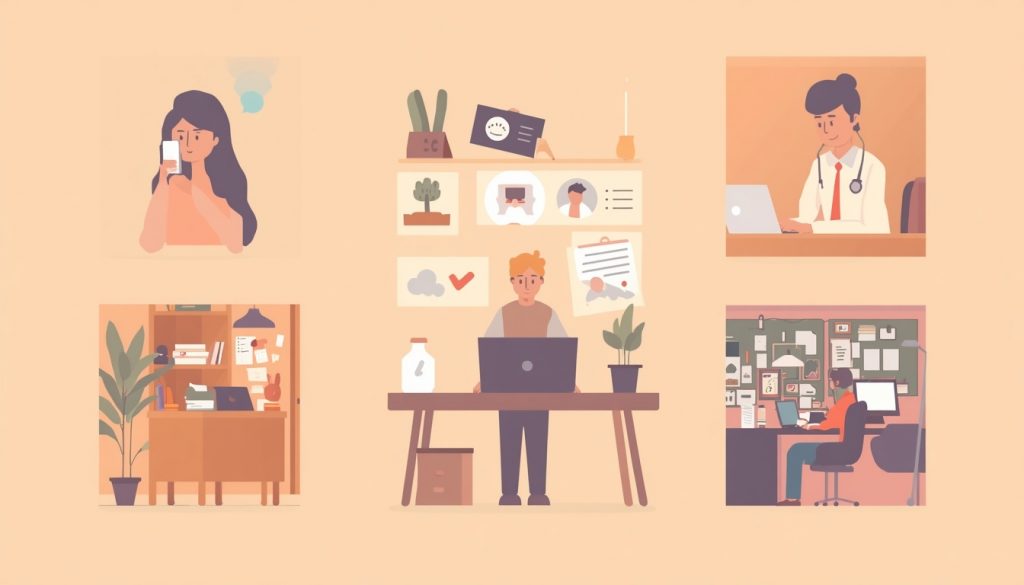
Maya sits down at 9 AM determined to finish her project proposal. By 10:30 AM she has answered six emails, scrolled LinkedIn twice, made a second coffee, reorganized her desktop folders, and written exactly one sentence. She has no idea where the time went.
Scenario 2: The Notification Spiral
James mutes his phone, but leaves his laptop notifications on. One Slack ping turns into a thread that pulls him into a meeting link. An hour later he’s trying to remember what he was working on originally and has to re-read his own document from the beginning.
Scenario 3: The Overthinking Freeze
Priya has a big task due by end of day. Instead of starting it, she keeps checking her email, reorganizing her desk, and telling herself she’ll begin “in five minutes.” The task feels so heavy that distraction feels easier than the discomfort of actually doing the work.
Scenario 4: The Open-Plan Office
David works in a shared office where colleagues drop by to chat, the phone rings, and the espresso machine is annoyingly loud. He’s tried noise-canceling headphones, but can’t escape the interruptions that need actual replies. By afternoon his concentration is shattered.
Scenario 5: The Work-from-Home Blur
Chloe works from home and loves the flexibility, but her workspace is also her living room, her kitchen, and where her kids play. The boundaries between “work mode” and “life mode” are invisible. Laundry piles, meal prep, and family noise constantly pull her attention, and she works late just to catch up.
If you saw yourself in any of these, you are not alone. Not even slightly.
The Hidden Link Between Stress and Distraction
Here’s something really important that doesn’t get talked about enough: when you’re stressed or burnt out, distraction becomes almost impossible to fight.
Stress depletes your prefrontal cortex — the part of your brain responsible for focus, decision-making, and impulse control. When it’s running low, you become more reactive to every little interruption. A minor notification feels urgent. A small worry spirals. Your attention scatters in ten directions at once.
This is why simple grounding techniques for work anxiety can be a game-changer before you even sit down to work. Calming your nervous system first means your brain is actually capable of focusing when you need it to.
And if you’re waking up every morning already feeling behind and scattered, the problem might start long before you open your laptop. Building a morning routine for mental clarity can radically change how your brain shows up for the day.
The National Institute of Mental Health also notes that underlying anxiety and stress are major drivers of attention difficulties in adults — not just in people with ADHD, but in people across the board.
How to Stop Getting Distracted at Work: 10 Strategies to Improve Focus and Stay on Task
This is not a list of productivity hacks that sound good in theory but crumble by Tuesday. These are the things that actually work — especially when you’re starting from a place of real mental exhaustion.
1. Start with a “Focus Intention”
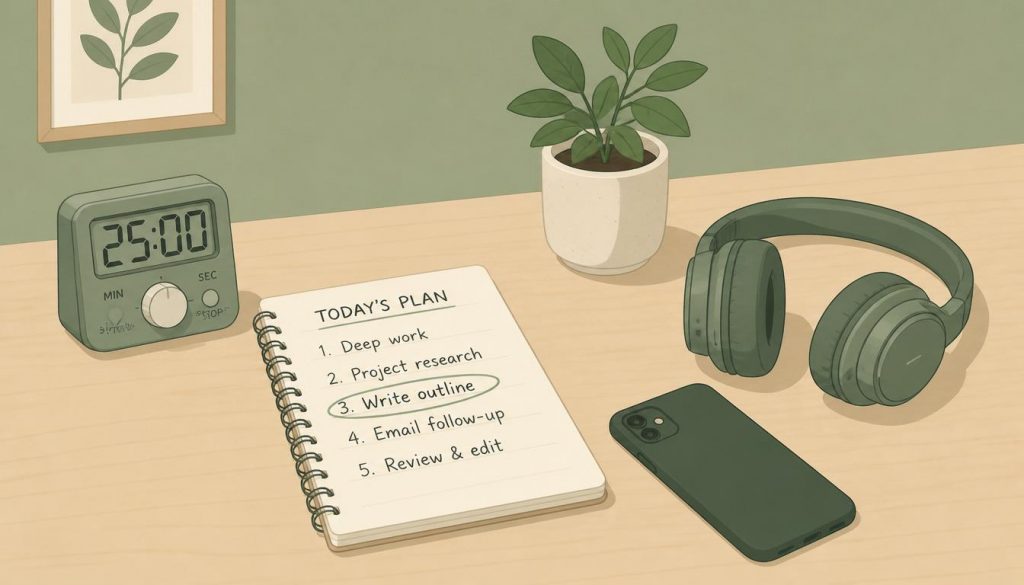
Before you open a single app or tab, write down one thing — just one — that you need to accomplish in the next 90 minutes. Not a to-do list. One thing. This creates a mental anchor your brain can return to when it wanders.
2. Create a Distraction-Proof Environment (Your Way)
This looks different for everyone. Some people need total silence. Others focus better with soft background music or ambient noise. Experiment honestly rather than copying someone else’s setup. What works is what works for you.
If you’re in an open office, a pair of noise-canceling headphones and a “Do Not Disturb” signal (like a small card or a status update) can help manage interruptions without being rude.
If you’re at home, try to designate a physical “work zone” — even if it’s just one end of the kitchen table. The physical boundary signals to your brain that this space is for focus.
3. Use the Pomodoro Method (or a Version of It)
Work for 25 minutes, then take a 5-minute break. After four rounds, take a longer 20-30 minute break. This structure works because your brain knows the break is coming, which reduces the urge to escape mid-task.
If 25 minutes feels too short or too long, adjust it. Some people do better with 45-minute blocks. Honor what your nervous system actually needs.
4. Do a Brain Dump Before You Begin
If your mind is cluttered with to-dos, worries, or random thoughts, trying to force focus over the noise rarely works. Spend five minutes writing everything in your head onto a piece of paper — every task, every worry, every “don’t forget” — and let the paper hold it so your mind doesn’t have to.
This is one of the most underrated focus tools there is. You can explore brain dump exercises for clarity in detail to build this into a real habit.
5. Tame Your Phone and Notifications
Your phone is a brilliant distraction machine. Not because you’re weak, but because it was literally designed by thousands of engineers to keep you coming back.
Try this: turn your phone face-down and put it across the room during focus blocks. Not muted on your desk — across the room. The physical distance matters more than you think. Out of sight genuinely does reduce the pull.
For your computer, apps like Freedom, Cold Turkey, or your browser’s built-in focus mode can block distracting sites during work sessions.
6. Identify Your “Peak Focus Hours”
Most people have a 2-4 hour window each day when their concentration is naturally strongest. For many, it’s mid-morning. For others, it’s early afternoon or even evening.
Pay attention to when you feel sharpest and protect those hours fiercely for your hardest, most important work. Use your lower-energy times for emails, admin, and routine tasks.
7. Stop Multitasking (Seriously, Stop)
It feels efficient. It is not. Research from the American Psychological Association shows that multitasking can reduce effective productivity by as much as 40%. Each time you switch tasks, your brain pays a “switch cost” in time and mental energy. Single-tasking — doing one thing fully before moving to the next — almost always produces better and faster results.
8. Handle “Two-Minute Tasks” Immediately
If something will take less than two minutes, do it right now. This clears the low-level mental noise of small undone tasks that keep nagging at your attention from the background.
9. Build in Real Breaks
Working through your lunch break or skipping breaks entirely because you “don’t have time” usually backfires. Your brain needs genuine rest to maintain focus across the day. A 10-minute walk, a proper lunch away from your screen, or even a few minutes of slow breathing will restore your concentration far more effectively than powering through.
The Mayo Clinic confirms that regular short breaks during the workday reduce mental fatigue, improve mood, and actually increase productivity over the full day.
10. Be Compassionate with Yourself When You Get Distracted
You will get distracted. Even with the best systems, the best tools, and the most focused mindset — your brain will wander sometimes. That is not failure.
The goal isn’t perfect focus. The goal is to notice when you’ve drifted, be kind to yourself about it, and gently return. Every time you catch yourself and come back, you’re actually strengthening your focus muscle. That’s the practice.
What “Knowing Yourself” Actually Has to Do with Focus
One thing that rarely gets mentioned in productivity articles: focus is deeply personal and emotional.
A person struggling with burnout will experience distraction very differently than someone who simply hasn’t set up good habits yet. Someone with anxiety will fight different demons than someone dealing with boredom. Someone going through grief, a relationship difficulty, or a health worry is carrying invisible weight that makes concentration genuinely harder.
This is important to name because too many people read productivity advice and then feel like failures when it doesn’t work — without realizing that the emotional weight they’re carrying is legitimate, and it needs to be addressed too.
Understanding yourself — your patterns, your needs, your triggers — is the real root of better focus. And that understanding is something worth caring about, not just as a performance upgrade, but as an act of self-respect.
A Few Words on Building Clarity for the Long Game
Managing distraction is not a one-time fix. It’s an ongoing practice — one that gets easier the more you understand your own mind and build an environment that supports it.
If your mind feels consistently foggy, scattered, or overloaded, it might be worth looking not just at your work habits, but at the bigger picture. Sleep, nutrition, movement, emotional wellbeing, and the quality of your rest all directly shape your capacity to focus. You can read more about how to improve mental clarity as a whole-life practice rather than just a work strategy.
You deserve a mind that feels like yours. That’s possible. And it starts with small, honest steps.
You’re Not Fighting a Losing Battle
Focus is not a gift that some people are born with and others aren’t. It is a skill, and like any skill, it responds to practice, patience, and the right environment.
The world we live in is genuinely distracting — by design, by pace, by pressure. The fact that you’re searching for ways to improve your focus means you already care. That matters. Keep going. Not because productivity makes you worthy, but because a calmer, clearer mind feels so much better to live in.
You are more capable of focused, meaningful work than you probably believe right now. I genuinely believe that.
Frequently Asked Questions
1. Why do I get so easily distracted at work even when I want to focus? Your brain is wired to seek novelty and avoid discomfort, which means tasks that feel hard or boring trigger an automatic escape response. This is completely normal. Building systems that reduce temptation and increase engagement with your work helps your brain stay on track without relying purely on willpower.
2. How do I stop getting distracted by my phone at work? Physical distance is the most effective strategy. Put your phone in another room or at least across the room during focus sessions. Turn off non-essential notifications, use Do Not Disturb mode, and consider app timers that limit your access to social media during work hours.
3. Is it normal to lose focus every few minutes? Yes, especially if you’re tired, stressed, or doing work that feels meaningless or overwhelming. The average person’s attention naturally drifts every 8 to 20 minutes. The key isn’t eliminating wandering — it’s getting better at noticing and gently returning.
4. What is the best technique for staying focused at work? There’s no single best technique — it depends on your personality and work style. The Pomodoro technique (timed focus blocks with short breaks) works well for many people. Others do best with longer uninterrupted blocks. Experiment to find what fits your actual brain, not what works for someone else.
5. How does stress affect my ability to focus? Chronic stress depletes the brain’s prefrontal cortex — the area responsible for attention, impulse control, and decision-making. When you’re stressed, your brain becomes more reactive and distraction-prone. Managing stress through rest, movement, and breathing techniques directly improves your ability to focus.
6. Why do I focus better under pressure or close to deadlines? Deadlines create urgency, which reduces the brain’s tendency to seek escape. The time constraint also makes the task feel more manageable — there’s a clear end in sight. If you find that you only focus well under pressure, you can experiment with creating artificial deadlines for yourself throughout the day.
7. How can I focus when working from home with lots of distractions? Establish a dedicated workspace if possible — even a corner of a room that signals “work mode.” Set clear boundaries with family members about your focus times, use headphones to signal unavailability, and create a consistent start-of-day ritual that mentally transitions you into work mode.
8. Does ADHD cause distraction at work, and how is it different? ADHD does create significant focus challenges, but distraction is not exclusive to ADHD. Many people without ADHD struggle with focus due to stress, poor sleep, anxiety, or environment. If you suspect ADHD, speaking with a qualified professional for evaluation is worthwhile and nothing to be ashamed of.
9. What are some focus strategies specifically for people with ADHD at work? People with ADHD often benefit from shorter, more structured work blocks (10–20 minutes rather than 25), body doubling (working alongside another person or even a virtual co-working session), external accountability like timers or focus apps, and reducing decision fatigue by preparing their workspace the night before. If you suspect ADHD, a proper evaluation by a qualified clinician can open up additional support options — including coaching, behavioral strategies, and in some cases, medication. Managing focus with ADHD is harder, but absolutely possible with the right tools and support.
10. Can what I eat or drink affect my focus? Absolutely. Blood sugar crashes, dehydration, and excess caffeine all negatively affect concentration. Steady energy from balanced meals, adequate water intake, and moderate caffeine use (not large amounts late in the day) all support more stable, sustained focus.
11. How long does it take to build better focus habits? Research suggests it takes around 21 to 66 days to build a new habit, depending on its complexity. But you don’t need to wait weeks to feel the difference — many of the techniques in this article will show results within days if applied consistently. Start small, stay consistent, and be patient with yourself.
Closing Thoughts
Here’s the truth: learning how to stop getting distracted at work is one of the kindest things you can do for yourself — not because it makes you more productive for your boss, but because a scattered mind is an exhausting place to live.
When you can focus, even imperfectly, you feel more capable. More present. More like yourself. And that sense of clarity isn’t just about work — it ripples into everything. Into how you feel at the end of the day. Into how much mental energy you have left for the people you love. Into how you feel about your own competence and worth.
You deserve a mind that works with you, not against you. Take it one small step at a time. That’s enough.
Which tip from this list felt most like it was written for you? Drop it in the comments — I read every one. And if this helped, consider sharing it with someone who might need it today.
Disclaimer
This article is written from personal experience and general wellness research for informational purposes only. It is not a substitute for professional mental health or medical advice. If you are struggling with significant attention difficulties, anxiety, or mental health challenges that affect your daily functioning, please consult a qualified healthcare professional. Mindbloom is a personal blog, not a clinical resource.