
Spirituality vs Religion: What’s the Real Difference (And Why It Matters)

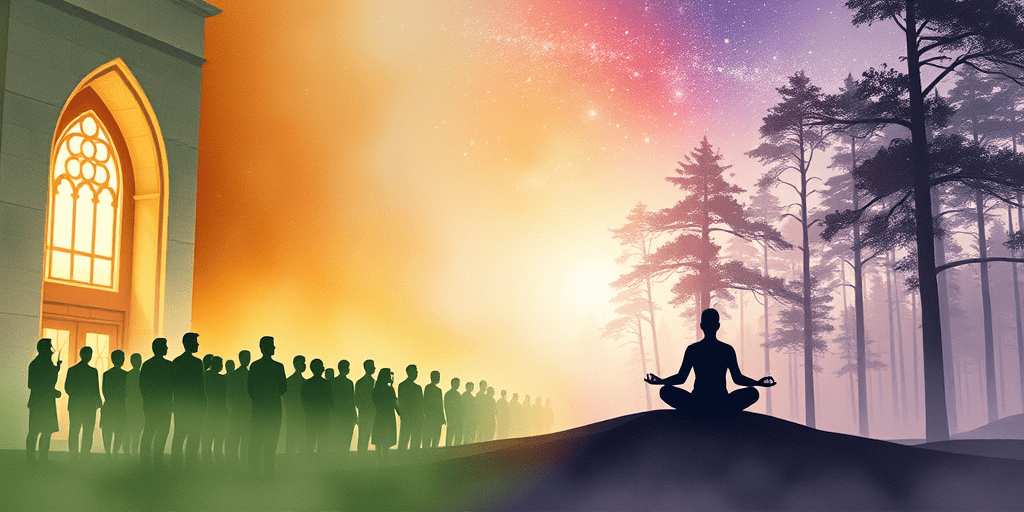
Have you ever sat in a quiet moment — maybe watching the sun set, or holding someone you love — and felt something shift inside you? Something wordless, something vast, something that made you feel deeply connected to life itself? That feeling is at the heart of one of the most deeply searched questions people are asking right now: what is the real difference between spirituality vs religion? And so many of us feel confused, guilty, or like we’re somehow doing it wrong when we try to answer it.
You’re not doing it wrong. The conversation around spirituality vs religion is one of the most deeply personal and meaningful ones you can have — with yourself and with others. And understanding the difference between the two might just be one of the most liberating things you ever do for your mental and emotional wellbeing.
In this guide, we’re going to explore that difference in a real, honest, and human way — no judgment, no dogma, and no pressure to be anything other than who you are.
Table of Contents
What Is Religion, Really?
At its core, religion is an organized, communal system of beliefs, practices, and rituals centered around a higher power, divine being, or sacred truth. Religion tends to have structure: sacred texts, defined doctrines, moral codes, clergy or religious leaders, and a community of believers who share the same faith.
Think of it like this: religion is a well-established path. It has a map, signposts, and a community of fellow travelers walking alongside you.
Some of the world’s major religions — Christianity, Islam, Hinduism, Buddhism, Judaism, and Sikhism, among others — have existed for thousands of years. They’ve shaped civilizations, cultures, art, law, and the very way billions of people understand life and death.
Religion often provides:
- A clear moral framework (right and wrong)
- Rituals and ceremonies marking life events (birth, marriage, death)
- A sense of community and belonging
- Answers to existential questions
- Prayer, worship, and devotion practices
For many people, religion is a source of profound comfort, identity, and strength. It’s a living tradition passed down through generations — a way of saying, “This is who we are and where we come from.”
What Is Spirituality?
Spirituality, on the other hand, is far more personal and fluid. It’s an inner journey — a search for meaning, connection, and something greater than the individual self. It doesn’t require a specific set of beliefs, a building to worship in, or a religious text to follow.
Spirituality is less about what you believe and more about how you feel and how you live.
It’s the person who finds God in a morning run through the forest. It’s the atheist who feels profound awe standing at the edge of the ocean. It’s the grief-stricken mother who lights a candle for her lost child and feels, for just a moment, that love doesn’t actually end. It’s the meditation practitioner who sits quietly every morning not because any religion demands it, but because it’s the only time they feel truly at peace.
Spirituality often involves:
- A personal relationship with something greater than yourself (God, the universe, nature, consciousness)
- Practices like meditation, journaling, yoga, or contemplative prayer
- A search for meaning and purpose
- Cultivating values like compassion, gratitude, and inner peace
- An openness to mystery and the unknown
Spirituality doesn’t come with a membership card. It evolves as you evolve. And that’s exactly what makes it so powerful — and sometimes so terrifying.
The Difference Between Spirituality and Religion: Spirituality vs Religion Explained
Understanding the difference between spirituality and religion isn’t about choosing sides. It’s about knowing yourself better. Here’s a simple way to think about it:
| Aspect | Religion | Spirituality | Both Can Include |
|---|---|---|---|
| Structure | Organized, institutional | Personal, fluid | A sense of daily practice |
| Community | Shared, communal | Often individual | Deep connection with others |
| Beliefs | Defined doctrine | Open-ended, personal | A relationship with the sacred |
| Practices | Rituals, worship, prayer | Meditation, reflection, nature | Gratitude and contemplation |
| Source of truth | Sacred texts, leaders | Inner experience, intuition | Wisdom passed across generations |
| Boundaries | Clear boundaries of faith | No fixed boundaries | A commitment to growth |
This doesn’t mean one is better than the other. In fact, many people live beautifully within both — attending church, mosque, or temple, while also maintaining a deeply personal spiritual life that goes beyond the Sunday service.
Can You Be Spiritual Without Being Religious?
Yes — absolutely, and more people than ever are saying exactly this.
According to research from the Pew Research Center, a growing number of Americans — around 27% — now identify as “spiritual but not religious.” This trend has accelerated significantly over the past two decades, particularly among younger generations.
There’s even a term for it: SBNR — Spiritual But Not Religious.
Consider Maya, a 34-year-old woman who grew up Catholic but drifted away from the Church in her twenties. She no longer attends Mass, doesn’t identify with any organized religion, and yet she meditates every morning, practices gratitude journaling, volunteers at a local shelter, and feels a profound connection to something she describes as “the sacred.” Is Maya spiritual? Deeply. Is she religious? Not in the traditional sense. And that’s perfectly okay.
Can You Be Religious Without Being Spiritual?
This is the flip side that doesn’t get talked about enough — and it’s just as valid.
You can follow every rule of a religion, attend every service, recite every prayer, and observe every ritual — and still feel spiritually empty. Religion, without personal inner connection, can feel like going through the motions.
Think of James, a 52-year-old man who attends church every Sunday because it’s what his family has always done. He knows the hymns by heart. He serves on the church committee, tithes faithfully, and never misses Easter or Christmas services. From the outside, he is a deeply religious man.
But late at night, when he’s honest with himself, James admits that he hasn’t felt truly moved in years. The prayers feel recited rather than spoken. The sermon washes over him. He goes through the motions — and feels vaguely guilty that the motions don’t mean more.
James isn’t broken. And religion isn’t failing him. What James is experiencing is the gap between external practice and inner connection — and recognizing that gap is actually the first step toward closing it. Spiritual growth is its own work, separate from outer observance. You can’t sleepwalk into it, even with years of religious devotion behind you.
Real-Life Scenarios That Help Explain the Difference
1. The Grieving Parent
Sarah lost her teenage son in a car accident three years ago. She had always been a churchgoer, but after his death, traditional religious answers felt hollow and cold. She started walking in nature every day, talking to her son out loud to the sky. She found solace in small signs — a butterfly at just the right moment, a song on the radio that felt like a message. Her grief led her into a deeply personal spiritual practice that exists alongside, but quite separately from, her formal religion.
2. The Skeptic Who Finds Meaning
David is a scientist — a committed atheist who has no belief in God and no interest in organized religion. Yet after a health scare at 45, he started practicing mindfulness meditation. He began to notice a sense of awe when studying the cosmos, a deep gratitude for being alive, a feeling of interconnectedness with all living things. He’d never call it spiritual — but it is.
3. The Young Person Questioning Everything
Priya grew up Hindu in a devout family. She loves the festivals, the food, the cultural richness of her faith. But she’s started questioning some doctrines that feel out of step with her values. She’s in the middle of a beautiful, sometimes painful process of figuring out what she believes versus what she was told to believe. This is spirituality doing its work.
4. The Person Who Needs Community
Tom struggled with addiction for years. It was Alcoholics Anonymous — with its emphasis on a “higher power” — that saved his life. He found a spiritual home there, outside of any traditional religion. The community, the rituals, the shared language of surrender and healing — all of this became his spirituality.
5. The Woman Who Does Both
Elena attends Friday prayer at her mosque faithfully. She also keeps a gratitude journal, practices yoga, and reads widely from multiple religious and philosophical traditions. For her, religion is the container — and spirituality is what fills it.
Why This Distinction Matters for Your Mental Health
Research consistently shows that both spirituality and religion can have significant positive impacts on mental health. A study published in JAMA Psychiatry found that people who attended religious services or had a strong sense of spiritual importance had lower rates of depression, anxiety, and suicidal ideation.
Meanwhile, the American Psychological Association acknowledges that spirituality — separate from religion — is increasingly recognized as a meaningful component of psychological wellbeing.
But here’s what the research can’t capture: the relief people feel when they finally give themselves permission to explore their inner life on their own terms. When you stop fighting the question of “Am I spiritual enough?” or “Am I religious enough?” and instead ask, “What actually feels true and alive to me?” — something opens up.
That opening is where healing begins.
If you’re exploring how inner practices connect to your emotional wellness, you might also find it meaningful to read about spirituality and mental health — a complete guide we’ve put together to explore exactly that connection.
How Spirituality and Religion Can Work Together
Here’s something that often gets lost in the debate: religion and spirituality are not opposites. At their best, they are partners.
The rituals and traditions of religion can be a doorway into spiritual experience. A Muslim prostrating in prayer five times a day isn’t just following rules — they’re cultivating a daily practice of surrender and presence. A Jewish family lighting Shabbat candles isn’t just observing tradition — they’re creating a sacred pause in the chaos of modern life. A Catholic receiving communion isn’t just participating in a ritual — they’re reaching toward something ineffable.
When religion is lived with heart, it becomes deeply spiritual. And when spirituality is shared with community, it can take on a richness that solitary practice alone can’t provide.
The question isn’t which one is right. The question is: what helps you live with more love, more presence, and more peace?
Practical Steps to Explore Your Own Spiritual Path
Whether you’re religious, non-religious, or somewhere in between, here are some genuinely helpful ways to deepen your inner life:
1. Start with questions, not answers. Sit quietly and ask yourself: What do I actually believe? What gives me a sense of awe? What makes me feel most alive? There are no wrong answers. Write them down.
2. Try a daily stillness practice. Even five minutes of quiet — meditation, deep breathing, or silent sitting — can open the door to spiritual awareness. You don’t need to call it anything. You just need to show up for it.
3. Spend time in nature. For many people, nature is the most direct portal to a felt sense of the sacred. Walk slowly. Look up. Put your phone away. Let yourself be small and held at the same time.
4. Read widely and curiously. Don’t limit yourself to one tradition. Read the Tao Te Ching. Read Rumi. Read Marcus Aurelius. Read the Psalms. Read Thich Nhat Hanh. Let different wisdom traditions show you their piece of the truth.
5. Find your community — wherever it is. Spiritual growth happens in connection. This might be a traditional religious community, a meditation group, a grief support circle, or even a small group of friends who meet to talk honestly about life. Connection matters.
6. Be patient with yourself. Spirituality isn’t a destination you arrive at. It’s a direction you keep walking in, even when — especially when — you’re not sure where you’re going.
What the Research Says About Spirituality and Mental Health
One of the most reassuring things about the spiritual landscape today is that there is growing scientific validation for spirituality as a mental health resource — regardless of formal religious affiliation.
Research published in Frontiers in Psychology highlights that spiritual experiences — feelings of awe, transcendence, meaning, and connectedness — are associated with lower psychological distress, greater resilience, and improved life satisfaction.
The World Health Organization has even broadened its definition of health to include spiritual wellbeing as a core component of overall human flourishing — alongside physical, mental, and social health.
You don’t have to have all the answers. You don’t have to belong to a specific tradition. You don’t have to pray a certain way or believe a certain thing. You simply have to be honest about what you long for — and start walking toward it.
Spirituality Without Religion: Letting Go of Spiritual Guilt
So many people carry a quiet, aching guilt about their spiritual life. Maybe you left a religion that no longer felt true, and you still feel like you betrayed your family. Maybe you’ve never been religious and secretly wonder if that means you’re missing something essential. Maybe you’re somewhere in between — trying to hold onto the good while letting go of what no longer fits.
Whatever your situation: your spiritual journey belongs to you. No one else can tell you what should make you feel connected, whole, or held. And no one — no institution, no doctrine, no well-meaning family member — has the right to define your relationship with the sacred on your behalf.
If you’ve been carrying shame around your beliefs, or the lack of them, this is a good moment to set some of that down.
For more on understanding yourself more deeply, take a look at our piece on what personal growth really means — because this kind of inner questioning is itself a beautiful form of growth.
The Difference Between Spirituality and Religion: A Summary
At its heart, the difference between spirituality and religion comes down to this:
Religion is a shared, structured tradition — a communal path toward the divine, passed down through centuries.
Spirituality is a personal, inner journey — an individual search for meaning, connection, and something greater than yourself.
One gives you a map. The other asks you to trust your own compass.
Both are valid. Both can be beautiful. And the wisest among us find a way to honor both — the ancient wisdom of tradition and the living truth of personal experience.
Your inner life is worth tending to — whatever form that takes. And the mere fact that you’re asking these questions tells us something important about you: you’re the kind of person who takes your own soul seriously.
That, in itself, is a spiritual act.
Closing Thoughts
The question of spirituality vs religion is really a question about what it means to be alive — and what makes that aliveness feel meaningful. There is no perfect answer, no correct tradition, no single right way to hold the mystery of existence.
What there is, is you — with your questions, your longing, your moments of awe, your grief, your wonder. All of it counts. All of it is sacred. And all of it is pointing you, gently and persistently, toward something worth exploring.
Whether you find that in a pew, on a yoga mat, in a forest, or in the quiet of a sleepless night — the path is yours, and it’s already begun.
If this article stirred something in you — a question, a memory, a quiet longing — we’d gently invite you to keep going. Our guide on spirituality and mental health is a natural next step: it explores how your inner life and emotional wellbeing are more deeply connected than most of us realize.
Keep blooming, gently.
Frequently Asked Questions About Spirituality Vs Religion
1. What is the main difference between spirituality and religion? Religion is an organized, communal system of beliefs and practices centered around a higher power or sacred tradition. Spirituality is a personal, inner journey toward meaning, connection, and transcendence that doesn’t require any formal structure or institution.
2. Can I be spiritual without being religious? Absolutely. Many people — sometimes called “spiritual but not religious” (SBNR) — have a rich, meaningful inner life without belonging to any organized religion. Spirituality is about personal experience and inner growth, not institutional membership.
3. Can I be religious without being spiritual? Yes. Someone can follow all the practices and rituals of a religion without feeling a deep personal connection to what they’re doing. True spirituality involves an inner aliveness that goes beyond outward religious observance.
4. Is spirituality better than religion? Neither is inherently better. Both offer different things. Religion provides community, tradition, structure, and shared meaning. Spirituality offers personal freedom, inner depth, and direct experience. Many people find the greatest richness when they honor both.
5. What does it mean to be spiritual? Being spiritual means cultivating an inner awareness of something greater than yourself — whether you call that God, the universe, nature, consciousness, or love. It involves seeking meaning, practicing presence, and living with a sense of connection and purpose.
6. Why are people leaving religion but staying spiritual? Many people find that traditional religious institutions don’t fully address their personal questions, values, or experiences. At the same time, they still hunger for meaning, community, and transcendence — so they continue exploring spirituality outside of formal religion.
7. How does spirituality affect mental health? Research shows that spirituality — including practices like meditation, mindfulness, gratitude, and a sense of purpose — is associated with lower rates of anxiety and depression, greater resilience, and improved emotional wellbeing. It gives people a framework for coping with life’s hardest moments.
8. What is a “spiritual but not religious” person? A “spiritual but not religious” (SBNR) person is someone who values inner growth, meaning, and connection to something greater, but doesn’t affiliate with an organized religion. They may draw from multiple traditions, or have an entirely personal spiritual practice.
9. Does spirituality require belief in God? No. Many spiritual people don’t believe in a personal God in the traditional sense. Spirituality can involve belief in the universe, nature, human connection, consciousness, or simply a deep sense of awe and gratitude for being alive.
10. How do I start exploring my own spirituality? Start simply: sit in quiet for a few minutes each day. Notice what moves you, what fills you with awe, what gives your life meaning. Try meditation, journaling, or spending time in nature. Read broadly from different wisdom traditions. Most importantly, be honest with yourself — your inner life will guide you.
Disclaimer
The content published on Mindbloom is for informational and educational purposes only. It is not intended to be a substitute for professional medical advice, diagnosis, or treatment. Always seek the advice of a qualified healthcare provider or mental health professional with any questions you may have regarding a medical or psychological condition. Mindbloom does not provide therapy, counseling, or clinical mental health services. The views expressed in this article reflect general wellness perspectives and are not intended to represent any specific religious, spiritual, or philosophical tradition.