
What Is Spiritual Bypassing? When Spirituality Becomes a Way to Avoid Healing
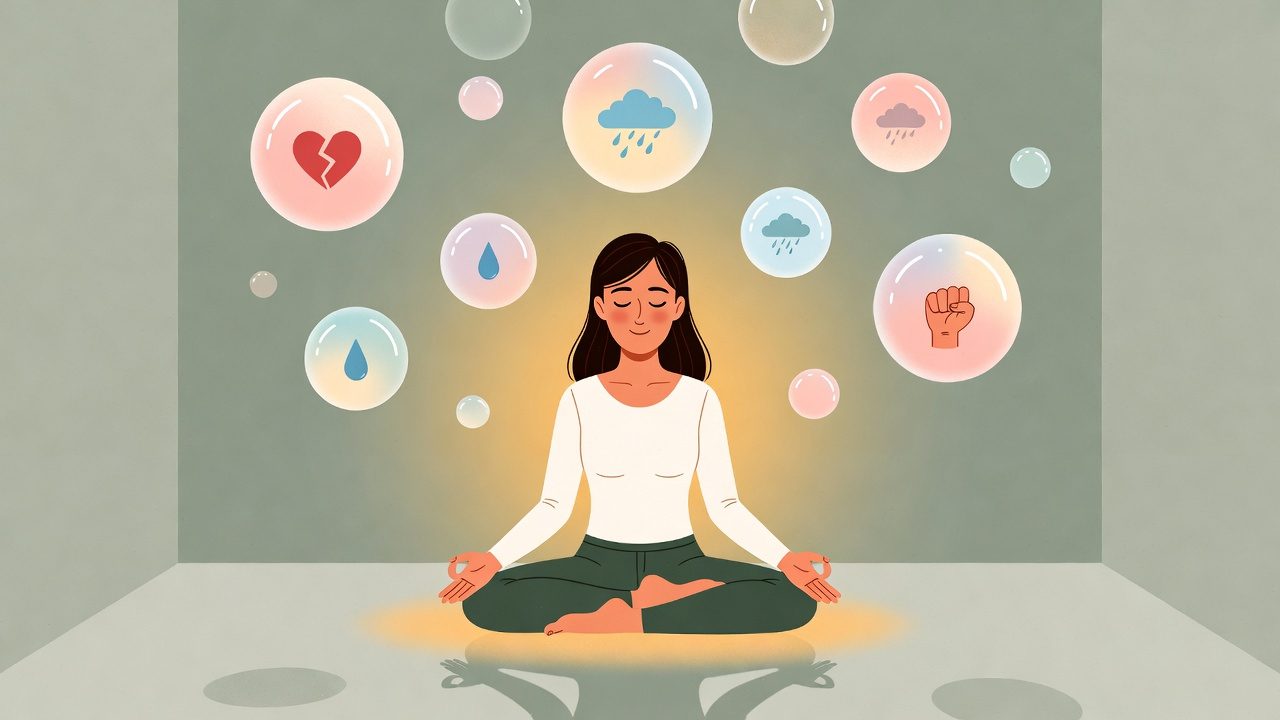
Spiritual bypassing is one of those patterns that is easy to miss — because it looks exactly like healing. Have you ever met someone going through something deeply painful — a breakup, a loss, a crisis — and instead of sitting with it, they jumped straight into “everything happens for a reason” and kept smiling? Or maybe that person was you. There is something so tempting about turning to spirituality when life hurts. It feels like relief. It looks like peace. But sometimes, what looks like healing is actually a very polished way of avoiding it. And it is far more common than most people realize — and far more damaging than it looks.
In this article, we are going to look honestly at spiritual bypassing: what it is, what it looks like in real life, why we do it, and how to tell the difference between genuine spiritual growth and spiritual escape. Because the goal of spirituality should never be to float above your pain. It should be to help you move through it.
Table of Contents
What Is Spiritual Bypassing?
Spiritual bypassing is the use of spiritual beliefs, practices, or language to avoid confronting unresolved emotional pain, psychological wounds, or real-life challenges. The term was coined by psychologist John Welwood in the 1980s, after he noticed that many people in spiritual communities were using their practices to sidestep genuine inner work rather than face it directly.
In simple terms, spiritual bypassing is when we use spiritual ideas, language, or practices as a shield against genuine emotional work.
It does not mean spirituality is bad. Far from it. Spirituality can be one of the most powerful anchors for mental and emotional wellbeing — as explored in Mindbloom’s piece on 7 Spiritual Practices for Everyday Mental Health. The problem is not the practice. The problem is when the practice becomes a trapdoor for avoiding the very things we need to feel, process, and heal from.
Think of it this way. Imagine you have a wound on your arm. Genuine healing involves cleaning it, treating it, letting it breathe, and sometimes dealing with the discomfort of it healing slowly. Spiritual bypassing is like covering the wound with a beautiful bandage covered in affirmations and pretending there is nothing underneath. The wound is still there. It is just hidden.
The Real-Life Faces of Spiritual Bypassing
Spiritual bypassing can be subtle. It hides in the language of wellness and growth. Here are some real, relatable scenarios that might feel uncomfortably familiar.
Scenario 1: The “Good Vibes Only” Breakup
Maya had just ended a long-term relationship. It hurt. Deeply. Her friends expected her to cry, to grieve, to need time. Instead, she threw herself into yoga, journaling about “releasing attachments,” and posting on social media about “choosing herself.” She told everyone she was grateful for the lesson.
On the surface, Maya looked like she was thriving. But six months later, in a new relationship, she found herself reacting with intensity she could not explain to things that seemed small. The grief she bypassed had not gone anywhere. It had just gone underground.
Scenario 2: The Perpetually “Zen” Parent
David’s relationship with his father was complicated and full of old hurt. Rather than exploring those feelings in therapy or honest conversation, he leaned heavily into the idea of forgiveness as a spiritual duty. “I have forgiven him,” he would say with a calm smile. “I am at peace.”
But when his own children frustrated him, he would explode in ways that confused him. The unprocessed anger toward his father had never been acknowledged — let alone truly healed. He had spiritually bypassed his way around it, mistaking an intellectual commitment to forgiveness for the actual emotional work of forgiving.
Scenario 3: The Anxiety Meditator
Sara had significant anxiety. Her doctor suggested therapy. Instead, she committed to two hours of meditation a day, crystals, and affirmations. “I am healing myself energetically,” she told a friend who gently encouraged her to seek professional support.
Meditation is genuinely powerful. But for Sara, it had become a way to temporarily quiet the noise of anxiety without ever addressing what was driving it. The meditation gave her pockets of calm, but her anxiety did not improve because its roots — past trauma, nervous system dysregulation — were never explored. According to the American Psychological Association, anxiety rooted in trauma or chronic stress typically responds best to structured, evidence-based treatment — and wellness practices alone are rarely sufficient as a primary intervention.
Scenario 4: The “Universe Has a Plan” Grief Avoider
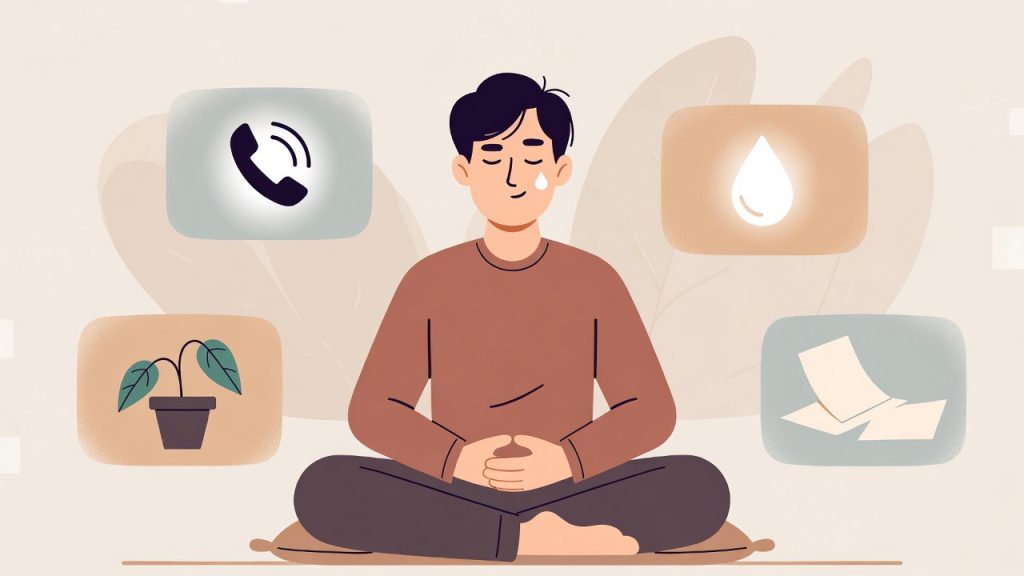
After losing his mother, James immediately moved into a space of spiritual acceptance. “She is in a better place. The universe called her home.” To everyone around him, he seemed at peace. But eighteen months later, a therapist pointed out that James had not actually cried. He had not been able to sit with the simple, human fact that he missed his mom. The spiritual narrative, while comforting, had blocked him from grieving.
Scenario 5: The Toxic Positivity Spiral
Priya joined a spiritual community after a difficult period of depression. The community encouraged “high-vibration thinking” and discouraged “low-vibe” conversations about sadness, fear, or anger. Priya started feeling ashamed of her darker feelings. She interpreted her depression as a spiritual failing rather than something that deserved compassionate care. According to Mental Health America, depression affects over 21 million adults in the United States alone, and shame around it makes recovery significantly harder.
Why Do We Spiritually Bypass?
Here is the thing. Spiritual bypassing is not weakness. It is not stupidity. It is actually a very human, very understandable response to pain. We do it because:
1. Pain is uncomfortable. Our nervous systems are wired to move away from discomfort. Spirituality offers a beautiful, socially acceptable way to do exactly that.
2. It looks like strength. In many wellness spaces, being “above” your emotions reads as evolved. Visible sadness, anger, or grief can feel like failure — so we reach for peace before we have actually earned it through feeling.
3. It gives a sense of control. Spiritual narratives — karma, divine plans, energetic alignment — can make pain feel purposeful. That is not inherently wrong. But when the framework stops us from feeling the pain altogether, it becomes a problem.
4. Community sometimes rewards it. When the people around you praise high-vibration thinking and treat difficult emotions as “low energy,” bypassing becomes socially reinforced. Your community becomes a mirror that tells you avoidance is growth.
Signs You Might Be Spiritually Bypassing
This section is not meant to judge you. It is meant to be a gentle mirror. Some signs that spiritual bypassing might be happening include:
- You feel proud of how “unbothered” you are by something that most people would find deeply painful.
- You frequently use spiritual language to explain away or dismiss your own needs, anger, or grief.
- You feel vaguely uncomfortable or superior around people who openly express difficult emotions.
- Your spiritual practice often starts immediately when you feel emotional discomfort, rather than after sitting with it first.
- You have forgiven people in your head but still feel tension, resentment, or anxiety in your body around them.
- You tend to label your anger, sadness, or fear as “low vibration” or “not serving your growth.”
- When a friend shares something painful, your first impulse is to jump straight to a silver lining or spiritual lesson.
- You have not cried about something significant in a long time, despite carrying it.
None of these things make you a bad person or even a bad spiritual practitioner. They make you human, trying to cope in the best way you know how. But awareness is the first step toward something more integrative and more real.
The Difference Between Genuine Spirituality and Spiritual Bypassing
This is where things get nuanced, and it is important to get it right.
Genuine spirituality does not avoid pain. It accompanies you through it.
Real spiritual growth acknowledges that dark emotions are not obstacles to healing. They are part of it. Grief, anger, shame, fear — these are not signs of low consciousness. They are signs of being alive and having cared about something.
Here is a quick comparison to help you identify which pattern is showing up in your own life:
| Spiritual Bypassing | Genuine Spiritual Growth |
|---|---|
| “I am not angry, I am just at peace.” | “I feel angry, and I am working through what that means.” |
| Forgiveness as a way to shut down grief | Forgiveness as a long, messy, earned process |
| Using meditation to escape difficult feelings | Using meditation to be present to difficult feelings |
| “Everything happens for a reason” (to avoid grief) | “I do not understand why this happened, and I am allowing myself to not be okay with it.” |
| Shame around “negative” emotions | Curiosity and compassion toward all emotions |
| Spiritual community that avoids darkness | Spiritual community that holds space for the full human experience |
The difference is not in the practice itself. It is in the intention underneath it. Are you using your practice to open, or to close? To feel, or to not feel?
Spiritual Bypassing and Trauma: A Critical Conversation
This deserves its own section because it is serious.
Spiritual bypassing can be particularly dangerous for people with trauma histories. Trauma lives in the body. It creates patterns in the nervous system, the way we react, the way we shut down or explode, the way we connect or disconnect in relationships — as explored in Mindbloom’s article on Attachment Style in Relationships.
Healing trauma requires more than positive thinking and spiritual frameworks. It requires working with the nervous system, often with professional support. The National Institute of Mental Health notes that trauma-focused therapies remain among the most effective approaches for processing and healing trauma.
When people with significant trauma turn only to spiritual practice, they can inadvertently retraumatize themselves. Intense meditation, for example, can sometimes surface overwhelming material that, without adequate support, becomes destabilizing rather than healing.
If you are unsure where to start, Mindbloom’s guide on 10 Different Types of Therapy Explained can help you find the right professional support for your situation.
How Spiritual Bypassing Affects Relationships
One of the places spiritual bypassing causes the most quiet damage is in relationships.
When someone spiritually bypasses their own wounds, those wounds tend to show up in how they love, attach, and react to the people closest to them. Unprocessed grief becomes withdrawal. Unacknowledged anger becomes passive aggression or resentment that leaks out sideways. Bypassed fear of abandonment becomes controlling behavior dressed in “holding space” language.
If you have ever been in a relationship with someone who was spiritually bypassing, you may have felt unseen. Every time you raised a real emotional concern, you got a spiritual platitude instead of genuine presence. “Trust the process.” “We are both mirrors for each other.” “Let go of what does not serve you.” These can be beautiful truths. They can also be ways of not really showing up.
Healthy relationships — as discussed in Mindbloom’s article on Navigating Differences in a Relationship — require people who can tolerate emotional discomfort in themselves and in others. That tolerance is built through doing the actual inner work, not around it.
How to Move Toward Integrated Healing: Practical Steps
If any of this has resonated with you, here are some gentle, concrete steps you can take. These are not about abandoning your spirituality. They are about deepening it.
1. Practice “Feeling First, Framing Second”
When something difficult happens, give yourself a window — even just 10 to 15 minutes — to simply feel before you reach for the spiritual reframe. Cry if you need to. Sit in the discomfort. Let it be what it is before you decide what it means.
2. Do a Body Check-In
Our bodies hold emotions our minds have bypassed. When you think about a painful situation, notice what happens in your chest, your stomach, your throat. Do you feel tight? Heavy? Numb? That is information. Do not skip past it.
3. Ask Yourself the Honest Question
When you reach for a spiritual narrative — “it is all part of the plan,” “I am releasing this,” “I have forgiven them” — ask yourself gently: “Is this something I have genuinely moved through, or something I am using to avoid moving through it?”
There is no judgment in the answer. Just honesty.
4. Welcome All Emotions as Valid
Anger is not low vibration. Sadness is not weak. Fear is not unspiritual. Begin practicing the idea that all emotions are messengers. They are trying to tell you something. Getting curious about what they are saying is more spiritual than silencing them.
5. Consider Therapy Alongside Spiritual Practice
Therapy and spirituality are not in competition. Many therapists today are deeply spiritually attuned. Consider working with a therapist who can help you process what your spiritual practice is surfacing. Mindbloom’s guide on 10 Different Types of Therapy Explained is a great place to start understanding what might be the right fit for you.

6. Audit Your Spiritual Community
Does your community hold space for darkness, complexity, and raw humanity? Or does it implicitly shame difficult emotions? A spiritual community worth belonging to will make room for the full spectrum of human experience — including the messy, unresolved, still-figuring-it-out parts of you.
7. Return to Spiritual Practice from a Grounded Place
Rather than running to your spiritual practice when emotions arise, try grounding yourself first. Take a walk. Breathe. Write in a journal without any spiritual filter. And then, from that grounded place, bring your practice in. This sequence changes everything.
What True Healing Looks Like
Real healing does not look like someone who has risen above their pain. It looks like someone who has learned to be present to it — without being consumed by it.
Real spiritual growth does not look like someone who never gets angry. It looks like someone who can feel their anger, understand its roots, express it healthily, and release it when the time comes.
It does not look like someone who never grieves. It looks like someone who lets grief move through them, cries when they need to, and comes out the other side carrying the love that the grief was made of.
It does not look like someone who never fears. It looks like someone who feels their fear, honors it as a signal, and then makes a conscious choice about what to do next.
This is what Psychology Today describes as emotional integration — the capacity to hold and work through your full emotional experience rather than compartmentalizing or bypassing it.
True healing looks a lot messier than spiritual bypassing. But it is the only kind that actually lasts.
A Note on Self-Compassion
If you have recognized yourself in this article, please be gentle with yourself. Spiritual bypassing does not come from a bad place. It comes from a tender one. It comes from a person who was in pain and reached for the most beautiful tool they could find to survive it.
You were not doing something wrong. You were doing the best you could with what you had.
The invitation now is simply to go a little deeper. To let your spirituality be brave enough to accompany you into the harder places, not just the peaceful ones. Because that is where the real transformation lives.
Closing: Your Healing Deserves to Be Real
Spirituality, at its best, is not an escape from the human experience. It is a way of becoming more fully human, more present, more compassionate, more willing to feel all of it.
Spiritual bypassing asks you to rise above your wounds. True healing invites you to walk through them, gently, with all the support and courage you can gather. You do not have to choose between your spirituality and your healing. In fact, the most profound spiritual path you can walk is the one that refuses to leave any part of you behind.
You are worthy of healing that is whole. Not just beautiful. Whole.
Frequently Asked Questions About Spiritual Bypassing
1. What is spiritual bypassing in simple terms? Spiritual bypassing is when someone uses spiritual beliefs, language, or practices to avoid confronting and processing painful emotions or unresolved psychological wounds. In other words, spiritual bypassing is a form of emotional avoidance dressed in the language of healing. It can look like growth from the outside, while the underlying pain remains completely unaddressed.
2. Who coined the term spiritual bypassing? The term was coined by American psychologist John Welwood in the early 1980s. He observed the pattern in spiritual communities where people used spiritual frameworks to sidestep genuine psychological and emotional work.
3. Is spiritual bypassing harmful? Yes, spiritual bypassing can be genuinely harmful. While it offers short-term relief from emotional discomfort, it prevents genuine healing, can worsen underlying mental health conditions like anxiety and depression, and often causes unresolved wounds to re-emerge in damaging ways — especially within close relationships.
4. What are the most common signs of spiritual bypassing? Common signs include using spiritual language to dismiss your own pain, feeling superior around people who openly express difficult emotions, premature forgiveness before genuine emotional processing, equating grief or anger with “low vibration,” and avoiding professional support in favor of spiritual practice alone.
5. Can you be spiritual and still do the emotional work? Absolutely. In fact, genuine spirituality supports deep emotional work. The two are not opposites. The most integrated spiritual practitioners combine inner emotional work, often with professional support, with their spiritual practice, allowing each to deepen the other.
6. How is spiritual bypassing different from healthy coping? Healthy coping acknowledges the emotion and works through it, while using supportive tools to manage the process. Spiritual bypassing skips the acknowledgment and processing stages, jumping directly to a state of acceptance or peace that has not actually been earned through feeling.
7. Can meditation contribute to spiritual bypassing? Yes. While meditation is a powerful and evidence-supported wellness tool, it can be used as a mechanism for suppression when someone uses it to avoid feeling difficult emotions rather than to observe and be present to them. This is especially worth monitoring for people with trauma.
8. What is the connection between spiritual bypassing and trauma? Spiritual bypassing is particularly risky for those with unprocessed trauma. Trauma requires nervous-system-level healing that purely spiritual approaches cannot provide alone. Using only spiritual practice to cope with trauma can lead to re-traumatization or to the trauma expressing itself in other areas of life, such as relationships and physical health.
9. How do I stop spiritually bypassing? Start by developing awareness of when you reach for spiritual frameworks in response to emotional discomfort. Practice allowing yourself to feel before you frame. Work with a therapist alongside your spiritual practice. Give yourself permission to grieve, be angry, and not be okay for a while.
10. Is spiritual bypassing common in spiritual communities? Yes, it can be especially prevalent in communities that place high emphasis on positivity, high-vibration thinking, or the idea that enlightened people do not struggle emotionally. A healthy spiritual community holds space for the full range of human experience, including darkness, doubt, and pain.
Disclaimer
The content on Mindbloom is written from personal lived experience and is intended for informational and supportive purposes only. It is not a substitute for professional mental health advice, diagnosis, or treatment. If you are experiencing significant emotional distress, trauma symptoms, anxiety, depression, or any other mental health concern, please reach out to a qualified mental health professional. If you are in crisis, please contact a crisis helpline in your area. You can find one at befrienders.org.