
Sleep Hygiene Habits That Actually Work: Proven Nightly Routines for Deeper, More Restful Sleep
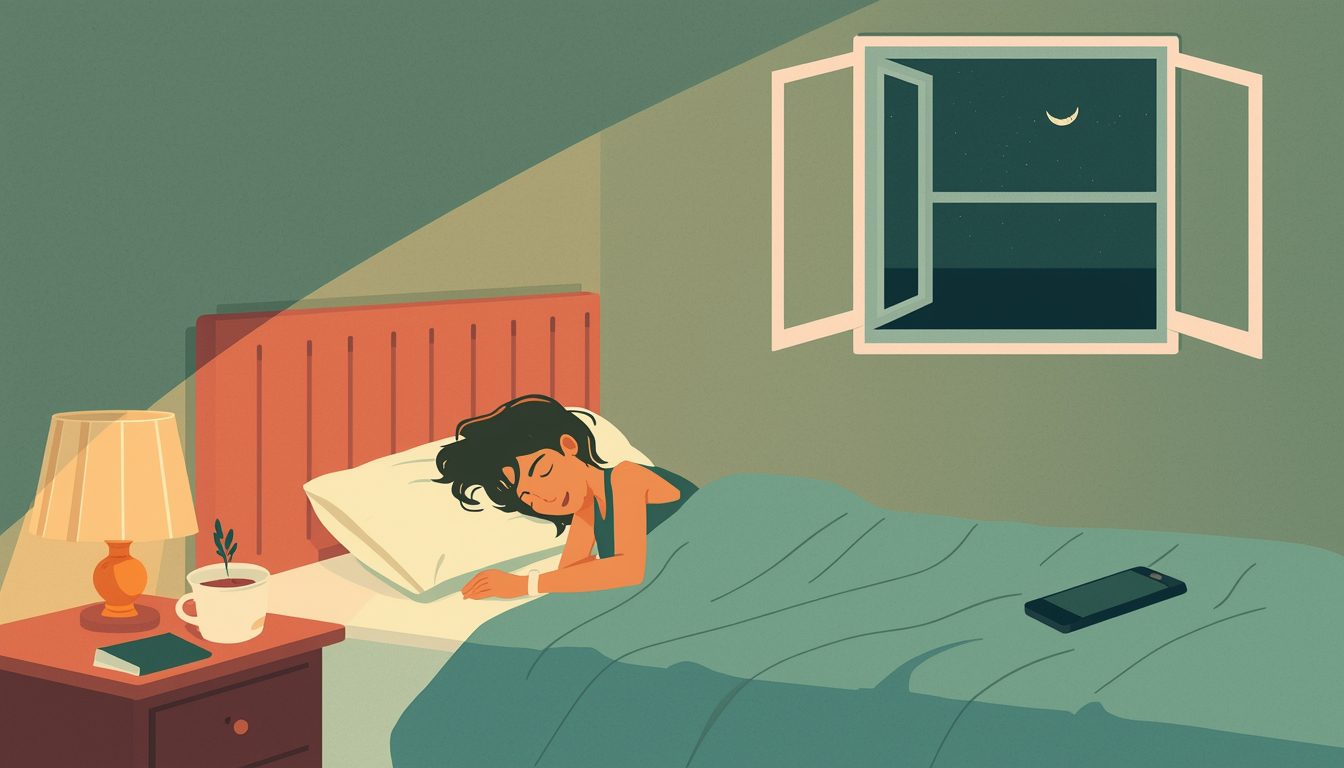
If you’ve ever collapsed into bed exhausted — only to lie there wide awake, mind racing through everything you forgot to do — you already know that sleep doesn’t come on command. The truth is, most people struggling tonight aren’t missing willpower. They’re missing the right sleep hygiene habits that actually work.
These aren’t about expensive supplements or elaborate gadgets. They’re small, consistent shifts that signal your brain and body: it’s safe to rest now. And honestly? Most of us were never taught how to do this. We were simply expected to figure it out.
Here’s a number worth sitting with: more than 1 in 3 American adults aren’t getting enough sleep, according to the Centers for Disease Control and Prevention (CDC). That’s not a personal failing — it’s a systemic problem with very real consequences for your mood, mental health, focus, and physical wellbeing.
This guide is not going to give you a rigid 27-step routine to follow perfectly or feel guilty about. It is going to give you real, human, doable habits that actually move the needle. The kind that have helped real people — maybe people a lot like you.
Table of Contents
Why Sleep Hygiene Matters More Than You Think
Before we get into the habits, let us talk about why this even matters.
Sleep is not just rest. It is when your brain processes emotions, consolidates memories, repairs your body, and regulates the hormones that affect your mood and stress response. When you consistently miss out on quality sleep, everything starts to feel heavier.
You snap at people you love. Small problems feel enormous. Your anxiety climbs. Your motivation drops. Your body starts to ache in ways that do not quite make sense.
The National Sleep Foundation recommends that adults aim for 7 to 9 hours of sleep per night. But here is the thing most people miss: it is not just about the hours. It is about the quality of those hours.
That is exactly where sleep hygiene habits that actually work come in.
What “Sleep Hygiene” Actually Means (And What It Does Not)
The phrase “sleep hygiene” sounds a little clinical, does it not? Like something a doctor says while handing you a pamphlet.
At its core, sleep hygiene simply refers to the daily behaviors and environmental conditions that support consistent, restorative sleep. Think of it like oral hygiene — you don’t brush your teeth once and expect permanent results. You do it consistently, and the benefits compound quietly over time.
It does not mean you need to follow someone else’s perfect routine. It does not mean failing one night ruins your progress. And it definitely does not mean you are broken if you have been struggling.
It just means your sleep environment and evening habits are either working with your body’s natural rhythms — or working against them. And small shifts can make a surprisingly big difference.
The Best Sleep Hygiene Habits That Actually Work (Backed by Research)
1. Anchor Your Wake Time First (Not Your Bedtime)
Here is a counterintuitive truth: most sleep experts agree that fixing your wake time first is more powerful than trying to force yourself to sleep at a set hour.
When you wake up at the same time every day — yes, even on weekends — you anchor your body’s internal clock, known as your circadian rhythm. Over time, your body naturally starts feeling sleepy at an appropriate hour before that wake time.
Think of it like this: Maya, a 34-year-old teacher, spent months trying to force herself to sleep at 10 PM. She would lie in bed, frustrated and wired. The moment she switched her focus to waking at 6:30 AM every single day without exception, her body started winding down naturally by 10:30 PM within two weeks. She did not change her bedtime. She changed her wake time.
This one shift alone has transformed sleep for countless people who felt like their body was “broken.”
2. Create a Wind-Down Window (At Least 45 Minutes Before Bed)
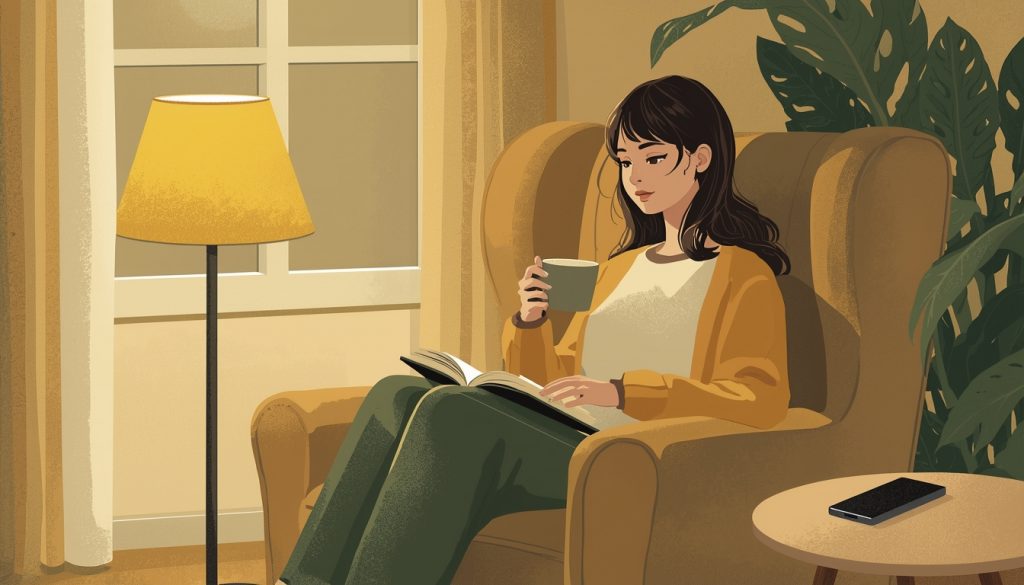
Your nervous system cannot flip from “full alertness” to “deep sleep” like a light switch. It needs a runway.
A wind-down window is a buffer period before bed where you intentionally slow things down. This might look like dimming your lights, changing into comfortable clothes, making a cup of herbal tea, doing some light stretching, or reading something calming.
The key is that you do it consistently. The routine itself becomes a cue to your brain: sleep is coming.
What does not work as a wind-down? Answering work emails. Scrolling social media. Watching an intense thriller. These keep your nervous system activated when it is trying to shift into rest mode.
This connects deeply to something many people overlook: why rest does not always feel restful. If your body has never learned to truly downshift, even time spent resting can feel hollow and unsatisfying.
3. Rethink Your Relationship With Screens and Blue Light
You have probably heard the advice to “put your phone away before bed.” And you have probably ignored it at least once this week. No judgment here.
But here is why it actually matters: the blue light emitted by phones, tablets, and laptops suppresses the production of melatonin, the hormone your body uses to signal that it is time to sleep. Even 30 minutes of scrolling before bed can delay your sleep onset by up to an hour.
The Sleep Foundation has documented that light exposure plays a significant role in regulating the sleep-wake cycle.
You don’t have to throw your phone across the room — but do move it out of arm’s reach. Try charging it in another room 45 minutes before bed. Then fill that space with something analog: a physical book, a crossword, a podcast on a small speaker, or simply some quiet. Most people are surprised by how naturally sleepiness arrives when the constant stimulation finally stops.
4. Make Your Bedroom a Sleep-Only Space
Your brain is an incredible pattern-recognition machine. Whatever you repeatedly do in a space, your brain starts to associate that space with that activity.
If you work from bed, scroll social media in bed, eat in bed, argue with your partner in bed, and then try to sleep in that same bed — your brain gets confused. It does not know what that space is for.
Ideally, your bedroom should be reserved for sleep and intimacy only. If that is not entirely possible in your living situation, at least try to create a visual shift: dim the lights, put the laptop away, and change your physical environment enough to signal a transition.
Temperature matters here too. According to Harvard Medical School’s Sleep Division, a slightly cool room — around 65 to 68 degrees Fahrenheit — supports deeper sleep because your core body temperature naturally drops as you fall asleep.
5. Watch What You Eat and Drink in the Evening
This one is not about being restrictive. It is about understanding how your choices after 6 PM affect your sleep quality.
Caffeine has a half-life of about five to six hours. That means if you have a coffee at 3 PM, half of that caffeine is still in your system at 8 or 9 PM. For some people, the effects linger even longer.
Alcohol is another common culprit that catches people off guard. Yes, it might make you feel sleepy initially. But alcohol disrupts your sleep architecture, reducing the amount of REM sleep you get. You may fall asleep faster but wake up at 2 AM feeling wired — and wonder why.
Consider Marcus, a 41-year-old in Chicago. He was having two glasses of wine every evening to “wind down.” He slept seven hours but always woke up feeling groggy and unrefreshed. When he moved his last drink to before dinner and switched to herbal tea in the evenings, his sleep quality shifted noticeably within a week.
A light snack before bed is fine. Heavy, rich, or spicy meals within two hours of sleep can cause discomfort that disrupts your rest.
6. Manage the Mental Load Before Your Head Hits the Pillow
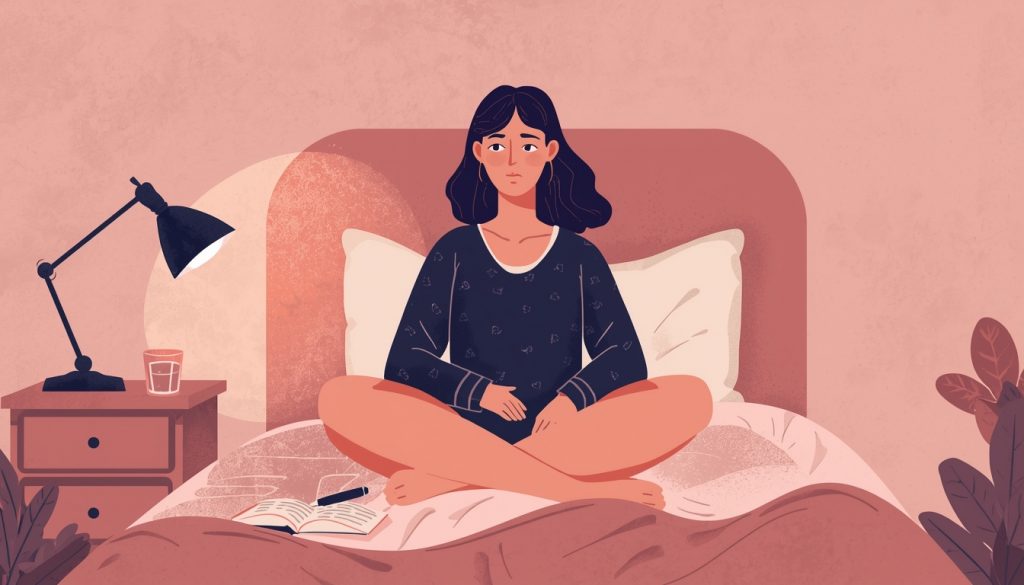
For many people, the real enemy of sleep is not darkness or temperature or caffeine. It is the mental noise that follows them to bed.
The endless to-do list. The unresolved worry about tomorrow. The conversation you keep replaying. The anxiety about what you forgot.
One of the most effective sleep hygiene habits that actually work for this is what researchers call a “cognitive offload” — getting the mental clutter out of your head and onto paper before bed.
A simple approach: spend five to ten minutes journaling before bed. If you don’t know where to start, try this prompt — “What am I carrying right now that I don’t want to forget?” Write it all down. Tasks, worries, half-formed thoughts. No grammar, no structure needed. The act of writing signals to your brain that the information is captured — it no longer needs to hold it in active memory. And that release? It’s what makes the difference between lying awake at midnight and actually drifting off.
If you want practical ways to do this, the brain dump exercises for clarity explored here at Mindbloom are a wonderful starting point. They are simple, effective, and deeply settling.
7. Get Sunlight in the Morning
This one surprises people. But morning light exposure is one of the most powerful regulators of your entire sleep-wake cycle.
When natural light hits your eyes within an hour of waking, it sends a clear signal to your brain: the day has begun. This anchors your circadian rhythm, boosts cortisol at the right time of day, and sets up your melatonin release for later that night.
You do not need to sit outside for an hour. Ten to fifteen minutes of natural light exposure in the morning — even on a cloudy day — makes a measurable difference. Open the blinds, step outside with your coffee, or take a short walk.
8. Move Your Body, But Time It Wisely
Regular physical movement is one of the best natural sleep aids available. It reduces anxiety, helps regulate your stress hormones, and tires your body in healthy ways.
But timing matters. Intense exercise within two to three hours of bedtime can elevate your heart rate and body temperature in ways that make it harder to fall asleep. If evenings are your only exercise window, opt for gentler movement — yoga, walking, stretching — rather than high-intensity training.
This also connects to the broader conversation about how suppressed emotions and stress physically show up in the body. Movement is often the missing release valve for emotional tension that keeps us lying awake at night.
A Practical Step-by-Step Evening Routine You Can Actually Follow
You do not need to do all of these at once. Start with two or three and build from there.
Your Simple Evening Sleep Routine — Start Here
☐ 6:00 PM — Limit caffeine. Switch to water, herbal tea, or decaf.
☐ 8:30 PM — Dim the lights. Signal to your brain that evening has arrived.
☐ 9:00 PM — Phone goes on the charger. In another room. Do it.
☐ 9:00–9:45 PM — Wind-down window: journal, stretch, read a physical book, or listen to calm music.
☐ 9:45 PM — Five-minute brain dump. Everything on your mind, onto paper.
☐ 10:00 PM — Into bed. Cool room, dark, quiet.
☐ Next morning — Same wake time. No exceptions. This is your anchor.
You don’t need all of these on night one. Pick two. Build from there.
What to Do When You Cannot Fall Asleep
Even with good habits in place, some nights are still hard. Here is what actually helps:
Do not lie in bed awake for more than 20 minutes. Get up, go to another room, and do something calm and boring (not screens) until you feel sleepy again. This prevents your brain from associating your bed with wakefulness.
Try slow, deep breathing. The 4-7-8 technique (inhale for 4 counts, hold for 7, exhale for 8) activates your parasympathetic nervous system and genuinely helps.
Avoid clock-watching. Turn your clock away. Watching the time ticks anxiety upward and makes sleep harder.
Remember: one bad night is not a catastrophe. Most people can function reasonably well after one poor night. Catastrophizing about bad sleep makes it worse.
If sleeplessness is a persistent, ongoing struggle, it is worth looking into insomnia remedies and causes in more depth — because chronic insomnia is a real condition that benefits from more targeted support.
The Connection Between Sleep and Mental Health
Sleep and mental health are not separate conversations. They are the same conversation.
Poor sleep raises anxiety. Anxiety disrupts sleep. Stress keeps you awake. Sleep deprivation lowers your stress resilience. It is a loop, and it runs in both directions.
Research published by the National Institutes of Health has consistently shown that sleep disturbances are both a symptom and a risk factor for conditions including depression, anxiety, and PTSD.
This is why caring for your sleep is an act of caring for your mental health. Not just your productivity. Not just your energy levels. Your actual emotional wellbeing.
And if your mind feels particularly loud or chaotic at night, learning how to quiet mental chatter is a skill worth developing — one that supports both your sleep and your emotional life.
Real Stories: When Small Habits Made a Real Difference
Sarah, 29, a remote worker in Austin: She was working until 11 PM most nights and wondered why she could not fall asleep until 1 AM. She moved her laptop out of her bedroom and set a firm 9 PM screen curfew. Within three weeks, she was falling asleep by 11 PM and waking up without an alarm.
James, 52, a father of two in Seattle: James had always been a light sleeper. His wife’s advice to “just relax” was not helping. He started sleeping with a fan for white noise and dropped the room temperature to 66 degrees. Those two changes alone improved his sleep continuity dramatically.
Priya, 38, a healthcare worker: Shift work had completely derailed her sleep. She could not always control her schedule but started anchoring her wake time on days off and getting morning sunlight consistently. Over time, her body began adjusting more fluidly to schedule changes.
Daniel, 24, a university student: He was using his phone to scroll until he fell asleep, often waking up at 3 AM unable to get back to sleep. He replaced the evening scroll with a physical book and started doing five minutes of journaling before bed. His 3 AM wake-ups stopped within two weeks.
A Word of Encouragement Before You Go
Sleep is not a performance. It is not something you win or lose at. It is a biological need, and your body wants to do it well. When it struggles, it is usually because of signals it has received — signals that you have the power to change, gently and gradually.
You do not need a perfect routine. You need a consistent one. You do not need to overhaul everything tonight. You need to pick one small thing and begin.
Start with your wake time. Or your phone in another room. Or five minutes of journaling. Just one thing.
Your nervous system has learned its current patterns. It can learn new ones too.
Be patient with yourself. Be consistent. And trust that the quiet investment you are making in your nights is going to change how every day feels.
Good sleep is not a luxury. It is the foundation everything else is built on — and you deserve to rest on it.
If tonight feels hard, start with just one habit from this list. Come back tomorrow. We’ll be here.
Frequently Asked Questions About Sleep Hygiene Habits
1. What are sleep hygiene habits? Sleep hygiene habits are the daily behaviors and environmental conditions that support consistent, quality sleep. They matter because poor sleep is directly linked to increased anxiety, depression, weakened immunity, poor concentration, and reduced emotional resilience. Building good habits helps your body’s natural sleep-wake cycle function as it is designed to.
2. How long before sleep hygiene habits start working? Most people begin to notice improvements within one to three weeks of consistently practicing good sleep habits. The key word is consistently. One good night after trying a new habit is encouraging, but the real benefits compound over time as your body adjusts to new cues and rhythms.
3. What is the most important sleep hygiene habit? Many sleep researchers point to a consistent wake time as the most powerful single habit. When you wake at the same time every day, you anchor your circadian rhythm, and your body naturally begins to fall asleep at the appropriate time without as much effort.
4. Can sleep hygiene help with anxiety and insomnia? Yes, significantly. Many people who struggle to sleep due to anxious thoughts find that a combination of journaling before bed, a consistent wind-down routine, and physical activity during the day reduces both their anxiety and their sleep difficulties over time. However, if anxiety is severe, professional support is also worthwhile.
5. Should you nap if you slept badly the night before? Short naps (20 to 30 minutes) before 3 PM can help you recover from a rough night without significantly disrupting your nighttime sleep. Longer naps or naps taken later in the afternoon can interfere with your ability to fall asleep that evening.
6. Does melatonin actually help with sleep hygiene? Melatonin supplements can be helpful for shifting your sleep-wake cycle — particularly for jet lag or shift work — but they are not a cure-all for general sleep difficulties. They work best as a short-term support rather than a long-term solution, and the dose most people take is often higher than needed. Consult a healthcare provider before using melatonin regularly.
7. How does alcohol affect sleep hygiene? Alcohol may help you fall asleep faster, but it significantly disrupts sleep quality. It suppresses REM sleep (the restorative stage) and often causes wakefulness in the second half of the night. Regular alcohol use as a sleep aid tends to worsen sleep quality over time.
8. What temperature is best for sleep? Most research suggests that a room temperature between 65 and 68 degrees Fahrenheit (18 to 20 degrees Celsius) promotes the best sleep. Your body temperature naturally drops during sleep, and a cooler environment supports this process.
9. Why do I wake up at 3 AM every night? Waking in the early morning hours is often connected to stress, alcohol consumption, blood sugar fluctuations, or disruptions in sleep architecture. It is also common during periods of high anxiety. Improving your wind-down routine, limiting alcohol, and addressing underlying stress can help. If it persists, speaking with a doctor is a good idea.
10. Can sleep hygiene habits help with depression? Sleep and depression are closely linked, and improving sleep quality can meaningfully support emotional wellbeing. While sleep hygiene is not a replacement for professional treatment of depression, it is a valuable part of any holistic approach to mental health. Many people find that better sleep makes other coping strategies more effective.
Disclaimer
The content published on Mindbloom is written for general informational and educational purposes only, based on personal experience and research. It is not intended to be a substitute for professional medical advice, diagnosis, or treatment. Always seek the guidance of a qualified healthcare provider with any questions you may have regarding a medical condition, sleep disorder, or mental health concern. Never disregard professional advice or delay seeking it because of something you have read on this blog. If you are in crisis or believe you may be experiencing a mental health emergency, please contact a qualified helpline or emergency services immediately.