
Sleep Deprivation and Depression: How Poor Sleep Triggers, Worsens, and Prolongs Depression
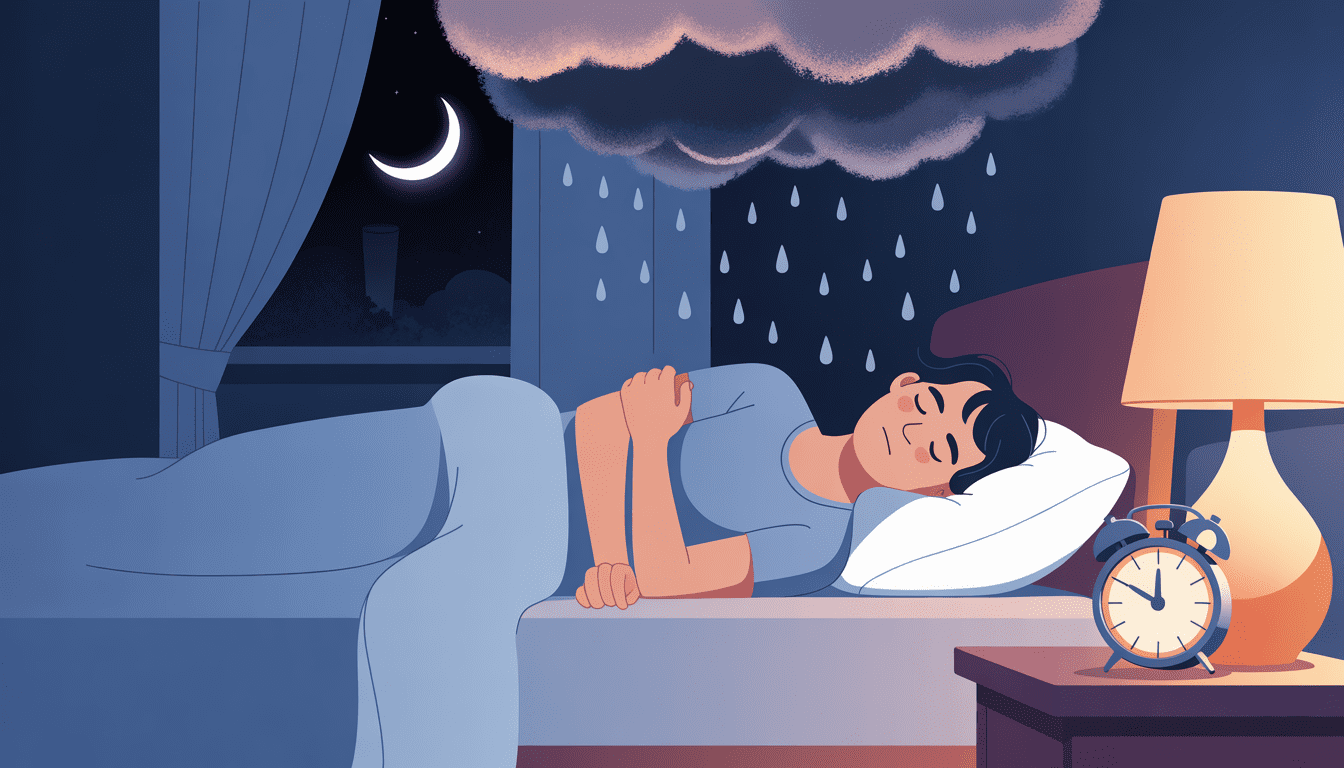
You told yourself you’d just stay up a little later. One more episode. One more scroll. One more hour of lying there, staring at the ceiling while your brain refuses to cooperate. Then morning arrived — heavy, gray, and already exhausted before it even began. What most people don’t realize is that this pattern isn’t just making them tired. The link between sleep deprivation and depression runs far deeper than most of us are ever told — and understanding it could change everything.
If that sounds familiar, you are not alone. Millions of people in the United States and around the world are walking through their days on too little sleep, not fully realizing that the heaviness they feel — the low mood, the irritability, the quiet sense that nothing really matters — might not just be tiredness. It might be something deeper.
The connection between sleep deprivation and depression is one of the most important, most overlooked conversations in mental wellness today. These two things don’t just coexist. They feed each other. They deepen each other. And understanding how they’re linked might be one of the most powerful steps you can take toward feeling like yourself again.
This article is for anyone who has ever wondered why they feel so emotionally hollow after a bad night’s sleep — or why, even when life is going relatively well, they just can’t seem to shake that low, flat feeling. Let’s talk about it.
Table of Contents
What Is Sleep Deprivation, Really?
Most people think sleep deprivation means pulling all-nighters or surviving on three hours before a big presentation. And yes, that counts. But the more common — and more dangerous — form of sleep deprivation is much quieter than that.
It’s the person who gets six hours every night and has done so for years, convincing themselves they’re “just not a big sleeper.” It’s the new parent who hasn’t had a full night’s rest in months. It’s the anxious professional lying awake from 2 to 4 a.m. every single night, doing the math on how many hours they have left.
According to the Centers for Disease Control and Prevention (CDC), adults need at least seven hours of sleep per night. Yet more than one in three American adults regularly get less than that.
That gap — between how much sleep we need and how much we actually get — is where things start to quietly fall apart.
The Difference Between Feeling Tired and Feeling Depleted
There’s tired, and then there’s the kind of tired that lives in your bones. The kind where you wake up and immediately feel like the day is already too much. Where small things feel enormous. Where you snap, and then feel terrible for snapping, and that guilt just adds to the weight.
That second kind of tired? That’s often sleep deprivation doing something much more serious than just making you yawn.
What Does Depression Actually Feel Like?
Before we explore the link between sleep deprivation and depression, it helps to understand what depression actually is — not the clinical definition, but what it feels like from the inside.
Depression isn’t always crying on the bathroom floor. Sometimes it’s just a persistent flatness. A quiet numbness. Going through the motions of your life without really feeling present in it. It’s the inability to feel excited about things you used to love. The heaviness when you try to get out of bed in the morning. The way everything just feels like effort.
It can look like irritability. Isolation. Eating too much or too little. Losing interest in relationships that used to matter. Feeling like you’re watching your own life through glass.
The Difference Between Sadness and Depression
Sadness is a response to something. Depression is a weather system that moves in without permission and stays. Sadness lifts; depression lingers. And when you pair it with chronic sleep loss, even the smallest tasks — replying to a text, making breakfast, getting dressed — can feel impossibly heavy.
The National Institute of Mental Health (NIMH) recognizes depression as one of the most common mental health conditions in the United States, affecting more than 21 million adults in any given year.
And here’s the thing that most people don’t know: for a significant number of those people, disrupted sleep isn’t just a symptom of their depression. It’s a cause.
The Science Behind Sleep Deprivation and Depression
Here’s where it gets really important — and honestly, a little eye-opening.
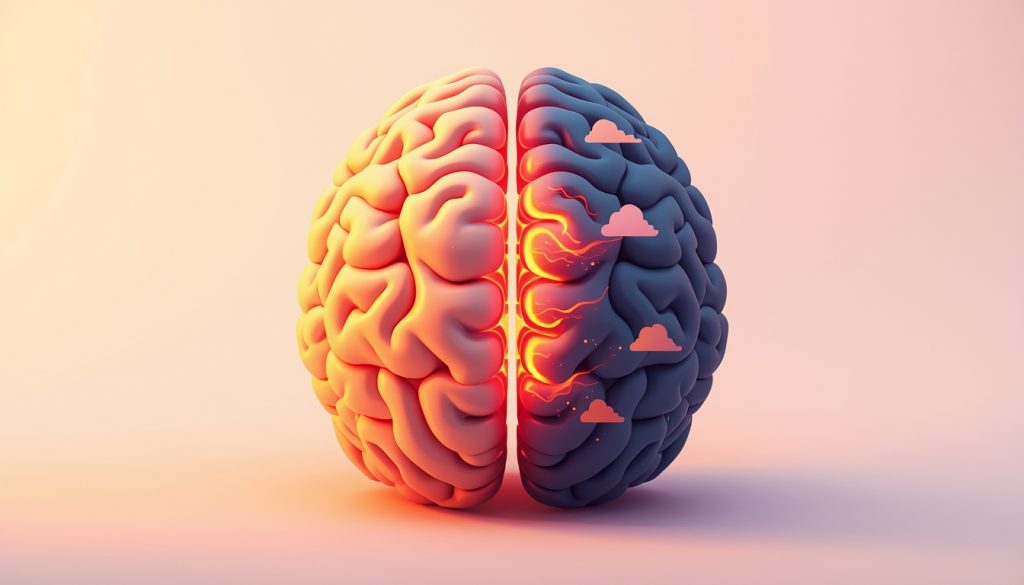
Your brain does some of its most critical emotional processing while you sleep. During deep sleep and REM (Rapid Eye Movement) sleep, your brain works through the day’s emotional experiences, regulates stress hormones, and restores the neurochemical balance that keeps your mood stable.
When you consistently miss out on that process, things start to go wrong.
Your Brain Chemistry Gets Disrupted
Sleep is the time when your brain recalibrates serotonin and dopamine — two of the key chemicals that regulate mood, motivation, and the ability to feel pleasure. When you’re sleep-deprived, the production and regulation of these chemicals gets thrown off.
Less serotonin means lower mood. Less dopamine means less motivation, less pleasure, less of that basic sense that life is worth engaging in.
A major study published in JAMA Psychiatry found that people with insomnia were significantly more likely to develop depression than those who slept well. Not slightly more likely. Significantly.
Your Emotional Brain Goes Into Overdrive
Have you ever noticed that after a terrible night’s sleep, everything feels more intense? Small inconveniences feel like disasters. Mild annoyances feel like personal attacks. Situations that you’d normally handle with grace suddenly feel completely overwhelming.
That’s not a personality flaw. That’s neuroscience.
Research from the University of California, Berkeley found that sleep-deprived brains showed up to 60% more activity in the amygdala — the part of your brain responsible for emotional reactions — compared to well-rested brains. At the same time, the rational prefrontal cortex becomes less active, meaning you’re less able to regulate or make sense of what you’re feeling.
The result is an emotional brain running on overdrive with no brakes.
The Stress Hormone Loop
Sleep deprivation also raises cortisol — your body’s primary stress hormone. Elevated cortisol over time is directly linked to the development of depression. And here’s where the loop becomes cruel: high cortisol makes it harder to fall asleep, which leads to more sleep deprivation, which raises cortisol further.
It’s a cycle that can be incredibly difficult to break on your own.
Real-Life Scenarios: Does Any of This Sound Like You?
Sometimes the science makes more sense when we see it in real life. Sleep deprivation and depression rarely announce themselves loudly — they creep in through small patterns that are easy to explain away. Here are five scenarios that might feel closer to home than you’d expect.
Scenario 1: The Exhausted Parent
Maya is a 34-year-old mother of two. Her youngest is two years old and still waking up twice a night. For the past two years, Maya has gotten maybe five to six fragmented hours of sleep. She’s noticed that she feels flat. She snaps at her husband over small things. She doesn’t really enjoy her hobbies anymore. She told her doctor she thinks she might be depressed — and she’s right. But no one connected it to the relentless sleep disruption she’s been living through.
Scenario 2: The Night Owl Who Doesn’t Realize the Cost
Jordan is 27 and works remotely. His sleep schedule has drifted — he’s up until 1 or 2 a.m. most nights and sleeping until 8 or 9. He gets about seven hours, technically. But because his schedule is misaligned with natural daylight and he rarely gets into deep sleep, he’s chronically under-rested. He’s been feeling low for months. He assumes it’s just life. He doesn’t connect it to sleep.
Scenario 3: The High Achiever Running on Empty
Priya is a 41-year-old attorney. She sleeps five hours a night, has for years, and wears it as a kind of badge. “I don’t need much sleep,” she says. But lately, she’s been struggling to feel motivated. She finds herself dreading things she used to love. She’s irritable. She feels detached. She hasn’t considered that her sleep habits might be at the root of it.
Scenario 4: The Anxious Insomniac
David, 38, has struggled with anxiety for most of his adult life. The anxiety makes it hard to sleep, and the lack of sleep makes the anxiety worse. Over the past year, the anxiety has shifted into something heavier — a persistent low mood, a loss of interest in things, a general sense of hopelessness. The sleep deprivation and depression are now feeding each other in a loop he can’t seem to get out of.
Scenario 5: The Teen Staying Up Too Late
Sixteen-year-old Sam stays up until midnight on her phone every night and is up at 6:15 a.m. for school. She’s been struggling emotionally at school, pulling away from friends, and feeling like nothing is fun anymore. Her parents are worried about teenage depression — and while they’re right to be concerned, her chronic sleep deficit is a significant piece of the picture.
The Two-Way Street: Depression Also Disrupts Sleep
Here’s what makes this relationship particularly complicated: depression doesn’t just result from sleep deprivation. Depression also causes sleep problems.
Many people with depression experience insomnia — lying awake for hours, unable to quiet a racing or negative mind. Others experience hypersomnia, sleeping too much but never feeling rested. Either way, the sleep that depressed people do get tends to be fragmented, shallow, and non-restorative.
This is why treating one without addressing the other so often leads to incomplete recovery. If you treat the depression but leave the sleep problems unresolved, the risk of relapse is significantly higher. If you improve sleep without addressing underlying depression, the progress can be frustratingly slow.
The most effective approaches tend to address both at the same time.
If you’ve ever lain awake wondering why your mind simply won’t switch off at night, you might find it helpful to explore some of the insomnia remedies that actually work — particularly the ones that address the mental and emotional components of sleeplessness, not just the physical ones.
How Long Does It Take for Sleep Loss to Affect Your Mood?
This is one of the most frequently asked questions — and the answer might surprise you.
Research shows that even one night of poor sleep can significantly impact mood the next day. Emotional reactivity increases, patience shrinks, and the ability to find pleasure in small things — a good meal, a funny moment, a kind word — quietly dims.
After two to three nights, emotional regulation begins to deteriorate noticeably. People report feeling on edge, unmotivated, and increasingly hopeless about things that would normally feel manageable.
After one week of insufficient sleep, the changes to mood, motivation, and cognitive function can begin to closely resemble the symptoms of clinical depression — including persistent low mood, loss of interest, fatigue, and difficulty concentrating.
It’s important to note: this doesn’t mean one bad night will cause depression. But it does mean that chronic, ongoing sleep loss creates the exact biological conditions in which depression can take root, deepen, and become genuinely difficult to shake without intervention.
Practical Steps: Breaking the Sleep-Depression Cycle
Understanding the connection between sleep deprivation and depression is one thing. Knowing what to do about it is another. Here are real, actionable steps that can help — not a rigid prescription, but a gentle starting point.
1. Prioritize Sleep as Mental Healthcare
This sounds simple, but the mindset shift matters. Sleep isn’t a luxury or a reward you get after you’ve finished everything else. It is healthcare. It is mood regulation. It is emotional resilience. Treating it that way changes how you protect it.
2. Create a Wind-Down Ritual
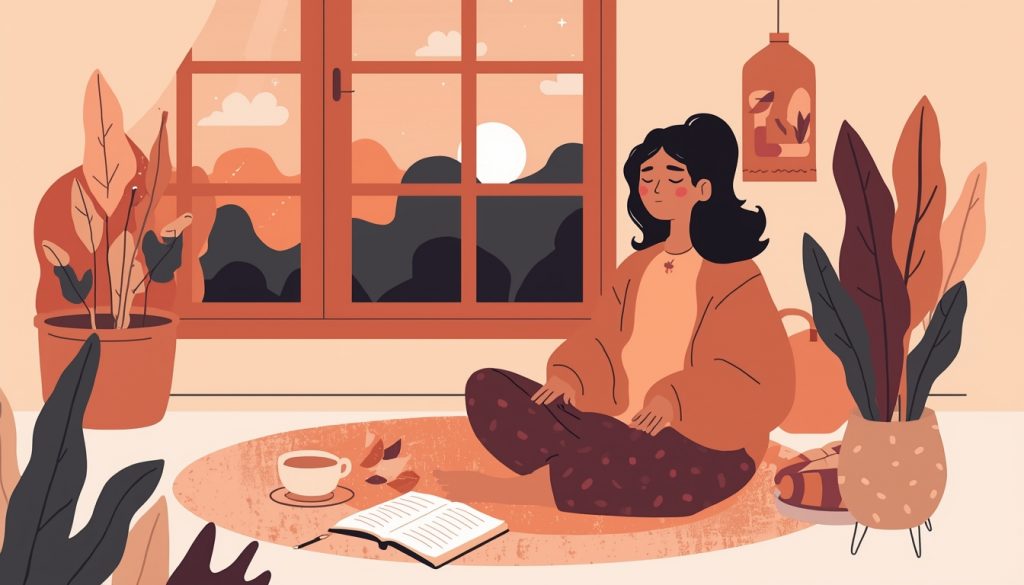
Your nervous system needs a signal that it’s time to shift from “doing” to “resting.” This doesn’t have to be elaborate. It might be dimming the lights an hour before bed, making a calming drink, putting your phone in another room, and reading something gentle. The routine itself becomes the cue.
3. Address the Anxiety That Keeps You Awake
For many people, the biggest barrier to sleep isn’t habits — it’s a mind that won’t stop. If anxious thoughts are keeping you up, working on those thoughts is part of working on your sleep. Simple grounding techniques for work anxiety can be surprisingly effective when practiced in the wind-down period before bed — they help bring your nervous system out of overdrive before you lie down.
4. Watch Your Relationship with Rest
There’s an important distinction between rest and recovery. Many people who struggle with sleep also find that their rest during the day doesn’t feel restorative — they lie on the sofa and still feel wired and tired at the same time. If that’s you, understanding why rest doesn’t always feel restful can help you approach both sleep and daytime recovery in a more intentional way.
5. Get Morning Light
One of the simplest and most powerful tools for resetting your sleep-wake cycle is morning sunlight. Getting natural light in your eyes within the first hour of waking up helps regulate circadian rhythms, boosts serotonin, and improves the quality of sleep that night. Even ten minutes outside makes a difference.
6. Move Your Body — But Not Too Late
Regular physical activity is one of the most evidence-backed interventions for both sleep quality and depression. Walking, swimming, yoga, dancing — it doesn’t need to be intense. But try to avoid vigorous exercise within two to three hours of bedtime, as it can be stimulating and make it harder to fall asleep.
7. Be Honest with a Professional
If you recognize yourself in this article — if the low mood, the sleep disruption, and the sense that something isn’t right have been going on for weeks or months — please talk to someone. A doctor or therapist can help you understand whether you’re dealing with depression, and can work with you on both the sleep and mood components together.
If you’re not sure whether what you’re experiencing is serious enough to bring to a professional, the signs that it’s time to see a therapist might help you make that call with more confidence.
What About Medication?
Some antidepressants also improve sleep quality. Some sleep medications can have antidepressant effects. This is not a coincidence — it reflects just how deeply intertwined the two systems are.
If you’re already on medication for depression and still struggling with sleep, it’s worth having a specific conversation with your prescribing doctor about this. And if you’re being treated for insomnia without any improvement in mood, that’s also worth flagging.
The Sleep Foundation has excellent resources on how sleep and mental health interact, and what integrated treatment approaches tend to look like.
The Emotional Weight of Living Sleep-Deprived
There’s something that doesn’t get talked about enough: the shame and self-blame that comes with sleep deprivation and depression together.
When you’re constantly exhausted and emotionally struggling, it’s easy to tell yourself a story. I’m just not coping well. Other people handle more than this. I’m weak. I’m lazy. I should be able to push through.
Please hear this clearly: you are not weak. You are not lazy. You are a human being whose brain chemistry has been disrupted by something physiological and real. The fact that it feels invisible doesn’t make it less real.
The heaviness you feel when you haven’t slept is not a character flaw. It’s biology. And biology can be changed.
There’s also the phenomenon where people don’t even realize how bad they feel until they sleep better. It’s only in hindsight — after a week of good sleep, when the world suddenly looks brighter and easier and more possible — that they realize how depleted they had been.
A Note on Suppressed Emotions and Sleep
One pattern that many people don’t connect to their sleep problems is the habit of pushing emotions down during the day. When we suppress feelings rather than processing them, those unprocessed emotions have a tendency to surface at night — as rumination, as dreams, as the 3 a.m. spiral of everything you’ve been holding together all day.
Understanding the effects of suppressed emotions on the body can be a genuinely illuminating piece of the puzzle when sleep and mood are both struggling. Our minds have a way of finding the quiet hours to process what we refused to feel during the loud ones.
When to Seek Help Urgently
If sleep deprivation and low mood have progressed to a point where you’re having thoughts of harming yourself, or where the sadness has become so heavy that daily functioning feels impossible, please reach out for help today.
In the United States, you can contact the 988 Suicide and Crisis Lifeline by calling or texting 988. The Crisis Text Line is also available — text HOME to 741741.
You deserve support. Reaching out is not weakness. It is one of the bravest things a person can do.
You Deserve to Feel Like Yourself Again
Sleep is not a passive thing. It is one of the most active, restorative, deeply necessary things your mind and body do. And when we protect it, we are protecting something sacred — the foundation on which emotional resilience, clarity, and joy are built.
You may be reading this at 2 a.m., tired and low and wondering why nothing feels quite right. I want you to know: there is a version of tomorrow that feels lighter. There is a version of yourself that feels more like you. And the path there may be quieter, and more rest-filled, than you’ve been told.
Healing isn’t always dramatic. Sometimes it begins with choosing sleep. With deciding that your mind matters enough to protect. With believing — even when it’s hard to — that you deserve to feel well.
You do. You really do.
Frequently Asked Questions
1. Can sleep deprivation cause depression? Yes. Chronic sleep deprivation disrupts the brain’s neurochemical balance — particularly serotonin and dopamine — and raises cortisol levels, creating the biological conditions in which depression can develop. Research consistently shows that people with ongoing sleep problems are significantly more likely to develop depression over time.
2. Is it normal to feel depressed after a few nights of bad sleep? It is common to feel low, irritable, emotionally flat, or unmotivated after poor sleep. These are signs of how closely mood and sleep are connected. If these feelings persist beyond a week or two, or feel like more than just tiredness, it’s worth speaking to a healthcare professional.
3. Does treating depression improve sleep? Often yes. Many people find that when their depression is treated — through therapy, medication, or lifestyle changes — their sleep improves significantly. However, some people need specific sleep support alongside depression treatment for the best outcomes.
4. How many hours of sleep do I need to protect my mental health? Most adults need between 7 and 9 hours per night. Consistently getting fewer than 7 hours — even if you feel used to it — is linked to increased risk of mood disorders including depression and anxiety.
5. Can sleeping too much be a sign of depression? Yes. Depression can cause both insomnia (difficulty sleeping) and hypersomnia (sleeping too much but still feeling exhausted). If you’re sleeping 10 or more hours and still feel drained, it’s worth discussing with a doctor.
6. What time should I go to bed to avoid sleep deprivation and depression? There is no universal “correct” bedtime, but going to bed and waking up at consistent times — aligned with natural darkness and light cycles where possible — supports better sleep quality and more stable mood. Most sleep experts suggest being asleep by midnight and getting 7 to 9 hours.
7. Is there a link between screen time at night and depression? Yes. Blue light from screens suppresses melatonin production, disrupting the sleep-wake cycle. Beyond the blue light, emotionally stimulating content (social media, news, comparison-triggering feeds) activates the brain’s stress response, making it harder to fall asleep and reducing sleep quality. Both factors contribute to the sleep-depression cycle.
8. Can napping help if I’m sleep-deprived and feeling depressed? Short naps (20 to 30 minutes) can improve alertness and mood in the short term. However, long naps or napping late in the day can disrupt nighttime sleep and worsen the overall pattern. If depression is involved, napping can sometimes become avoidance behavior, which can deepen low mood over time.
9. What is the fastest way to break the sleep-depression cycle? There’s no single fast solution, but Cognitive Behavioral Therapy for Insomnia (CBT-I) is considered the gold-standard treatment for sleep problems related to mental health. Combined with depression treatment and lifestyle changes like morning light exposure and physical activity, many people see meaningful improvement within weeks.
10. Should I see a doctor or a therapist for sleep deprivation and depression? Ideally, both. A doctor can rule out physiological causes and discuss medication options if appropriate. A therapist — particularly one trained in CBT-I or depression — can help address the thought patterns and behaviors that maintain both the sleep problems and the low mood. Many people benefit most from a combined approach.
11. Can sleep deprivation make you cry more easily? Yes. Sleep loss reduces the brain’s ability to regulate emotional responses. The prefrontal cortex — the rational, calming part of your brain — becomes less active when you’re sleep-deprived, while the emotional amygdala becomes overactive. This means that things you’d normally process with perspective can instead feel overwhelming, triggering tears, frustration, or a sense of despair that feels disproportionate to the situation.
12. Is there a specific type of sleep that protects against depression? Yes — REM sleep (the dreaming stage) appears to be particularly critical for emotional regulation and mood. During REM, the brain processes emotional memories and reduces their intensity, essentially helping you “file away” distressing experiences. People who are regularly deprived of REM sleep — which happens when sleep is cut short, since REM is most abundant in the final hours — are more vulnerable to emotional dysregulation and depression over time.
Disclaimer
The content published on Mindbloom is written from personal experience and is intended for general informational and educational purposes only. It is not a substitute for professional medical advice, diagnosis, or treatment. Always seek the guidance of a qualified healthcare provider with any questions you may have regarding a medical or mental health condition. Never disregard professional medical advice or delay seeking it because of something you have read on this blog. If you are in crisis or believe you may be experiencing a medical or psychiatric emergency, please contact your doctor or emergency services immediately.