
How to Stop Nighttime Anxiety and Racing Thoughts: Why It Happens and What Actually Helps
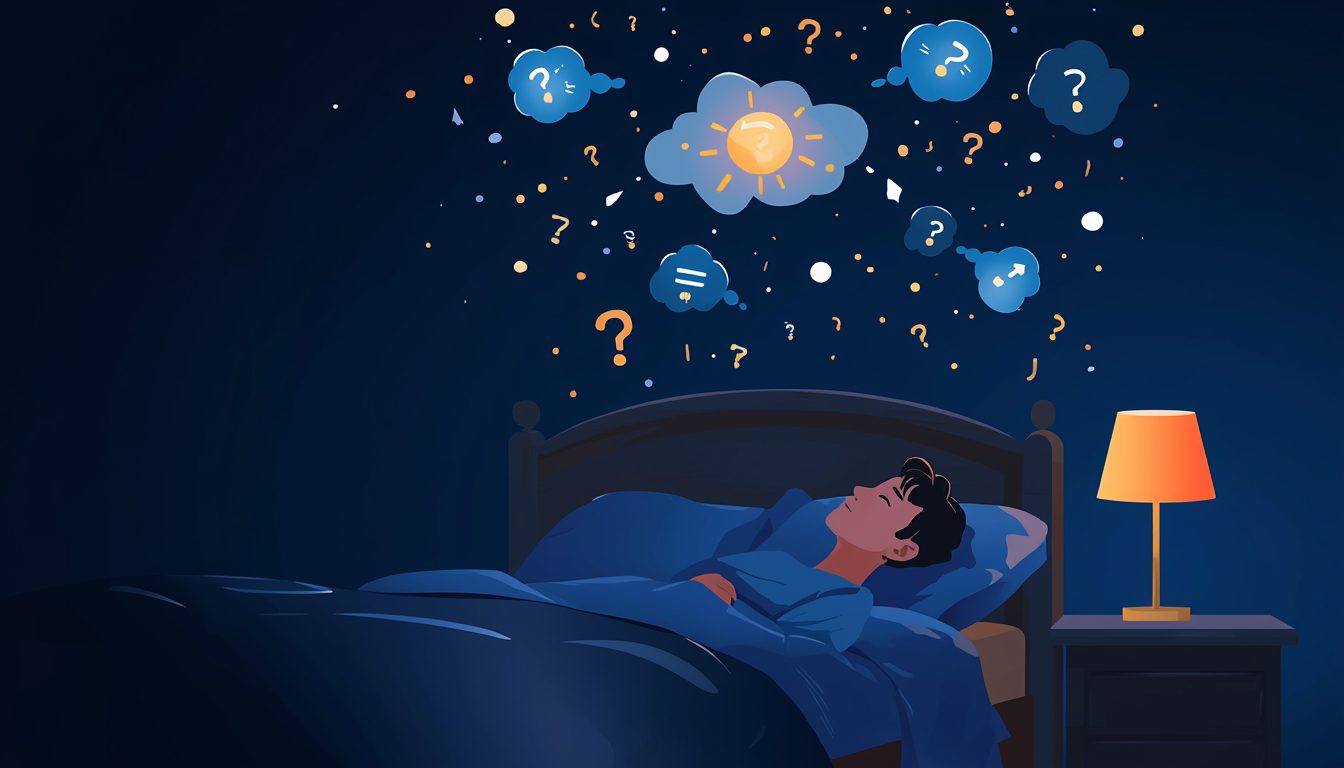
It’s past midnight. The house is quiet. You’re exhausted — the kind of tired that lives in your shoulders and behind your eyes — and yet your brain has decided that right now, in the dark, is the perfect time to replay every awkward thing you’ve said this week, loop through tomorrow’s to-do list, and catastrophize things that haven’t even happened yet. If nighttime anxiety and racing thoughts are keeping you awake night after night, you are far from alone — and you are not broken.
Nighttime anxiety and racing thoughts are one of the most common — and most quietly devastating — struggles people deal with today. You’re not broken. You’re not “too anxious.” And you are definitely not alone. Millions of people lie awake every single night fighting the exact same battle, wondering why their mind simply won’t let them rest.
This article is for you. Not a clinical breakdown — just an honest, practical conversation about why this happens, what it actually feels like, and what you can genuinely do about it tonight and every night going forward.
Table of Contents
Why Is Anxiety Worse at Night? The Real Reason Your Brain Won’t Shut Off
Here’s something that trips a lot of people up: nighttime anxiety isn’t random. There are real, understandable reasons why your brain tends to spiral after dark.
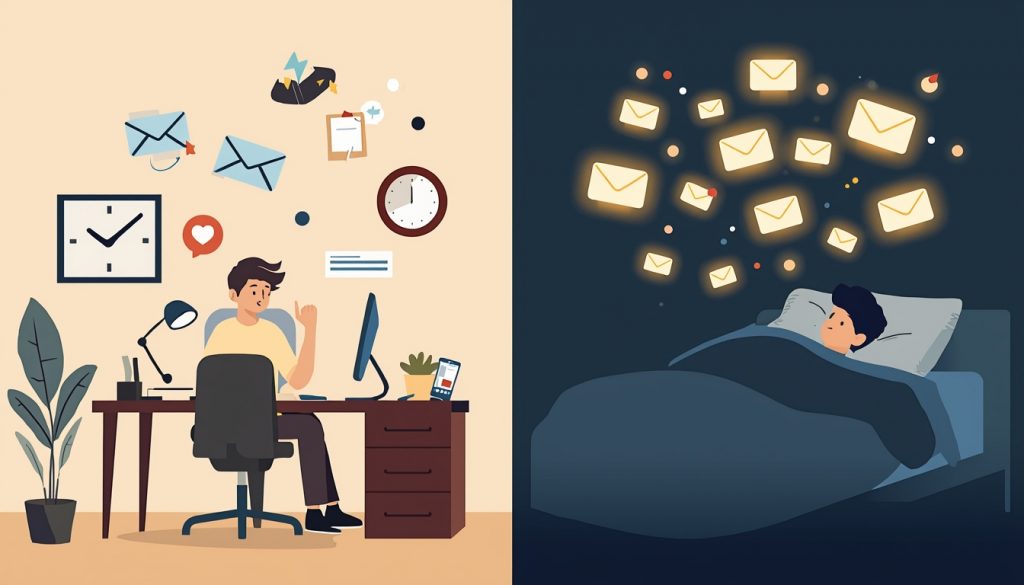
During the day, your mind is occupied. You’re responding to emails, making decisions, talking to people, navigating traffic, cooking dinner. All of that busyness acts like white noise — it drowns out the anxious thoughts trying to surface. But the moment you lie down in bed and the distractions disappear? Everything you were too busy to process rushes in all at once.
Think of daytime busyness as background noise — it drowns out the anxious thoughts trying to surface. The moment you lie down and that noise disappears, everything you were too busy to feel rushes in at once.
There’s also a physiological piece to this. Research from the American Psychological Association shows that anxiety naturally elevates cortisol — your body’s primary stress hormone. When cortisol stays elevated into the evening, it can actively suppress melatonin, the hormone your body needs to feel sleepy. The result? You feel tired but wired. Exhausted but unable to switch off.
Your bedroom itself can sometimes become a trigger. If you’ve spent enough nights lying awake in the same space, your brain starts to associate your bed with wakefulness and worry rather than rest. It becomes a cycle — and breaking it takes both understanding and intention.
What Racing Thoughts Actually Feel Like (Real Scenarios)
Before we talk solutions, let’s just sit here for a moment. Because nighttime anxiety doesn’t look the same for everyone, and sometimes just seeing your experience reflected back at you is a kind of relief.
Scenario 1: The Overachiever Who Can’t Stop Planning
Sarah is an incredibly capable woman — handles everything at work, holds her family together, always on top of things. But the moment she gets into bed, her brain opens every tab at once. Did she reply to that email? What’s she going to say in tomorrow’s meeting? What if the car needs to go in for service and she forgets to book it? She’s not anxious about anything specific — she’s anxious about everything, running on a mental hamster wheel until 2 a.m.
Scenario 2: The Person Replaying a Conversation
Marcus had a slightly awkward exchange with a coworker at lunch. Nothing dramatic. But at 11:30 p.m., lying in the dark, he’s replaying it frame by frame. Did he say something weird? Did he come across as rude? What did she mean by that look? He knows, logically, that it’s nothing. But his brain won’t accept that answer.
Scenario 3: The Parent Lying Awake Worrying About Their Kids
Elena’s children are safe, healthy, and asleep down the hall. But in the quiet of her bedroom, her mind fills with every possible thing that could go wrong. Their health, their futures, whether she’s doing enough as a parent. The love is enormous. So is the weight of it at night.
Scenario 4: The Person Dreading Tomorrow
Jamie has a difficult conversation coming up at work. He knows it’s going to be uncomfortable. So every night leading up to it, his body kicks into a low-grade state of dread — heart beating a little too fast, thoughts rehearsing every possible version of how it could go, unable to let the worry go long enough to fall asleep.
Scenario 5: The Late-Night Existential Spiral
Some nights, there’s no specific trigger at all. Just a formless, nameless dread. A feeling that something is wrong, or could be wrong, without being able to point to a single thing. This kind of free-floating anxiety is one of the hardest to explain — and one of the most exhausting to live with.
If any of those felt like a mirror, you’re in the right place.
The Connection Between Your Body and Nighttime Anxiety
Here’s what most people don’t realize: nighttime anxiety isn’t just in your head. It lives in your body too.
When your nervous system senses a threat — real or imagined — it activates your fight-or-flight response. Your heart rate increases slightly. Your muscles tense. Your breathing gets a little shallower. Your brain becomes hypervigilant, scanning for danger even when there is none. This is the same system that would save your life if you were being chased by something. But at 1 a.m. in your bedroom, it just keeps you awake.
This body-mind connection is something Mindbloom has explored in depth. If you’ve ever felt that anxious, wired-but-tired sensation and wondered why rest doesn’t feel restorative even when you do sleep, understanding your nervous system is a powerful starting point — and you can explore exactly why rest doesn’t always feel restful in this honest piece that might hit close to home.
The physical symptoms of nighttime anxiety can include:
- A racing or pounding heartbeat
- Tight chest or shallow breathing
- Restlessness or an inability to get comfortable
- A churning stomach
- Feeling hot or flushed despite the room being cool
- Waking suddenly from light sleep, heart pounding
These are real. They are not imagined. And they deserve to be taken seriously — not dismissed with “just relax.”
How Nighttime Anxiety and Sleep Become a Vicious Cycle
One of the cruelest things about nighttime anxiety is the way it feeds itself.
Night one: you can’t sleep because your thoughts are racing. You eventually fall asleep exhausted, and wake up already feeling behind.
Night two: you get into bed and immediately think, “What if I can’t sleep again?” That thought alone creates anxiety — which makes it harder to sleep.
Night three: you start dreading bedtime during the day. The bedroom starts to feel like a battlefield.
This pattern is remarkably common and remarkably hard to break without understanding what’s fueling it. The Sleep Foundation confirms that anxiety is one of the leading contributors to insomnia, and that the relationship between the two runs in both directions — poor sleep worsens anxiety, and anxiety worsens sleep.
If this cycle has been going on for a while, you might also notice that it’s starting to affect how you feel during the day. Your mood, your energy, your ability to concentrate, even your relationships. Because when you’re not sleeping well, nothing else quite works right either. This is explored in depth in the Mindbloom piece on sleep deprivation and depression, which sheds light on just how deeply connected our sleep and our emotional wellbeing truly are.
10 Practical Ways to Calm Nighttime Anxiety and Quiet Racing Thoughts
Let’s get into what actually helps. Not vague advice like “just try to relax.” Real, specific, actionable things you can try tonight.
1. Give Your Thoughts Somewhere to Go Before Bed
Racing thoughts often spiral because they have nowhere to land. One of the most effective tools for this is a simple brain dump — spending ten minutes before bed writing everything that’s in your head onto paper. Not in a journal, not in a structured way. Just a messy, unfiltered outpouring of every worry, task, and thought crowding your mind.
The act of writing externalizes your thoughts. They’re no longer circling inside — they’re captured on the page. Your brain can, literally, let go a little. Mindbloom’s guide to brain dump exercises for clarity walks you through exactly how to do this effectively, including techniques designed specifically for mental overload.
2. Try the 4-7-8 Breathing Method
This breathing technique, developed by Dr. Andrew Weil and widely recommended by anxiety researchers, is deceptively simple and genuinely effective for quieting a racing nervous system.
Here’s how it works:
- Inhale through your nose for 4 counts
- Hold your breath for 7 counts
- Exhale slowly through your mouth for 8 counts
- Repeat 4 times
The extended exhale activates your parasympathetic nervous system — your body’s “rest and digest” mode — and signals to your brain that you are safe. According to Harvard Health Publishing, breathwork like this can meaningfully reduce the physiological symptoms of anxiety within minutes.
3. Create a “Worry Window” During the Day
This one sounds counterintuitive, but it works beautifully. Instead of fighting your worries all day and having them pile up until bedtime, schedule a specific 20-minute window during the day — say, at 5 p.m. — when you are allowed to worry. Write down your concerns, think them through, and then close the notebook.
When a worry surfaces after that window, you can remind yourself: “I’ve already scheduled time for that. I don’t need to process it now.” Over time, this retrains your brain to contain its anxious processing to a dedicated time rather than nighttime.
4. Build a Wind-Down Routine That Signals Safety
Your nervous system responds to cues. If you go from scrolling social media to lying in bed staring at the ceiling, your body hasn’t had time to transition from alert to restful. A consistent wind-down routine — even just 20-30 minutes long — gives your brain the signal that it’s safe to slow down.
This might look like: a warm shower, dimming the lights, making herbal tea, reading something light, and doing a few minutes of gentle stretching. The specific activities matter less than the consistency. Mindbloom’s guide to sleep hygiene habits that actually work covers exactly this — and it’s worth reading if you’re ready to build a routine that genuinely supports your nervous system.
5. Use the “Name It to Tame It” Technique
This is a research-backed method rooted in what neuroscientists call “affect labeling.” When you find yourself spiraling in anxious thoughts, pause and name what you’re feeling as specifically as possible. Not just “I feel anxious” — but “I feel afraid that tomorrow’s conversation will go badly and that people will think less of me.”
The National Institute of Mental Health notes that putting feelings into words activates the prefrontal cortex — the rational part of your brain — which actually helps calm the amygdala, the part that triggers fear responses. It’s science. And it works.
6. Try Cognitive Shuffling to Interrupt the Spiral
This technique has been gaining serious attention from sleep researchers, and for good reason — it works.
Cognitive shuffling was developed by cognitive scientist Dr. Luc Beaulieu-Prévost to mimic the fragmented, non-linear thought patterns the brain naturally produces as it drifts toward sleep. Here’s how to do it:
Pick a neutral, emotionally bland word — something like “candle” or “window.” For each letter of that word, think of as many random, unrelated images as you can for about five to eight seconds. C — castle, caterpillar, clouds. A — acorn, astronaut, apricot. And so on.
The goal is to flood your brain with random, non-threatening imagery, which essentially derails the anxious thought loop and coaxes your mind toward the disorganized thinking that precedes sleep. Many people report falling asleep mid-word. It sounds almost too simple — but the research behind it is solid, and it costs nothing to try tonight.
7. Make Your Bedroom a Sanctuary, Not a Stress Zone
If your bed has become a place where you lie awake worrying, your brain has learned to associate it with stress. Reclaiming it as a place of rest takes some deliberate effort.
- Only use your bed for sleep (and intimacy) — not for working, scrolling, or watching TV
- Keep the room cool, dark, and quiet
- Consider a white noise machine or app if silence feels too loud
- Remove work devices from the room where possible
These changes might feel small, but they rebuild the psychological association between your bed and rest rather than dread.
8. Try a Body Scan Meditation
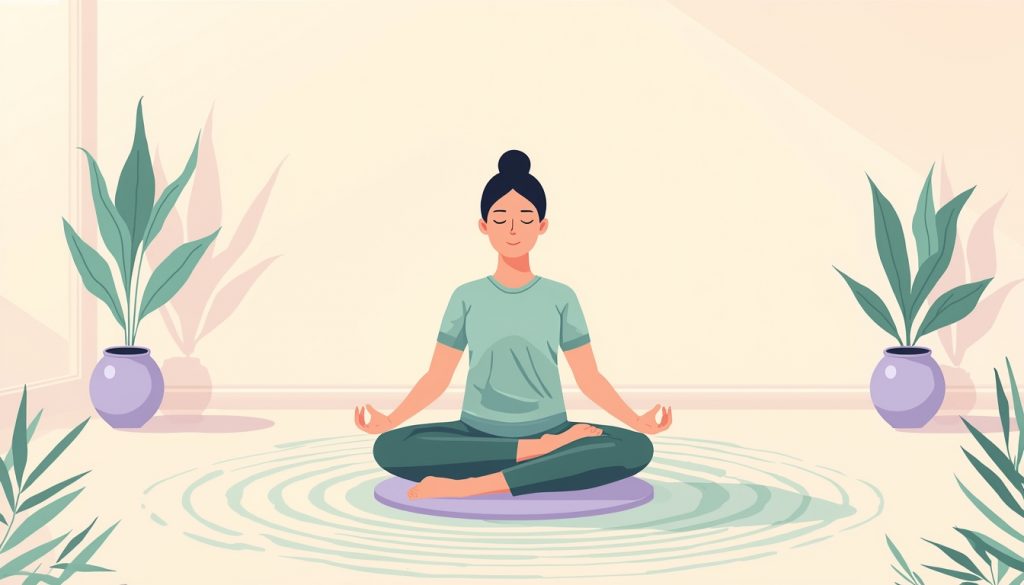
A body scan is one of the most effective ways to anchor your attention in your physical body and pull it away from the thought spiral in your head. Starting at your feet, slowly bring your attention to each part of your body — noticing any tension, warmth, or sensation without trying to change it. Work your way slowly up through your legs, torso, arms, and head.
The goal isn’t to fall asleep during the scan (though many people do). The goal is to redirect your attention away from future-focused anxious thoughts and into the present-moment experience of your body.
The Mayo Clinic recommends body scan meditation as part of an evidence-based approach to managing anxiety and improving sleep.
9. Limit Screens at Least 60 Minutes Before Bed
This one is well-known but frequently underestimated. The blue light emitted by phone and laptop screens suppresses melatonin production, keeping your brain in a daytime alertness mode. But it’s not just the light — it’s the content. Scrolling through news or social media right before bed loads your brain with stimulating, emotionally charged information at the worst possible moment.
Try replacing the last hour of screen time with something calmer — a physical book, gentle music, a podcast on a peaceful topic, or simply a conversation with someone you love.
10. Get Out of Bed If You Can’t Sleep
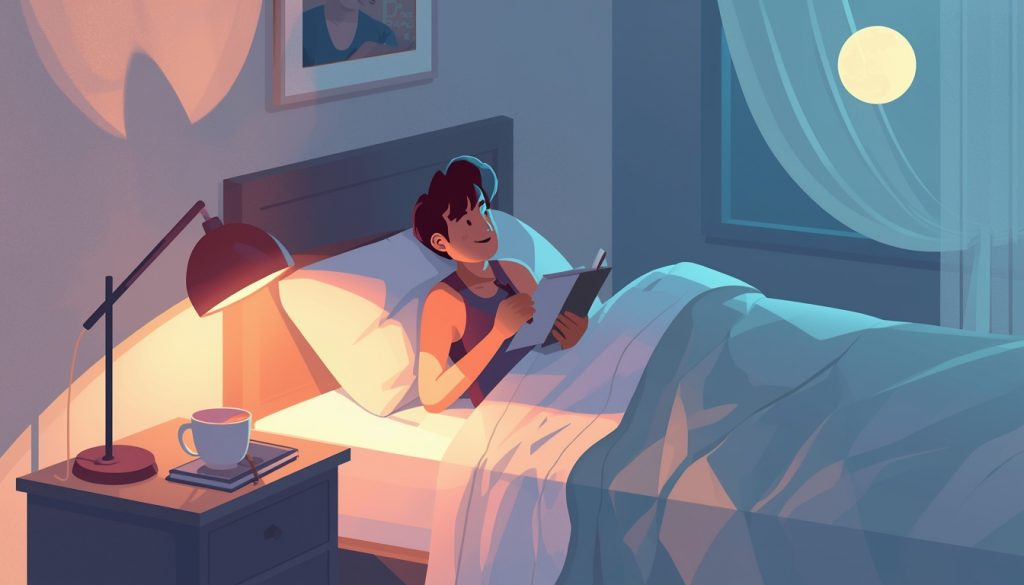
This one feels wrong, but it’s actually recommended by sleep experts. If you’ve been lying awake for 20 minutes or more and the anxiety is building, get up. Go to another room. Do something quiet and calming — read, journal, listen to soft music — until you feel genuinely sleepy. Then return to bed.
This prevents your brain from deepening the association between your bed and wakefulness. It’s uncomfortable in the short term, but it’s one of the most effective long-term strategies for breaking the anxious-sleep cycle.
11. Talk to Someone — Including a Professional
Living with nighttime anxiety doesn’t have to be something you manage entirely alone. If it has been going on for weeks or months, if it is affecting your work, your relationships, or your quality of life, it is worth talking to a therapist or counselor. Cognitive behavioral therapy for insomnia (CBT-I) in particular has a strong evidence base for helping people break the cycle of anxiety and poor sleep.
Not sure if it’s time? Mindbloom’s piece on how to know when to see a therapist can help you work through that question with honesty and without pressure.
What Not to Do When Your Thoughts Are Racing
It’s just as important to know what makes nighttime anxiety worse, especially when you’re desperate for sleep.
Don’t check your phone. Every notification, news update, or social media post your brain absorbs at midnight is fuel for more thinking.
Don’t lie there trying to force yourself to sleep. Sleep can’t be forced. Trying harder to fall asleep makes you more alert, not less. Let go of the goal of sleep; focus instead on relaxing your body.
Don’t reach for alcohol. Alcohol might feel like it helps you wind down, but it disrupts your sleep architecture — meaning the sleep you do get is lighter, less restorative, and more fragmented. You may fall asleep faster, but you’ll wake up feeling worse.
Don’t catastrophize about not sleeping. “If I don’t sleep, tomorrow will be ruined” is a thought that keeps you awake. The truth is, humans are remarkably resilient to one or even a few bad nights. Gently remind yourself that you will get through tomorrow, even imperfectly.
A Note on When Nighttime Anxiety Might Be Something More
For most people, nighttime anxiety is a response to life stress — too much on your plate, too much uncertainty, too little downtime. Practical changes really can make a meaningful difference.
But sometimes, persistent and intense nighttime anxiety is a sign of an underlying anxiety disorder, generalized anxiety disorder, or another mental health condition that would benefit from professional support. Signs that it might be worth seeking professional guidance include:
- Anxiety that has been severe for more than a few weeks without any clear cause
- Panic attacks during the night — sudden, intense physical symptoms of fear
- Racing thoughts accompanied by very low mood or hopelessness
- Anxiety so severe it is significantly interfering with your daily life
Reaching out is not weakness. It is wisdom. And it takes real courage — the kind of courage that is always worth celebrating.
You Deserve Rest — Not Just Sleep
Here’s something worth holding onto on the hard nights: the goal isn’t just to sleep. It’s to feel safe enough to let go.
Nighttime anxiety is, at its heart, your mind trying to protect you. All of that spinning, planning, rehearsing, and worrying is your brain’s attempt to keep you ready for whatever comes next. It’s doing its job, perhaps a little too enthusiastically.
Learning to calm nighttime anxiety and racing thoughts is really about learning to send your mind a different message: You can rest now. You’ve done enough today. Whatever tomorrow holds, you’ll be able to face it. Right now, you are safe.
That message takes time and practice to stick. But it does stick. And one quiet night at a time, you can reclaim your sleep — and your peace.
And if tonight is one of the hard ones, you don’t have to white-knuckle your way through it alone. Start with one thing on this list. Just one. Because every quiet night you manage to build is proof that change is possible — and that you are more capable of finding rest than your 2 a.m. mind would have you believe.
👉 If you’re curious why rest still doesn’t feel restorative even when you do sleep, this piece on why rest doesn’t always feel restful is worth reading next.
Frequently Asked Questions About Nighttime Anxiety and Racing Thoughts
1. Why do I get anxiety only at night? During the day, distractions and busyness give anxious thoughts less space to surface. At night, when stimulation disappears, unprocessed emotions and worries that have been building up all day finally break through. It’s not that your anxiety is worse at night — it’s that it finally has room to be heard.
2. Is nighttime anxiety a sign of an anxiety disorder? Not necessarily. Occasional nighttime anxiety is extremely common and can be triggered by life stress, big changes, or difficult periods. However, if it’s happening most nights, is severe, or is significantly affecting your functioning, it’s worth talking to a mental health professional to understand what’s driving it.
3. What is the fastest way to stop racing thoughts at night? Deep breathing techniques like the 4-7-8 method can help calm your nervous system quickly. Getting out of bed if you’re spiraling, doing a brain dump before sleep, and grounding techniques that bring you back to the present moment are also effective rapid responses.
4. Can anxiety cause you to wake up in the middle of the night? Yes. Elevated cortisol and an activated nervous system can cause both difficulty falling asleep and nighttime waking. Many people with anxiety wake at 2 or 3 a.m. with a rush of anxious thoughts, which is a recognized symptom of anxiety affecting sleep.
5. Why do I keep waking up at 3am with anxiety? Waking at 3 a.m. with a surge of anxiety is extremely common and has a biological explanation. In the early morning hours, your cortisol levels begin rising naturally to prepare your body for the day. If you already have elevated background anxiety, this cortisol surge can trigger an abrupt wake-up accompanied by a rush of worried thoughts. It is not random, and it does not mean something is seriously wrong. The strategies in this article — particularly the wind-down routine, worry window, and breathing techniques — can help reduce the frequency over time.
6. What is the 3-3-3 rule for anxiety? The 3-3-3 rule is a simple grounding technique designed to interrupt an anxiety spiral by pulling your attention into the present moment. When your thoughts start racing, pause and identify: 3 things you can see, 3 sounds you can hear, and 3 parts of your body you can move or feel. It works by engaging your senses and redirecting your brain away from abstract worrying toward immediate physical reality — which is inherently calming for the nervous system. It takes less than a minute and can be done lying in bed in the dark.
7. How long does nighttime anxiety last? This varies widely. For some people it’s tied to a stressful season of life and resolves naturally. For others it becomes a persistent pattern that benefits from targeted intervention. With the right strategies and, where needed, professional support, most people see meaningful improvement.
8. Does melatonin help with nighttime anxiety? Melatonin can help with the sleep side of the equation — it supports your body’s natural sleep-wake cycle. But it doesn’t directly address anxiety. It may be most helpful for people whose nighttime anxiety has disrupted their sleep schedule, but it’s not a standalone solution.
9. What foods or drinks make nighttime anxiety worse? Caffeine consumed in the afternoon or evening is a significant contributor, as it can remain active in your system for six or more hours. Alcohol, while it may seem relaxing, disrupts sleep quality. High-sugar foods and heavy meals before bed can also elevate your heart rate and make restful sleep harder.
10. Can exercise help with anxiety at night? Regular exercise is one of the most effective long-term strategies for reducing overall anxiety levels. However, intense exercise right before bed can be stimulating. Aim to exercise earlier in the day, and consider gentle yoga or stretching in the evening as a wind-down practice.
11. Is it normal to feel physical symptoms with nighttime anxiety? Absolutely. A racing heart, tight chest, tense muscles, and shallow breathing are all physical expressions of anxiety. They’re real, not imagined, and they’re your nervous system doing what it’s designed to do — preparing you for a threat. Calming the mind and body together through breathing and relaxation techniques addresses both the mental and physical dimensions.
12. When should I see a doctor about nighttime anxiety? If your nighttime anxiety has been ongoing for several weeks, is happening most nights, is causing significant sleep deprivation, or is accompanied by other symptoms like persistent low mood or panic attacks, it’s time to speak with your doctor or a mental health professional. There’s no shame in asking for help — it is one of the most self-aware things you can do.
A Final Word: You Don’t Have to Keep Fighting Your Own Mind Alone
There is something quietly brave about every person who lies in the dark and tries — really tries — to find their way to peace when their mind won’t cooperate. You are not weak for struggling with this. You are not broken. You are human.
Nighttime anxiety and racing thoughts are one of the most honest signs that you care — about your life, your work, your people, your future. The goal was never to care less. It’s to learn to carry that caring without letting it consume your rest.
So tonight, try one thing from this list. Just one. Light a candle, write down your thoughts, breathe slowly, or simply give yourself permission to not have everything figured out by midnight. You are already doing more than you know.
Rest is not a reward for being productive enough. It is your birthright. Claim it, one quiet night at a time.
Disclaimer
This article is written for informational and supportive purposes only and reflects personal perspective and general wellness knowledge. It is not a substitute for professional mental health advice, diagnosis, or treatment. If you are experiencing severe or persistent anxiety, please consult a qualified healthcare professional or mental health provider. If you are in crisis, please contact a helpline in your area — a global directory is available at befrienders.org.