
Navigating Differences in a Relationship: How to Stay Connected as Two Different People

You fell in love with this person. You chose them. And then, somewhere between the honeymoon phase and real life, you started noticing just how different you actually are.
Maybe they need silence after a long day and you need conversation. Maybe you want to talk about every feeling and they shut down the moment things get emotional. Maybe your spending habits clash, your family values don’t match, or you can’t even agree on how loud to keep the TV.
One of the most common challenges couples face is navigating differences in a relationship — and one of the least talked about with any real honesty. We’re sold the idea that love means compatibility, that the right person will just “get” you without effort. But the truth? Even the healthiest, happiest couples are two different people trying to build one life together. That takes real work, real patience, and a genuine willingness to understand someone who sees the world differently than you do.
This guide is for anyone who loves their partner but sometimes wonders if being so different is a sign something is wrong. Spoiler: it usually isn’t.
Table of Contents
Why Differences in Relationships Are Normal (and Sometimes Beautiful)
Let’s start here, because this matters.
No two people are built the same. You grew up in different homes, with different parents, different experiences, different wounds, and different joys. Of course you’re going to approach life differently. Of course you’re going to disagree sometimes.
Research from the Gottman Institute, one of the most respected names in relationship science, suggests that roughly 69% of relationship conflicts are what they call “perpetual problems” — disagreements rooted in fundamental personality differences that never fully go away. The goal, they say, isn’t to eliminate these differences but to manage them with understanding and humor.
That reframe alone can change everything.
Think of a couple like Maya and James. Maya is spontaneous, social, and energized by plans. James is a homebody who gets drained at big gatherings and likes his weekends quiet. Early on, this drove them both crazy. But over time, they learned to take turns, to give each other space to be who they are, and even to appreciate what the other brings to their life. Maya pulls James into adventures he’d never plan himself. James gives Maya a soft place to land when the world gets too loud.
Different doesn’t always mean incompatible. Sometimes it means complementary.
The Most Common Differences Couples Face
Understanding what kind of differences you’re dealing with can help you figure out how to approach them.
Introvert vs. Extrovert Couples: When Social Needs Don’t Match
This is one of the most frequently felt differences in relationships. One partner recharges by being alone; the other refuels by being around people. Neither is wrong. But if it’s not understood, it can feel like rejection on one side and pressure on the other.
Take Sofia and Leo. Sofia needs two or three nights a week at home to feel like herself. Leo calls friends on a Tuesday evening for a spontaneous dinner out and genuinely cannot understand why Sofia would want to say no. Neither of them is being difficult. They just have different social batteries, and learning that changed how they talk about it.
Different Communication Styles: Processors vs. Expressors
Some people are processors. They need to think, sit with something, and come back to it. Others are expressors who need to talk through feelings the moment they arise. When a processor is partnered with an expressor, the expressor often feels ignored or dismissed, while the processor feels ambushed or overwhelmed.
Financial Differences in Relationships: When Money Habits Clash
One person saves obsessively; the other spends freely. One grew up in a household where money was tight and security meant everything; the other grew up in abundance and doesn’t think twice about a big purchase. These aren’t just preferences. They’re deeply emotional, often tied to childhood experiences and fear.
According to Psychology Today, financial disagreements are among the leading causes of relationship stress and breakups. But couples who talk openly about money, rather than avoiding the discomfort, tend to navigate it far better.
Different Upbringings, Different Expectations: The Role of Family Background
How you were raised shapes everything: how you express love, how you handle conflict, what you expect from a partner, and what “family” even means to you. When two people come from very different family cultures, those differences can show up in subtle but powerful ways.
Rachel grew up in a family that expressed love through constant togetherness. Meals together, weekend trips, calling just to say hi. Her partner, Darius, grew up in a quieter, more independent household. When he didn’t call daily, Rachel felt unloved. When she expected him to join every family event, he felt smothered. Neither was doing anything wrong. They were just speaking different love languages that had been written long before they ever met.
(If this resonates, you might find it helpful to explore attachment style in relationships and how your early experiences may still be shaping the way you love today.)
Mismatched Life Goals and Core Values: The Hardest Differences to Bridge
Do you want kids? Does your partner? Do you value career ambition or work-life balance? Is religion important to one of you and not the other? These bigger-picture differences can feel overwhelming, but they’re also the ones most worth exploring with honesty and care.
Why Differences Become Problems: It’s Not the Differences Themselves
Here’s the part most articles skip: it’s rarely the difference itself that causes the damage. It’s the meaning we assign to it.
When your partner pulls away during conflict, do you tell yourself “they don’t care about this relationship”? When they spend money differently than you, do you think “they’re irresponsible”? When they want more social time, do you feel like “they’d rather be with anyone but me”?
The stories we tell ourselves about our partner’s behavior are often more destructive than the behavior itself.
The American Psychological Association notes that couples in distress tend to fall into patterns of negative interpretation, where they assume the worst about their partner’s motives. Couples who thrive tend to give each other the benefit of the doubt far more often.
This doesn’t mean ignoring real problems. It means asking, “Is this difference something we can understand and work with, or is it a genuine incompatibility in values?” Those are very different conversations.
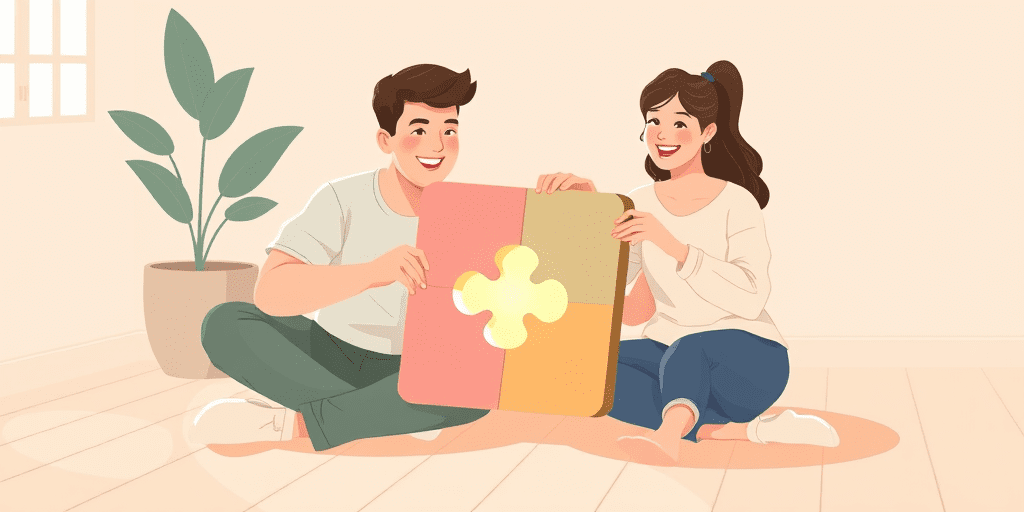
How to Navigate Differences in a Relationship Without Losing Yourself or Each Other
Now let’s get practical. Here are the approaches that actually work.
1. Get Curious Instead of Critical
The next time a difference frustrates you, try replacing judgment with curiosity.
Instead of “Why do you always shut down when we argue?” try “What’s going on for you when a conversation gets intense? What does it feel like?”
You might discover that your partner goes quiet because they grew up in a home where raised voices meant danger. That’s not stubbornness. That’s survival. And knowing that changes everything about how you respond.
Curiosity builds bridges. Criticism builds walls.
2. Name the Difference Without Making It a Flaw
Language matters enormously. There’s a difference between “You’re so antisocial” and “I’ve noticed we seem to have different needs around social time.”
One blames. The other observes and opens a door.
Try framing differences as facts about who you each are, not judgments about who’s right. “I tend to process emotions by talking things out. You tend to need time alone first. Can we figure out a way to work with both of those things?”
3. Find the Shared Values Underneath the Surface Difference
Often, two people want the same thing but express it differently.
Both partners might want financial security, but one shows it by saving every dollar and the other shows it by investing in experiences that make life feel meaningful. The goal is the same. The approach is different.
When you can find the shared value underneath the behavior that drives you crazy, it becomes a lot easier to meet in the middle.
4. Build Rituals That Honor Both of You
Couples who navigate differences well don’t just compromise. They create routines and rituals that genuinely work for both people.
For the introvert and extrovert couple, this might mean one social event a week (for the extrovert) and one completely unscheduled Sunday a month (for the introvert). Nobody sacrifices. Everybody gets something.
These rituals become the backbone of a relationship that can hold two different people.
5. Know When to Seek Support
Some differences are manageable with communication and goodwill. Others, especially those rooted in deep trauma, values incompatibilities, or recurring conflict patterns, benefit enormously from outside support.
Couples therapy isn’t a last resort. It’s a tool, and a powerful one. A good therapist gives you a shared language and a neutral space to work through what you can’t seem to resolve on your own. If you’ve never considered it, reading about what therapy really is and how it works might help demystify the process.
Understanding Your Partner’s Inner World
One of the most transformative things you can do in a relationship is genuinely try to understand how your partner experiences the world, not how you think they should, or how you would.
This means asking real questions. What does a good day look like for you? What makes you feel safe in an argument? What do you need when you’re overwhelmed?
It also means listening to the answers without planning your rebuttal.
Understanding your partner’s attachment style in relationships can be incredibly eye-opening here. Whether someone is anxiously attached, avoidantly attached, or securely attached shapes almost everything about how they love, how they fight, and what they need when they feel scared or disconnected.
The five love languages framework is another lens that can help. If your partner feels loved through acts of service but you’re giving them words of affirmation, you’re both trying and both missing each other. Learning each other’s language isn’t just sweet. It’s practically helpful.
When Differences Feel Like Distance
Sometimes the problem isn’t the differences themselves. It’s that the differences have created emotional distance, and that distance starts to feel like the relationship is falling apart.
This is worth naming directly.
When you’ve been in conflict about the same things for months, it’s easy to stop seeing your partner as your teammate and start seeing them as your opponent. You stop telling each other about your day. You stop laughing together. You become roommates with shared bills.
If this sounds familiar, know that this is recoverable. Many couples have come back from exactly this place.
But it requires intentional reconnection. Not just talking about the problems, but deliberately creating moments of warmth, humor, and closeness. Small things count: a text in the middle of the day, a shared inside joke, making coffee for them without being asked.
The Gottman Institute found that couples who maintain a ratio of roughly five positive interactions for every one negative interaction tend to stay together and stay happy. Five to one. The differences don’t disappear, but they’re surrounded by enough warmth that they don’t swallow the relationship whole.
Practical Tips: An Actionable Step-by-Step Guide for Navigating Differences
The following six-step framework is designed for couples who want to move from frustration to genuine understanding — without anyone having to give up who they are.
Step 1: Identify the specific difference causing friction. Be precise. Not “we always fight” but “we handle conflict differently and I feel unheard when they go quiet.”
Step 2: Explore the origin. Have an honest, non-confrontational conversation. Ask where this behavior or value comes from. Share yours too. Understanding the root often dissolves the resentment.
Step 3: Separate dealbreakers from workable differences. Some differences are lifestyle preferences (night owl vs. early bird). Others are core values (wanting children vs. not). Know which you’re dealing with.
Step 4: Co-create solutions. Instead of one person adapting to the other, design systems that genuinely work for both. This might take a few tries. That’s okay.
Step 5: Revisit and adjust. What works now might not work in two years. Check in regularly. “Is this still working for both of us?” is a question healthy couples ask. If you find that recurring arguments are taking a toll on your emotional wellbeing, it may also help to start with an emotional check-in with yourself before the next difficult conversation.
Step 6: Celebrate what the differences bring. This one gets skipped, but it matters. What do you have access to, experience, or enjoy because of who your partner is, even when they drive you a little crazy? Write it down.
Red Flags in Relationships: When Differences Signal Something Deeper
This article is about workable differences, but it would be incomplete without acknowledging that some differences are genuinely harmful.
If your partner’s behavior involves disrespect, control, cruelty, dishonesty, or any form of abuse, that isn’t a “difference.” That’s a boundary violation, and it deserves to be taken seriously. No amount of communication work excuses behavior that harms you.
The National Domestic Violence Hotline is available 24/7 if you’re trying to understand whether what you’re experiencing crosses a line.
The differences this article is about are the ordinary, human kind — personality clashes, different communication styles, different needs — not behaviors that cause harm.
What Thriving Relationships Actually Look Like
They’re not conflict-free. They’re not perfectly matched. They’re not two people who never irritate each other.
Thriving relationships are built by two people who keep choosing each other, keep being curious about each other, and keep doing the work of understanding.
They fight sometimes, and they repair. They feel disconnected sometimes, and they reach back toward each other. They are different, and they let those differences make the relationship richer instead of more fragile.
Understanding your own emotional patterns is part of that. Taking care of your own mental health, building your own sense of self, and knowing what you genuinely need all make you a better partner too. The work you do on yourself matters just as much as the work you do together. If you’re curious about what that looks like, exploring how to do an emotional check-in with yourself is a wonderful place to start.
A Final Thought: You Don’t Have to Be the Same to Belong Together
Somewhere out there is a version of your relationship where the differences don’t feel like fault lines. Where they feel like the thing that keeps things interesting, keeps you growing, keeps you from becoming a smaller version of yourself.
You don’t need a partner who is exactly like you. You need a partner who is willing to meet you, to try to understand you, and to build something together that neither of you could have built alone.
Navigating differences in a relationship isn’t about erasing who you are. It’s about two whole, different people deciding that figuring this out together is worth it — and choosing, again and again, to show up for that.

Frequently Asked Questions About Navigating Differences in a Relationship
1. Is it normal to have a lot of differences in a relationship? Yes, absolutely. Research shows that most couples have significant areas where they differ. What matters more than the number of differences is how you manage them and whether you maintain respect and affection while doing so.
2. Can a relationship survive if two people are very different? Yes. Many of the strongest, longest-lasting relationships are between people who are quite different. Compatibility isn’t about being the same; it’s about being able to navigate differences with care, curiosity, and genuine goodwill.
3. How do you stop having the same arguments over and over in a relationship? The first step is accepting that some conflicts in relationships are “perpetual” and won’t fully resolve. The goal shifts from winning to understanding. Working with a couples therapist can also be hugely effective for breaking recurring patterns.
4. What are the most common differences couples argue about? Money, communication styles, intimacy needs, household expectations, parenting approaches, and how much time to spend together versus apart are among the most common recurring differences in relationships.
5. How do I communicate my needs when my partner and I see things completely differently? Use “I” statements instead of “you” statements. Focus on how you feel and what you need, rather than what they’re doing wrong. Pick a calm, low-stakes moment to talk, not mid-argument.
6. How do you know if a difference is a dealbreaker? Ask yourself whether the difference touches a core value, such as wanting children, religious beliefs, or views on fidelity, versus a lifestyle preference, such as how tidy the house is or how often you socialize. Core value mismatches tend to cause much deeper and harder-to-resolve conflict.
7. Is couples therapy a good idea for navigating differences? Yes, for many couples it’s genuinely transformative. Therapy doesn’t mean the relationship is broken. It means you’re taking the relationship seriously enough to invest in it. Even a few sessions can give you tools that change how you interact for years.
8. What role does attachment style play in relationship differences? A significant one. Your attachment style shapes how you handle closeness, conflict, and emotional vulnerability. Understanding your own and your partner’s attachment style can explain patterns that previously felt confusing or painful.
9. Can two introverts or two extroverts have conflict about social differences? Yes. Even two people with similar personalities can differ in other ways. And within introversion or extroversion, there’s a wide spectrum. Two introverts might have very different needs around alone time or social obligations.
10. How do differences affect intimacy in a relationship? Unresolved differences can create emotional distance that reduces physical and emotional intimacy. But when differences are handled with respect and curiosity, they can actually deepen intimacy, because truly knowing someone, including the parts of them that are unlike you, is one of the most intimate things there is.
Disclaimer
The content on Mindbloom is written from personal experience and is intended for general informational and emotional support purposes only. It is not a substitute for professional mental health advice, diagnosis, or treatment. If you are experiencing significant distress in your relationship or personal life, please consider speaking with a licensed therapist or mental health professional. If you are in crisis, please reach out to a qualified helpline in your area.