
Mental Health in Young Adulthood: Why Your 20s Are Harder Than Anyone Told You
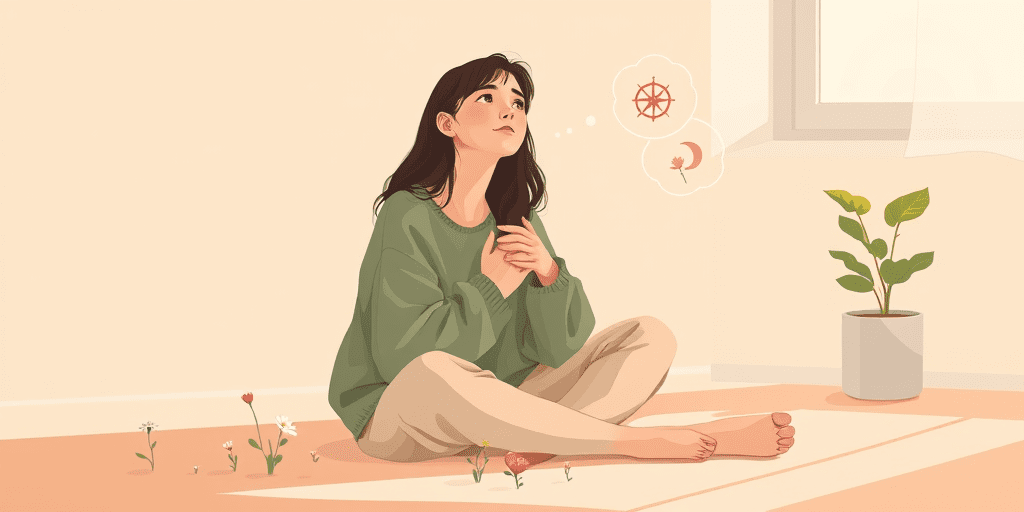
Mental health in young adulthood is one of the most overlooked crises of our time — and if you’re in it, you already know the real version of your 20s looks nothing like the movies. Instead of spontaneous road trips and effortless self-discovery, there are 2 a.m. spirals, the pressure to have it all figured out, and the quiet but constant feeling that everyone else got a manual you somehow missed. You’re far from alone in feeling that way.
Young adulthood, roughly spanning ages 18 to 29, is one of the most psychologically intense periods of a person’s entire life. You’re building an identity from scratch, making decisions that feel permanent, managing stress without the coping tools many people don’t acquire until much later — and often doing all of this with a brave face plastered on, because admitting you’re struggling feels like failing.
This article is for you. It’s a deep, honest, compassionate look at what mental health in young adulthood actually looks like — the challenges, the causes, the quiet signs you might be struggling, and the practical, real-world steps you can start taking today.
Table of Contents
Why Young Adulthood Is a Mental Health Pressure Cooker
When researchers talk about mental health trends, one thing becomes consistently clear: young adults are struggling at historically high rates. According to the American Psychological Association, Generation Z and Millennials report significantly higher levels of stress, anxiety, and depression compared to older generations. This isn’t weakness. It’s the predictable result of a perfect storm.
Young adulthood is the life stage where the greatest number of high-stakes transitions happen simultaneously. You’re leaving the structure of school. You’re forming a romantic identity. You’re figuring out your career, your finances, your living situation, and your social circle — all at the same time. Neurologically, the brain’s prefrontal cortex — the part responsible for decision-making, emotional regulation, and impulse control — doesn’t fully mature until around age 25. So you’re being handed enormous adult responsibilities before your brain has even finished developing.
Add to that the cultural weight of social media, the economic anxiety of student debt and rising living costs, the erosion of community structures, and a pandemic that hit this generation squarely in some of their most formative years — and it starts to make a lot of sense why so many young adults are quietly falling apart behind perfectly curated Instagram grids.
The Unique Mental Health Challenges Facing Young Adults in Their 20s
Identity Crisis Is Real, and It’s Exhausting
One of the core psychological tasks of young adulthood is identity formation — figuring out your values, your purpose, your sense of self. Psychologist Erik Erikson famously described this stage as a battle between “identity vs. role confusion.” But what that looks like in real life is messier and more emotionally draining than any textbook suggests.
Take Maya, 24, who spent three years studying business because her parents said it was “safe,” only to realize she felt hollow every single day. She wasn’t ungrateful or lazy — she was experiencing the real, disorienting pain of living a life that didn’t belong to her. That kind of internal disconnect is one of the lesser-talked-about roots of depression and anxiety in young adulthood.
Or consider James, 26, who came out as gay to his family during his sophomore year of college. What should have been a moment of liberation turned into years of grief, renegotiated relationships, and a quietly fractured sense of self-worth. The intersection of identity and social acceptance — whether it’s sexual identity, cultural identity, religious questioning, or career identity — is genuinely one of the heaviest burdens young adults carry.
Mindbloom’s article on teen mental health explores how these identity seeds are actually planted even earlier, which helps explain why so many struggles in young adulthood feel like they have long, tangled roots.
The Comparison Trap and Social Media’s Invisible Weight
It’s impossible to talk about mental health in young adulthood without talking about social media. The American Journal of Preventive Medicine has linked heavy social media use to significantly increased rates of anxiety and depression in young people — and the mechanism isn’t complicated.
When your brain is in the middle of forming an identity, it is incredibly sensitive to social comparison. Every highlight reel you scroll past sends a quiet signal: you’re behind. You’re not doing enough. You’re not enough. A friend posts engagement photos while you’re eating cereal alone for dinner. A former classmate announces a promotion while you’re still figuring out if your current job is even the right field. The comparison is relentless, and it’s exhausting in a way that’s hard to explain to anyone who dismisses it as “just social media.”
This isn’t a willpower problem. It’s a psychological environment problem.
Financial Anxiety: The Stress That Never Clocks Out
Young adults today are navigating a financial landscape that is, by almost every measurable standard, harder than what previous generations faced. Student loan debt in the U.S. has surpassed $1.7 trillion. Homeownership rates for people under 35 are at historic lows. The gig economy has normalized financial precarity as just “how things are.”
Financial stress is not just a practical problem — it is a profound mental health issue. Chronic money anxiety activates the same stress response systems as physical danger, meaning many young adults are essentially living in a low-grade state of fight-or-flight. Cortisol levels stay elevated. Sleep suffers. Relationships strain under the pressure. And asking for help feels shameful because somewhere along the line we absorbed the message that struggling financially means you failed at being an adult.
Sophia, 27, works two part-time jobs, pays half her income in rent, and sends money home to help her parents. She told a friend she was fine — “just tired.” What she was, actually, was burning out in slow motion, with financial stress as the quiet engine running underneath everything.
Our piece on the difference between stress and burnout might resonate if this sounds like your story.
Loneliness and the Collapse of Easy Community
Here’s something many young adults don’t hear enough: the loneliness you feel is not a personal failing. It is an epidemic. The U.S. Surgeon General officially declared loneliness a public health crisis in 2023 — and young adults are among the most affected.
After the built-in social structures of school dissolve, making and keeping friends as an adult is genuinely hard. You have to be intentional in ways you never had to be before. You have to put yourself out there without the safety net of shared classes or dormitory hallways. And in a culture that increasingly prizes productivity over presence, finding time and space for real connection can feel almost impossible.
Daniel, 22, moved to a new city for a job opportunity right after college. He knew nobody. His coworkers were friendly, but the friendships never deepened beyond small talk. Within six months, he was spending most evenings alone, scrolling through his phone feeling vaguely disconnected from everyone — including himself. What he was experiencing wasn’t introversion or antisocial behavior. It was the very real, very painful experience of relational poverty in an era that rarely acknowledges it.
Signs That Mental Health in Young Adulthood Is Struggling
Sometimes the signs don’t look like what you’d expect. You might not be crying every day or unable to get out of bed. The signs can be quieter, easier to explain away — and easier to ignore.
Emotional Signs
- You feel a persistent sense of flatness or emptiness, even when nothing is “wrong”
- You’ve lost interest in things you used to genuinely enjoy
- You’re overthinking constantly, replaying conversations or catastrophizing about the future
- You feel like you’re performing “fine” for everyone around you while something quieter hurts beneath the surface
Behavioral Signs
- You find yourself snapping at people you love over small things
- You’re isolating — saying no to plans, going quiet on people who care about you
- You’re using substances, food, scrolling, or work as a way to not feel what you’re actually feeling
Physical Signs
- You’re exhausted no matter how much you sleep — something our piece on waking up tired after a full night’s sleep explores in depth
- You’re getting sick more often, or noticing your body carrying tension in your shoulders, jaw, or chest
None of these make you broken. They make you human. But they are worth paying attention to.
Practical Steps to Protect Your Mental Health in Young Adulthood
The good news — and there genuinely is good news — is that there are real, actionable things you can do. You don’t have to have it all figured out. You just have to start somewhere.
1. Name What You’re Actually Feeling
One of the most underrated mental health practices is emotional specificity. Not “I’m fine” or even “I’m stressed” — but getting genuinely curious about what’s happening inside. Are you lonely? Overwhelmed? Grieving something? Resentful? The difference between emotions and more surface-level feelings is something we explore deeply in this Mindbloom piece — and it can be genuinely eye-opening.
When you can name what you’re feeling, you stop being at the mercy of a vague, unnamed weight. You get traction.
2. Audit Your Social Media Use — Honestly
You don’t have to delete everything. But it’s worth asking: how do you feel after 30 minutes on Instagram or TikTok? If the honest answer is “worse about myself,” that’s data worth acting on. Try keeping your phone out of your bedroom. Try one day a week with no social media at all. Pay attention to what comes up in that silence — it’s usually telling.
3. Build Structure When Life Offers None
Young adulthood is one of the most structurally unanchored periods of life. Without external schedules holding you in place, it’s easy to drift — and that drift feeds anxiety and low mood. Creating your own rhythms isn’t boring. It’s protective. Start small: a consistent wake time, even on weekends. A 10-minute walk after lunch. A Sunday evening check-in where you write down three things you’re carrying and one thing you’re proud of. These micro-structures don’t constrain your freedom — they create the internal stability that actually makes freedom feel possible.
4. Talk to Someone — and Know When It’s Time to See a Therapist
There is an enormous difference between venting to a friend and working through deep-rooted patterns with a professional. Therapy isn’t reserved for crises. It’s a tool for anyone who wants to understand themselves better and build a life that actually fits. If you’ve been wondering whether what you’re experiencing warrants professional help, this guide on when to see a therapist is worth reading before your next late-night spiral.
Many universities offer free or low-cost counseling. Community mental health centers operate on sliding-scale fees. Platforms like BetterHelp and Open Path Collective have made professional support more accessible than ever.
5. Invest in Your Sleep Like Your Mental Health Depends On It — Because It Does
The connection between sleep and mental health is not a small one. Research from the National Institute of Mental Health consistently shows that poor sleep dramatically worsens anxiety, depression, and emotional regulation. For young adults especially, sleep is often the first thing sacrificed and the last thing prioritized — which is exactly backward. Protecting 7–9 hours of sleep is not a luxury. It is a foundational mental health practice.
6. Stop Waiting to Have It All Figured Out
One of the cruelest myths of young adulthood is that everyone else knows what they’re doing and you’re the only one improvising. Almost no one has it figured out — they’re just better at performing certainty. Releasing yourself from the pressure to have a five-year plan by 23 is not giving up. It’s a profound act of self-compassion. A practical reframe: instead of asking “Where should I be by now?”, try asking “What do I want to understand better about myself this year?” That single shift moves you from shame about a gap to curiosity about a direction — and curiosity is actually something you can act on.
7. Create a Personal Development Plan
Growth doesn’t have to be accidental. Intentionally mapping out who you want to become — your values, your goals, your habits — gives your young adult years direction without rigidity. A personal development plan can be one of the most empowering tools you build during this season of life.
When to Reach Out for Professional Support
If you’ve been feeling low, anxious, or disconnected for more than two weeks — especially if it’s affecting your work, relationships, or ability to function day-to-day — please consider reaching out to a professional. This is not an overreaction. This is wise, brave self-care.
Resources in the United States:
- SAMHSA National Helpline: 1-800-662-4357 (free, confidential, 24/7)
- Crisis Text Line: Text HOME to 741741
- Psychology Today Therapist Finder: Find a therapist near you
You don’t have to be in a crisis to ask for support. You just have to be willing to try.
A Note on Being Kind to Yourself
Here is something worth reading slowly: the fact that you’re struggling in your young adult years does not mean you are failing at life. It means you are human, in a genuinely hard season, in an era with enormous amounts of pressure and very little acknowledgment of that pressure.
Your 20s do not need to look the way you imagined. They don’t need to look like anyone else’s. They just need to be honest — and you deserve the support, the grace, and the space to figure yourself out without apology.
You are not behind. You are not broken. You are becoming.
Frequently Asked Questions About Mental Health in Young Adulthood
1. Why is mental health in young adulthood getting worse? Several factors contribute, including economic pressure, social media comparison culture, reduced community connection, the lasting effects of the pandemic, and a brain that’s still developing well into the mid-20s. It’s not weakness — it’s a complex environment problem.
2. What are the most common mental health issues in young adults? The most common mental health issues in young adults are anxiety disorders, which affect roughly 1 in 3 people in this age group, followed closely by major depression. Other frequently occurring conditions include ADHD (often undiagnosed until adulthood), disordered eating, substance use disorders, and trauma-related symptoms. Social anxiety disorder is particularly prevalent during this life stage, as young adults face a high volume of new social evaluations — job interviews, new relationships, unfamiliar environments — all at once.
3. Is it normal to feel lost in your 20s? Yes — feeling uncertain, unsettled, or directionless in your 20s is developmentally normal, not a personal failure. Psychologists use the term “emerging adulthood” to describe the period from roughly 18 to 29, recognizing it as a distinct life stage characterized by identity exploration and instability. Research by developmental psychologist Jeffrey Arnett found that feeling “in-between” — no longer adolescent but not yet fully settled as an adult — is one of the defining features of this period, experienced by the majority of young adults across cultures.
4. How does social media affect mental health in young adulthood? Heavy social media use has been linked to increased anxiety, depression, loneliness, and low self-esteem, particularly in young adults. The constant exposure to curated highlight reels triggers comparison, and the dopamine loop of scrolling can erode focus and emotional regulation.
5. What are the signs of a mental health crisis in a young adult? Signs include persistent hopelessness, withdrawal from relationships, inability to perform daily tasks, talking about feeling like a burden, or expressing thoughts of self-harm or suicide. If you or someone you know shows these signs, please seek immediate help.
6. Can young adults recover from depression and anxiety without medication? Many young adults effectively manage depression and anxiety through therapy alone — particularly Cognitive Behavioral Therapy (CBT), which has strong research support for both conditions. Lifestyle factors including regular sleep, physical activity, reduced social media use, and strong social connection also have meaningful evidence behind them. Medication is one valuable tool among many, not a universal requirement. That said, for moderate to severe depression or anxiety, a combination of therapy and medication often produces better outcomes than either alone. The best approach depends on the individual, and a qualified mental health professional is the right person to help make that determination.
7. Why do young adults avoid seeking mental health help? Common barriers include stigma, cost, not knowing where to start, minimizing their own struggles, fear of judgment, and a culture that glorifies self-sufficiency and “pushing through.”
8. How can I support a young adult friend who is struggling mentally? Listen without trying to fix. Don’t minimize their experience. Gently encourage professional support without pressure. Check in consistently, not just during crises. Sometimes presence — just letting them know you see them — is the most powerful thing you can offer.
9. Does young adult mental health get better with age? For many people, yes — as identity solidifies, financial stability increases, and coping tools develop, many mental health challenges ease. But that improvement is rarely automatic. Seeking support now rather than waiting it out leads to better long-term outcomes.
10. What are the best free mental health resources for young adults? In the U.S.: SAMHSA’s National Helpline (1-800-662-4357), Crisis Text Line (text HOME to 741741), university counseling centers, community mental health clinics with sliding-scale fees, and online platforms like 7 Cups. Many employers also offer Employee Assistance Programs (EAPs) that include free counseling sessions.
Disclaimer
The content on Mindbloom is written for general informational and educational purposes only. It is not intended to be a substitute for professional medical advice, diagnosis, or treatment. Always seek the guidance of a qualified mental health professional or physician with any questions you may have regarding a mental health condition. If you are experiencing a mental health emergency, please contact a crisis helpline or go to your nearest emergency room immediately. Reliance on any information provided by Mindbloom is solely at your own risk.