
Mental Health in Older Adults: Signs, Causes, and What Actually Helps
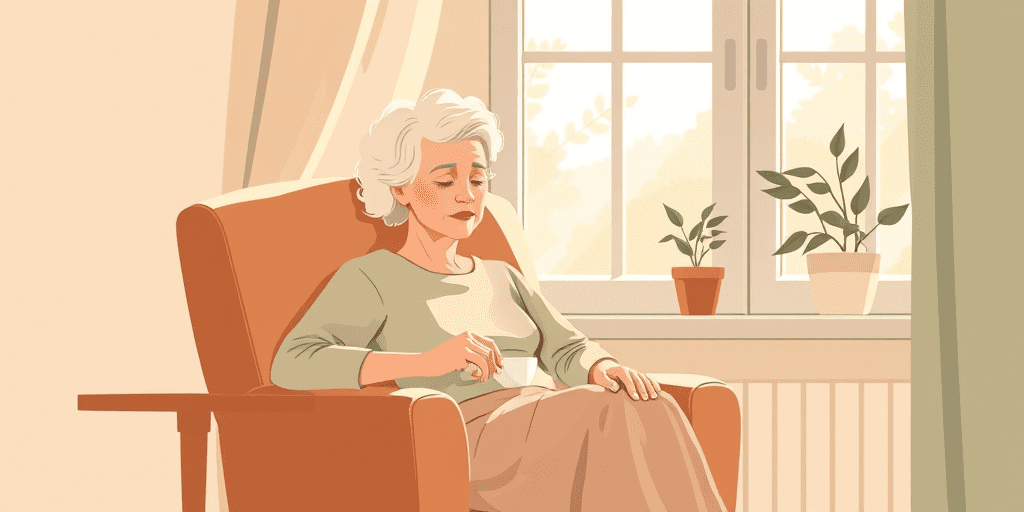
Mental health in older adults is one of the most overlooked areas of wellness today, and one of the most important.
They talk about the gray hair and the slower mornings. They celebrate the grandchildren and the retirement parties. But almost no one sits down with the people they love most and says, “Hey, how are you really doing inside?”
The emotional weight that comes with aging, the losses, the identity shifts, the quiet loneliness, can be just as heavy as anything a person carries in their younger years. Sometimes heavier. And yet, mental health struggles in older adults are routinely dismissed, misunderstood, or simply never discussed.
If you are an older adult navigating a season of life that feels more complicated than it looks from the outside, or if you love someone who is, this article is for you. We are going to talk honestly about what mental health in older adults really looks like, why it gets ignored so often, and most importantly what actually helps.
📊 Mental Health in Older Adults: Key Facts
- Approximately 14% of adults aged 60+ live with a mental health condition (WHO)
- Depression affects an estimated 7 million Americans aged 65+ (CDC)
- Nearly 1 in 3 adults over 45 report feeling lonely (National Institute on Aging)
- The vast majority of older adults with mental health conditions never receive treatment
- Depression in older adults responds well to treatment — recovery is common when support is accessed
Table of Contents
Why Mental Health in Older Adults Gets Overlooked
There is a quiet myth that floats around in our culture. It goes something like this: older people have lived long enough to have it figured out. As if age automatically delivers peace. As if wrinkles equal wisdom and wisdom equals being okay.
The truth is far more complicated.
Mental health struggles do not retire. Anxiety does not pack its bags when someone turns sixty-five. Depression does not check itself out after a certain birthday. In fact, according to the World Health Organization, approximately 14% of adults aged 60 and over live with a mental health condition — and the vast majority of them never receive any treatment.
Fourteen percent sounds like a statistic. But that is one in every seven older adults quietly carrying something that most of the people around them do not even know is there.
There are a few reasons this happens:
Stigma runs deep in older generations. Many people who are now in their sixties, seventies, and beyond grew up in a time when mental health was not discussed. Struggling emotionally was seen as a sign of weakness. You pushed through. You did not talk about it — not with your doctor, not with your family, and certainly not with yourself.
Symptoms are often dismissed as “just aging.” Fatigue, loss of interest, withdrawal from social life — these are frequently written off as natural parts of getting older, when in reality they can be signs of depression that deserves real attention.
Older adults are less likely to seek help. Whether because of stigma, cost, lack of awareness, or simply not knowing that help is available for someone their age, many older adults suffer in silence for years.
This is not acceptable. And recognizing it is the first step toward changing it.
How Aging Affects Mental Health: The Emotional Reality Nobody Talks About
Getting older means navigating a kind of emotional terrain that nobody maps for you in advance.
Think about everything that can shift in this chapter of life. Careers end — sometimes by choice, sometimes not. Children grow up and move away. Friendships quietly thin as people relocate, fall ill, or pass on. Bodies change in ways that can feel like a slow conversation with your own limitations. Spouses and partners are lost. Roles that gave structure and identity — parent, professional, caregiver, provider — either transform completely or disappear.
Any one of those things would be a lot to process. Many older adults are navigating all of them at once, often without the support systems they once had.
Grief and Loss in Older Adults: When It Accumulates in Silence
Margaret is seventy-one years old. In the last four years, she has lost her husband of forty-three years, her closest friend from college, and her sister. She goes to church on Sundays. She keeps a tidy home. She tells her children she is fine.
But inside, she is grieving in layers. Not just the people she has lost — but the versions of her life those people represented. The Saturday dinners. The long phone calls. The someone who always knew what she was really thinking.
Grief in older adults is rarely a single event. It accumulates. And when it is not acknowledged and supported, it can deepen into depression.
Retirement and Identity Loss: Why “Congratulations” Can Ring Hollow
Robert spent thirty-seven years as an engineer. His work was not just his income — it was his identity, his daily purpose, his community. When he retired at sixty-eight, everyone around him celebrated. He smiled and said he was looking forward to the rest.
Six months later, he barely got out of bed before noon. He felt purposeless. Invisible. Like the world had quietly moved on without him.
What Robert was experiencing is far more common than people realize. The American Psychological Association notes that retirement, while often celebrated, can trigger profound identity disruption — particularly for people who built their sense of self around their professional roles.
Loneliness in Older Adults: Why It’s More Dangerous Than People Realize
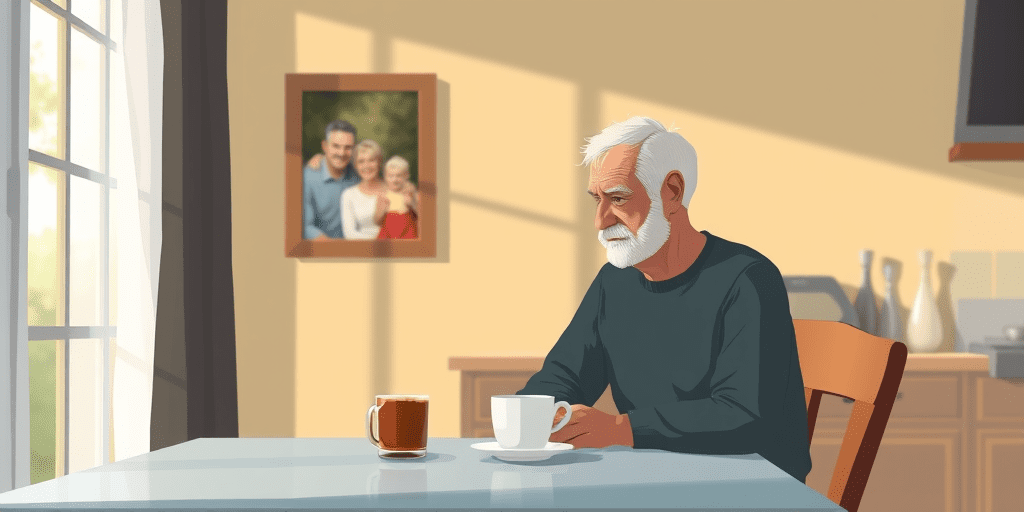
Loneliness among older adults has reached what many researchers call epidemic levels. In the United States, the National Institute on Aging estimates that nearly one-third of adults aged 45 and older report feeling lonely — and that number is even higher for those over seventy-five.
Eleanor is eighty years old and lives alone. Her children are wonderful people who love her deeply and call when they can. But between visits, days can pass without a single meaningful conversation. The TV stays on more for company than for watching. Some mornings, she realizes she has not spoken out loud to another person in over two days.
That kind of isolation does not just feel painful. It is genuinely damaging to mental and physical health alike.
If you want to understand why human connection affects us so profoundly — at every age — the article on emotional wellbeing and daily habits explores the science behind why we are wired for each other.
Common Mental Health Conditions in Older Adults
Understanding what to look for — in yourself or someone you love — is one of the most compassionate things you can do.
Depression
Depression is not sadness. It is a persistent heaviness that dulls everything — pleasure, motivation, energy, hope. In older adults, it often presents differently than in younger people. Instead of crying, an older adult with depression might become irritable, withdrawn, or physically focused on aches and pains.
The Centers for Disease Control and Prevention (CDC) reports that depression affects about 7 million Americans aged 65 and older — yet it remains massively underdiagnosed in this age group.
Signs to watch for include:
- Persistent feelings of emptiness or hopelessness
- Loss of interest in things that used to bring joy
- Withdrawing from family and friends
- Changes in sleep or appetite
- Difficulty concentrating
- Unexplained physical complaints
- Thoughts of death or feeling like a burden to others
Anxiety
Anxiety in older adults often shows up as excessive worry about health, finances, or family members — a constant background hum of “what if” that makes it difficult to rest or feel at peace.
Patricia is sixty-eight and cannot stop worrying about her health. Every new ache sends her spiraling. She checks her blood pressure three times a day. She has canceled plans numerous times because she was convinced something was wrong, even when nothing was. Her children think she is just being dramatic. What she is actually experiencing is anxiety — and it is exhausting her.
Grief-Related Mental Health Challenges
As we covered earlier, grief is a significant mental health concern for older adults. When losses accumulate without adequate support, grief can evolve into something that requires more attention — sometimes developing into complicated grief or depression that deserves real professional care.
Cognitive Changes and Mental Health
It is worth noting that anxiety and depression in older adults can sometimes mimic or overlap with early cognitive changes. This is another reason why professional support is so important — not to label or alarm, but to understand what is actually happening so it can be properly addressed.
The Mind-Body Connection in Older Adults: Why You Can’t Separate the Two
Mental and physical health are never truly separate, but this connection becomes especially significant as we age.
Chronic pain, mobility limitations, serious illness, and the medications used to treat them can all affect mood and mental wellbeing. At the same time, untreated depression and anxiety can worsen physical health outcomes — affecting everything from immune function to cardiovascular health to recovery after illness.
This is a circle, not a line. Caring for the mind is caring for the body, and vice versa. If you want to explore how deeply your emotional health connects to the way your body feels, the Body & Mind section here at Mindbloom goes deep into this relationship in a way that is honest and human.
How to Support Mental Health in Older Adults: 7 Things That Genuinely Work
Here is the part that matters most — because older adults deserve not just acknowledgment of their struggles, but real, practical pathways toward feeling better.
1. Talk to a Doctor or Therapist — Without Shame
This deserves to be first on the list because it is the step people are most likely to skip.
Mental health treatment works for older adults. Therapy, in particular, has been shown to be highly effective — and many older adults who finally try it say they wish they had done it decades earlier. Not sure whether what you’re feeling warrants professional support? The honest guide on how to know when to see a therapist was written for exactly this moment — when you’re unsure, but something inside you keeps asking the question.
Do not let the idea that it is “too late” stop you. It is never too late to feel better.
2. Stay Connected — Even When It Feels Hard
Social connection is genuinely one of the most powerful protectors of mental health in older adults. This does not mean you need to be surrounded by people all day. It means maintaining meaningful contact with at least a few people who know and care about you.
Phone calls count. Video chats count. A weekly coffee with one good friend counts enormously.
If existing social connections have thinned, there are ways to build new ones — community centers, faith groups, volunteer organizations, senior activity programs, and online communities have all helped older adults find meaningful connection in later life.
3. Create New Structures of Purpose
One of the most important things a person can do after a major role change — like retirement, or children leaving home — is to build new structures that provide a sense of purpose and contribution.
This looks different for everyone. For some, it is volunteering. For others, it is learning something completely new — a language, an instrument, a skill. For others still, it is mentoring younger people, tending a garden, or being present for grandchildren in a meaningful way.
Purpose does not have to be grand. It just has to feel like yours.
4. Move Your Body Gently and Regularly
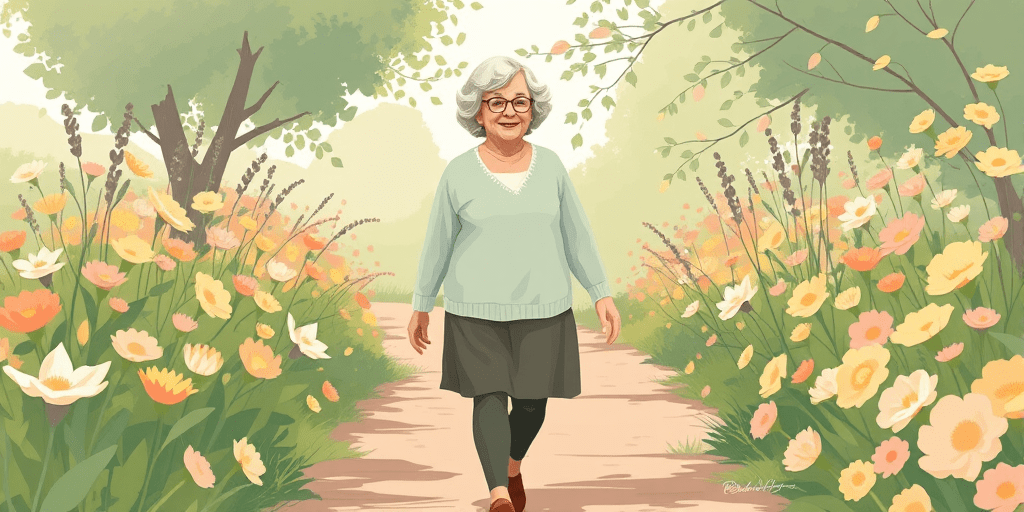
Physical movement is one of the most underrated tools for mental health at any age. For older adults specifically, research consistently shows that regular, gentle movement — walking, swimming, chair yoga, dancing — meaningfully reduces symptoms of depression and anxiety.
You do not have to run a marathon. A twenty-minute walk, five days a week, changes the chemistry of how your brain functions.
5. Honor Your Grief Rather Than Suppressing It
If you have experienced significant losses, give yourself permission to grieve them fully. This means not rushing through it, not pushing it down, and not pretending you are fine when you are not.
Grief is not weakness. It is love with nowhere to go. Letting it move through you — in your own time, in your own way — is one of the healthiest things you can do. The Emotions and Healing section of Mindbloom has deeply honest writing on grief and emotional processing that many readers have found comforting during their hardest seasons.
6. Limit Alcohol and Other Numbing Behaviors
It is very common for people of all ages — including older adults — to use alcohol or other numbing behaviors to manage difficult emotions. While understandable, this tends to deepen depression and anxiety over time rather than relieving them.
If you notice that you are reaching for a drink every time things feel heavy, it is worth examining that pattern with honesty and compassion.
7. Practice Small Daily Acts of Joy
This sounds simple, but it carries real power. Intentionally doing small things each day that bring even a moment of genuine pleasure — a warm cup of tea in morning light, a favorite piece of music, a slow walk through a garden — signals to your nervous system that life still holds beauty.
Small joys, practiced consistently, are not trivial. They are a form of resistance against despair.
A Note for Family Members and Caregivers
If you are reading this because you are worried about an older adult you love, your concern matters more than you know.
One of the most healing things you can do is simply ask — genuinely ask — “How are you really doing?” And then stay still and actually listen to the answer.
Many older adults have lived entire lifetimes without being asked that question with enough patience and presence to answer it honestly. Your willingness to sit with them in their truth could change everything.
Avoid minimizing what they are going through. Saying things like “you have so much to be grateful for” or “you’re stronger than this” — even with good intentions — can make someone feel more alone, not less.
If you are supporting an older adult through significant emotional challenges, it is also important to take care of your own mental health. Caregiving can be quietly exhausting, and your wellbeing matters too. The writing on stepping outside your comfort zone speaks to the courage it takes to show up — for others and for yourself.
Redefining What It Means to Age Well
For too long, aging well has been measured mostly in physical terms. Blood pressure numbers. Cholesterol levels. Whether you can still touch your toes.
But aging well is also — perhaps primarily — a matter of the inner life.
It means being allowed to grieve without shame. It means having relationships where you feel genuinely known. It means having a reason to get up in the morning that feels meaningful to you. It means getting help when you are struggling, not because you are weak, but because you are human.
Older adults deserve every bit of emotional care and attention that younger people receive. The idea that suffering is just part of getting old — something to quietly accept — is not wisdom. It is a story we have been telling ourselves for far too long.
If you are in your sixties, seventies, or beyond and you are struggling, you are not alone. And you are not past help. This season of life, as complicated as it can be, still belongs to you.
Understanding where you are in the arc of life — and how that shapes your mental health — is also something worth exploring. If you want to understand how identity shifts happen across different life stages, the article on midlife mental health crisis offers a deeply honest look at what happens when life starts asking harder questions.
You Have Not Run Out of Time
Here is something worth holding onto: the people who have lived longest have also, by definition, survived the most. Every older adult carries within them a history of hard seasons they got through — losses they never imagined surviving, changes they never expected to accept, griefs they were certain would break them.
And they are still here.
That is not nothing. That is extraordinary.
Mental health in older adults is not a lost cause. It is a chapter of life that deserves the same tenderness, attention, and hope as every other chapter before it. You have not run out of time to feel better, to reconnect, to find meaning, or to heal.
Wherever you are in this season — whether you are the one aging, the one watching someone you love age, or the one trying to understand it all — you are in the right place. And there is still so much good ahead.
Frequently Asked Questions About Mental Health in Older Adults
1. What is the most common mental health problem in older adults? Depression is the most commonly diagnosed mental health condition in older adults, followed closely by anxiety. Both are often underdiagnosed and undertreated in this age group because symptoms can be mistakenly attributed to normal aging rather than recognized as treatable conditions.
2. How does aging affect mental health? Aging brings significant life changes — retirement, loss of loved ones, physical health changes, shifts in identity and social roles — that can all place real stress on mental wellbeing. These transitions are natural, but they can trigger or worsen depression, anxiety, and grief if not properly acknowledged and supported.
3. Why is mental health often ignored in elderly people? Several factors contribute, including generational stigma around discussing emotions, a tendency by healthcare providers to focus on physical health, symptoms being misattributed to aging, and older adults themselves being less likely to seek help due to shame or simply not knowing support is available.
4. Can older adults recover from depression? Absolutely. Depression in older adults responds well to treatment, including therapy, medication, lifestyle changes, and social support. Many older adults who receive appropriate care report meaningful improvement in their quality of life. Recovery is not only possible — it is common when proper support is accessed.
5. What is the difference between normal aging and depression in older adults? Normal aging may bring some slowing down, occasional forgetfulness, or quieter days. Depression, however, is persistent — it strips away pleasure, motivation, and hope in ways that don’t lift with time or distraction. Key differences include: depression lasting more than two weeks, loss of interest in things that once brought joy, social withdrawal, and feelings of worthlessness or being a burden. When in doubt, speaking with a doctor is always the right call.
6. What are the signs of depression in elderly people? Beyond sadness, depression in older adults can look like persistent irritability, loss of interest in hobbies, withdrawal from family and friends, unexplained physical complaints, changes in appetite or sleep, fatigue, difficulty concentrating, and in serious cases, thoughts of death or being a burden to others.
7. How does loneliness affect the mental health of older adults? Chronic loneliness is associated with higher rates of depression, anxiety, cognitive decline, and even physical health problems including weakened immune function and cardiovascular issues. Social connection is not a luxury for older adults — it is a genuine health need.
8. What are the best therapies for older adults with mental health issues? Cognitive Behavioral Therapy (CBT) is among the most well-researched and effective approaches for older adults dealing with depression and anxiety. Talk therapy, grief counseling, group therapy, and in some cases medication can all be beneficial. The right approach depends on the individual and should be decided in consultation with a qualified professional.
9. Is anxiety normal in old age? While some degree of worry is a natural part of life, persistent, excessive anxiety that interferes with daily functioning is not simply a normal part of aging — it is a treatable condition. Anxiety disorders are common in older adults but are frequently unrecognized and untreated.
10. How can family members support older adults with mental health challenges? The most impactful things family members can do include asking genuine, open-ended questions and truly listening to the answers, reducing stigma by treating mental health the same as physical health, helping connect loved ones with professional support, and maintaining consistent, meaningful contact rather than only reaching out during crises.
11. What lifestyle changes improve mental health in older adults? Regular gentle physical activity, maintaining social connections, finding sources of daily purpose and meaning, quality sleep, limiting alcohol, engaging in activities that bring genuine enjoyment, and managing chronic pain or physical health conditions all contribute meaningfully to better mental health outcomes in older adults.
Disclaimer
The content on Mindbloom is written from lived personal experience and is intended for informational and supportive purposes only. It is not a substitute for professional medical or psychological advice, diagnosis, or treatment. If you or someone you love is experiencing mental health challenges, please reach out to a qualified healthcare provider. If you are in crisis, please contact a helpline in your area — you can find one here.