
Keeping the Spark Alive in a Long-Term Relationship: What Actually Works

You remember the beginning, don’t you?
The way your heart raced before every date. The texts you re-read three times just to smile again. That feeling was real. And if it has faded a little — or a lot — that is real too.
Keeping the spark alive in a long-term relationship doesn’t happen by accident. It fades not because love is broken, but because love is a living thing — and living things need attention, intention, and a little courage to keep growing.
This article is for anyone who loves their partner deeply but sometimes wonders where the magic went. It is for couples in their second year and their twentieth. It is for the person scrolling at 11pm wondering if what they feel is normal. Spoiler: it is. And it can get better.
Table of Contents
Why the Spark Naturally Fades Over Time
Before we talk about how to reignite it, it helps to understand why it dims in the first place.
The early stage of a relationship is powered by something psychologists call limerence — an almost involuntary state of intense longing and obsession. Your brain is flooded with dopamine, norepinephrine, and serotonin. Everything feels heightened. Their laugh, their habits, even their flaws feel endearing.
But here is the truth: that neurochemical cocktail was never designed to last forever. According to research from Helen Fisher and the Kinsey Institute, the intense romantic love phase typically lasts between 12 and 18 months before shifting into a calmer, more stable attachment.
This does not mean love is dying. It means it is maturing.
The problem is that many couples mistake this transition for disconnection. They stop doing the small things that made the beginning so wonderful. Life fills in the gaps with work, kids, finances, and Netflix. And slowly, two people who deeply love each other start to feel more like comfortable roommates than romantic partners.
The good news? Comfort and spark are not opposites. You can have both. You just have to choose to.
The Real Reason Couples Lose Their Connection
It is rarely dramatic.
There is usually no single argument, no big betrayal, no moment you can point to. Most couples drift apart through a thousand tiny moments of not choosing each other.
The conversation you put off because you were tired. The compliment you thought but never said. The date you kept meaning to plan. The hand you did not reach for.
Relationship researcher Dr. John Gottman calls these moments “sliding door moments” — small, everyday forks in the road where couples either turn toward each other or turn away. Over time, the direction you consistently choose shapes everything.
Research from The Gottman Institute shows that happy, long-term couples are not couples without conflict or boredom. They are couples who consistently choose engagement over avoidance, curiosity over assumption, and warmth over withdrawal.
Keeping the spark alive in a long-term relationship, then, is less about grand gestures and more about these quiet, consistent choices.
Real-Life Scenarios: Does This Sound Familiar?
Scenario 1: The Parallel Lives Trap
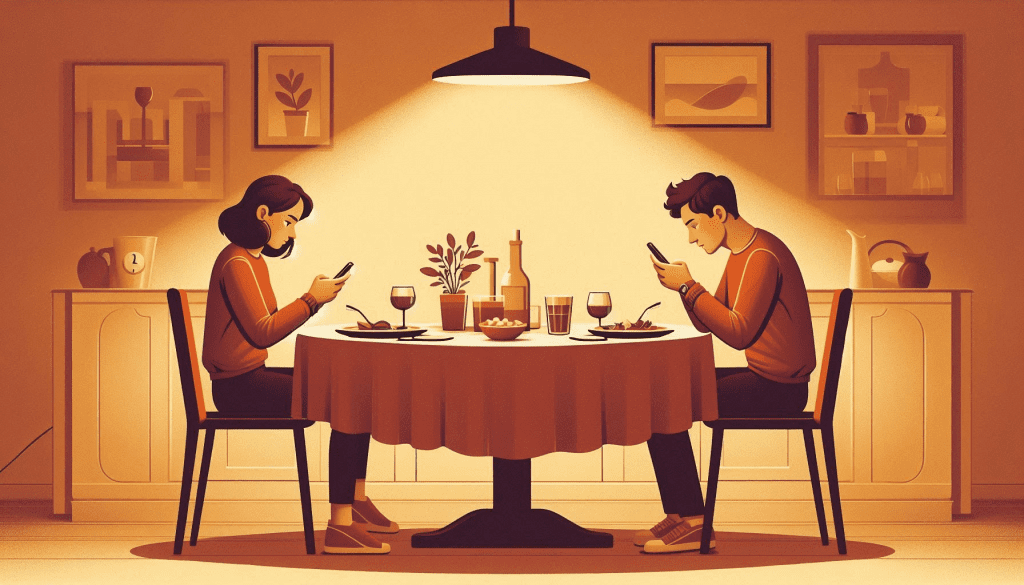
Marcus and Jenna have been married for seven years. They have two kids, demanding jobs, and a dog that needs walking. They love each other — genuinely. But at dinner, they scroll their phones. In bed, they watch separate shows. On weekends, they divide and conquer chores.
One evening, Jenna realizes she cannot remember the last time Marcus made her laugh. Not a polite chuckle. Actually laugh.
They are not unhappy, exactly. But they are not really together either. They share a life without truly sharing moments.
Scenario 2: The Familiarity Blindness
After six years together, Sofia knows everything about Daniel. His coffee order, his triggers, the way he gets quiet when he is stressed. She loves him. But lately, she has stopped being curious about him.
She assumes she already knows what he will say. She finishes his sentences. She has, without realizing it, replaced the living, evolving person in front of her with the version of him she built in her head three years ago.
Scenario 3: The Touch Drought
Priya and Ravi used to be physically affectionate constantly. Holding hands, random hugs, a kiss before work. Life got busy. Now they barely touch outside of intimacy, and even that has become rare and routine.
Neither of them would say they are unhappy. But both of them lie awake some nights feeling quietly lonely.
Scenario 4: The Appreciation Gap
Tom does a lot for his relationship. He handles most of the cooking, plans their vacations, remembers anniversaries. He just… stopped saying it out loud. And Leila, his partner, has started to feel invisible even while being loved.
The love is there. The expression of it has quietly dried up.
Scenario 5: The Fear of Vulnerability
Aisha and Michael are five years in. Early on, they talked for hours. Now, when Aisha tries to share something deep, she holds back. She is not sure why. Maybe she is afraid of being misunderstood. Maybe she does not want to make things heavy.
Without realizing it, they have stopped letting each other in. They are safe. But they are also a little… separate.
How to Keep the Spark Alive: Practical, Honest Steps
Here is what actually works. Not the Instagram version. The real, imperfect, beautiful version.
1. Get Curious Again — Genuinely
Your partner is not the same person they were three years ago. Neither are you. Ask questions you have never asked. “What do you think about most when you are alone?” “Is there anything you want that you haven’t told me?” “What has changed for you this year?”
Curiosity is one of the most intimate things you can offer someone. It says: I am still interested in who you are becoming.
2. Create a Ritual That Is Only Yours
Shared rituals are relationship glue. Not grand gestures — small, consistent ones. A morning coffee together with no phones. A Sunday walk. A specific way you say goodbye before work. A late-night check-in that is just yours.
The content matters less than the consistency. Rituals say: this time belongs to us.
3. Touch More, Deliberately
Physical affection outside of sexual intimacy is a powerful connector. A hand on the small of the back. A hug that lasts three seconds longer than usual. A forehead kiss for no reason.
Research published in Psychology Today consistently shows that non-sexual physical touch activates the bonding hormone oxytocin and deepens emotional connection.
You do not need a spa day. You need a thirty-second hug.
4. Speak Your Appreciation Out Loud
Do not assume they know. Say it. Specifically. Not “you’re great” — but “I noticed how patient you were today and I really appreciate it.”
Specific appreciation lands differently than general praise. It tells your partner that you actually see them.
Understanding how your partner best receives love can make this even more powerful. If you haven’t already explored the idea of love languages, this guide to the five love languages and how they work in relationships can help you communicate appreciation in the way your partner actually feels it most.
5. Do Something New Together
Novelty is a spark trigger. Your brain lights up in shared new experiences the same way it did when your relationship was new. This is backed by research from Stony Brook University showing that engaging in novel, challenging activities together increases relationship satisfaction.
It does not have to be skydiving. Try cooking a cuisine you have never made. Take a dance class. Visit a place neither of you has been.
6. Be Vulnerable Again
Tell them the thing you have been holding back. Share the fear you haven’t said out loud. Vulnerability is not weakness — it is the deepest form of intimacy. And when one person goes first, it usually gives the other permission to follow.
If anxiety or emotional walls have been getting in the way of this kind of openness, exploring these articles on emotional healing and self-awareness might gently help you work through that first.
7. Protect Your Relationship From Neglect
Neglect does not always look like fighting. Sometimes it looks like two people being kind to each other while quietly prioritizing everything else. Protecting your relationship means treating it like the living thing it is — giving it time, attention, and energy on purpose.
This might mean putting phones away during dinner. It might mean going to bed at the same time twice a week. It might mean turning toward each other in the small moments before the big moments become necessary.
8. Address What Has Gone Unsaid
Sometimes the spark is buried under unspoken resentment, accumulated disappointments, or conversations that keep getting avoided. If that is the case for you, the most loving thing you can do is bring it gently into the light.
You do not need to fix everything in one conversation. But starting is an act of love.
For couples navigating deeper patterns, understanding how to build a healthy romantic relationship from the ground up can provide a really grounding framework to work from together.

The Role of Individual Wellbeing in Relationship Spark
This part does not get talked about enough.
You cannot keep the spark alive if you are running on empty inside. When you are burned out, anxious, disconnected from yourself, or emotionally depleted, it is almost impossible to show up fully for someone else.
Taking care of your own mental and emotional health is not selfish. It is one of the most loving things you can do for your relationship.
This means checking in with how you are doing. It means noticing when you are projecting stress onto your partner. It means tending to your own emotional world — through therapy, journaling, movement, rest, or whatever helps you reconnect with yourself.
The most magnetic thing you can bring to a long-term relationship is a partner who is genuinely alive inside themselves.
For anyone navigating mental load, chronic stress, or the burnout that quietly seeps into relationships, Mindbloom’s stress and burnout resources offer honest, warm support for reclaiming that inner aliveness.
Can Long-Term Passionate Love Last? What the Science Actually Shows
Here is something beautiful: long-term passionate love is actually possible. It is not just a fairytale.
A landmark study by Arthur Aron and colleagues at Stony Brook University scanned the brains of couples who had been together for over 20 years and still reported being intensely in love. Their brain scans looked remarkably similar to those of newly-in-love couples — rich with activity in the dopaminergic reward system.
The difference? These couples shared certain consistent behaviors: they expressed admiration for each other regularly, they continued to have new experiences together, and they maintained a genuine sense of curiosity and respect.
According to research published in Social Cognitive and Affective Neuroscience, long-term passionate love is not just a romantic myth. It is a neurologically real outcome of specific, intentional choices.
That is incredibly hopeful. It means the spark is not gone. It is waiting for you to turn toward it.
What Keeping the Spark Alive Is NOT
Let us clear up a few things.
It is not about being perfect. Couples who keep the spark alive argue sometimes. They have boring weeks. They have seasons of disconnection. The difference is they come back to each other.
It is not about constant excitement. Wanting peace and stability is not the same as wanting a dead relationship. Quiet moments together are not failures. They are gifts.
It is not just the other person’s job. Spark is co-created. It requires both of you to show up, even imperfectly, with intention.
It is not always easy. There will be seasons where effort is needed. Choosing love on a difficult Tuesday is not less romantic than fireworks in the beginning. It is actually more.
It’s Not Too Late to Reignite Your Relationship
If you are reading this and feeling that familiar ache — that quiet longing for the connection you once had or maybe never fully had — please hear this:
You are not too late.
Love is not a finite resource. It is not used up by hard seasons or quiet years. It renews. It grows. It deepens in ways the beginning could never reach.
Keeping the spark alive in a long-term relationship is one of the most quietly radical acts of hope you can choose. Every small moment of turning toward your partner is a vote for the life you want together.
Start tonight. With one question. One touch. One “I see you and I’m glad you’re mine.”
That is enough. That is everything.
Frequently Asked Questions
1. Is it normal for the spark to fade in a long-term relationship? Yes, completely. The intense early-phase chemistry is driven by neurochemicals that naturally stabilize over time. This is not a sign that love is dying — it is a sign it is maturing. Most couples experience this shift, and it can be the beginning of a deeper, more intentional connection.
2. How do I know if my relationship has lost its spark or if there is a bigger problem? A faded spark often feels like comfortable distance — you still love each other but feel more like friends or roommates. A bigger issue might involve consistent contempt, unresolved resentment, or feeling fundamentally unseen and unheard. If it is the latter, couples therapy can be a valuable and courageous step.
3. What are the first steps to take when a relationship starts feeling distant? Start small and start honest. The most effective first step is usually a direct, low-pressure conversation — not to “fix” anything, but simply to acknowledge the distance and express that you want to feel close again. From there, introducing one new shared ritual (even something as simple as a 10-minute phone-free check-in before bed) can begin to shift the dynamic meaningfully within weeks.
4. How often should couples do something new together to keep the spark alive? Even once or twice a month makes a meaningful difference, according to relationship research. The key is that the activity feels genuinely novel and is experienced together — not just in parallel. Quality matters more than frequency.
5. Does physical touch really make a difference in long-term relationships? Yes, significantly. Non-sexual affectionate touch stimulates oxytocin (the bonding hormone), reduces cortisol, and increases emotional closeness. Studies consistently link regular affectionate touch with higher relationship satisfaction and resilience.
6. What if only one partner wants to work on the relationship? This is painful, but one person initiating change can genuinely shift relationship dynamics. Often, when one partner consistently chooses warmth, curiosity, and appreciation, the other begins to mirror it over time. That said, both partners eventually need to invest. If one person is consistently unwilling, that is worth exploring — possibly with the help of a therapist.
7. How does stress affect the spark in a relationship? Significantly. Chronic stress depletes the emotional bandwidth needed for connection. Stressed partners are more likely to snap, withdraw, or misread each other’s intentions. Managing individual stress is one of the most underrated investments in relationship health.
8. Are date nights actually effective for keeping the spark alive? Yes, but with a caveat: the quality of time together matters more than the label of “date night.” Sitting together at a restaurant while looking at your phones will not help much. Genuine presence, conversation, and shared attention are what actually matter.
9. What role does communication play in keeping romantic spark alive? It is foundational. Couples who talk about their inner lives — their dreams, fears, evolving needs — maintain a living, breathing intimacy that routine cannot erode. Communication is not just conflict management; it is the ongoing act of letting each other in.
10. When should a couple consider therapy to help reignite their connection? Any time, really — therapy is not only for crisis. But if feelings of disconnection have persisted for more than a few months, if the same conflicts keep cycling without resolution, or if both partners feel unseen or unheard, couples therapy can provide tools and perspective that are genuinely transformative. Seeking support is brave, not a sign of failure.
Disclaimer
The content on Mindbloom is written from personal lived experience and is intended for general informational and emotional support purposes only. It is not a substitute for professional mental health advice, diagnosis, or treatment. If you are experiencing significant relationship difficulties, emotional distress, or mental health concerns, please seek support from a qualified mental health professional or counselor. If you are in crisis, please contact a helpline in your area.