
How to Quiet Mental Chatter: Proven Ways to Silence the Noise in Your Head

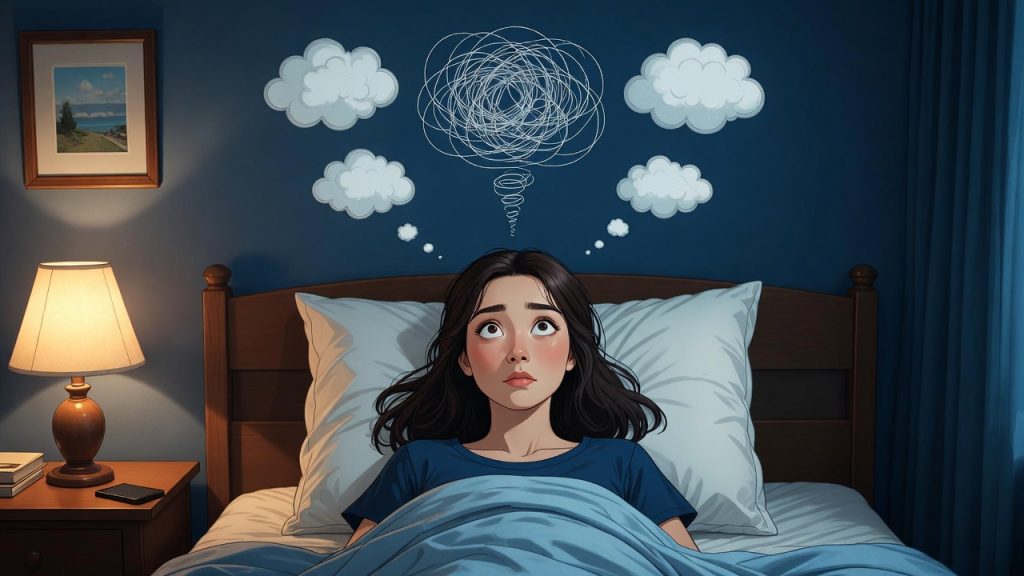
Have you ever lain in bed, completely exhausted, while your brain replays every awkward conversation from the past five years? Or finally sat down to rest, only for your mind to immediately serve up a to-do list, a reel of past mistakes, and three hypothetical future disasters?
That is mental chatter — the relentless inner voice that narrates, criticizes, worries, and replays on a loop. And while a busy inner world is completely normal, there is a real difference between useful self-reflection and the kind of mental noise that leaves you feeling scattered, anxious, and drained.
The good news is that you do not have to live at the mercy of your own mind. In this guide, you will learn exactly what mental chatter is, why your brain does it, and — most importantly — seven practical strategies to quiet it, starting today.
Table of Contents
What Is Mental Chatter (And Why Does It Feel So Loud)?
Mental chatter goes by a lot of names. Some people call it the monkey mind. Others call it overthinking, rumination, or the inner critic. Whatever you call it, it refers to the same thing: the constant, often involuntary stream of thoughts that plays in the background of your mind, day and night.
Some of this is just the brain doing its job. Your mind is designed to problem-solve, anticipate threats, and keep track of things. The trouble is, it was built for a very different world — one where those threats were physical and immediate, not existential and abstract. So now it applies the same urgent, vigilant energy to your inbox, your relationships, your past decisions, and your hypothetical future disasters.
Think of mental chatter like a radio you cannot quite turn off. The station keeps changing — sometimes it is self-criticism, sometimes it is worry, sometimes it is a play-by-play of something that happened years ago. And the volume seems to go up the moment you try to rest.
Research from Harvard University suggests that the human mind wanders roughly 47% of the time — nearly half of our waking hours — and that this mind-wandering is consistently linked to unhappiness. That is a significant portion of your life spent somewhere other than where you actually are.
Real-Life Moments Where Mental Chatter Takes Over
Understanding mental chatter becomes a lot easier when you can see it in everyday situations. Here are some scenarios that might feel painfully familiar.
Sarah at 11 PM. Sarah has been putting in long days at work. She is finally in bed, lights off, ready to sleep. But instead of drifting off, her mind starts replaying the presentation she gave that afternoon. Did she stumble over her words? Did her manager look unimpressed? What if she made a mistake in the data? Within twenty minutes, she has worked herself into a quiet panic — and it is now midnight.
James trying to enjoy a Sunday. James has no plans. He deliberately cleared his weekend for rest. But the moment he sits down, his mind fills the silence immediately: Should he be doing something more productive? Is he falling behind? He cannot remember if he responded to that email. He should probably exercise. Why does relaxing feel so hard? He spends most of Sunday on his phone, unable to settle.
Priya during a conversation. Priya is having lunch with a friend but is barely present. Half her mind is on what she needs to say next, half is rehearsing how to bring up a difficult topic, and a small portion is still chewing over a comment her partner made this morning. Her friend is talking, but Priya is miles away.
Marcus before a big decision. Marcus has been offered a new job. It is a good offer. But instead of feeling excited, his mind has been running a loop for two weeks: What if it is a mistake? What if the old job was better? What if he hates the new team? He has thought about it so many times the decision no longer feels like his own.
Leila during meditation. Leila downloaded a meditation app because everyone said it would help. But every time she tries to sit quietly, her mind becomes louder — shopping lists, unresolved arguments, random song lyrics. She decides she is just “not a meditation person.” (She is. She just needs a different approach.)
If you recognized yourself in any of those, you are not struggling more than others. You are just human — and you are aware enough to notice it.
Why Your Brain Creates Mental Noise
Before you can quiet mental chatter for good, it helps to understand why your brain generates it in the first place.
Your brain has something called the default mode network (DMN) — a cluster of brain regions that becomes active when you are not focused on the outside world. When you let your mind wander, when you daydream, when you drift off during a boring meeting, that is your DMN doing its thing.
The DMN is not inherently bad. It is linked to creativity, self-reflection, and processing emotions. But when it goes unchecked — when it runs on anxiety, unresolved stress, or habitual worry — it becomes the engine driving your mental chatter. And the more stressed or anxious you are overall, the louder it tends to get.
There are also emotional factors. Unprocessed feelings have a way of circling back as thoughts. If you had an argument you never resolved, a loss you never fully grieved, or a fear you never examined, your mind will keep pulling you back to those places. It is not punishing you. It is trying to help you finish what is unfinished.
You can read more about how emotional processing connects to mental clarity in our piece on emotional intelligence — because the way you handle your emotions has everything to do with how loud that inner noise gets.
How Mental Chatter Affects Your Health and Wellbeing
Mental chatter is not just annoying. When it becomes chronic, it can significantly affect your wellbeing in ways you might not immediately connect.
Sleep. Persistent mental noise is one of the biggest culprits behind difficulty falling or staying asleep. A mind that will not slow down is a mind that cannot truly rest. If you have ever wondered why you wake up tired even after a full night in bed, unresolved mental noise is often part of the answer.
Stress and burnout. Constant thinking about work, problems, and responsibilities keeps your nervous system in a low-level state of alert. Over time, this background stress accumulates. If you want to understand more about how that slow buildup happens, our post on the difference between stress and burnout breaks it down in a really honest way.
Focus and productivity. When your mind is constantly jumping between thoughts, it becomes very hard to stay present with any one task. You might sit at your computer for an hour and feel like you got nothing done.
Relationships. It is hard to be truly present with people you love when your head is somewhere else. Mental chatter can make you feel disconnected, even when surrounded by others.
Physical tension. Anxious thoughts do not stay in your head. They show up as tight shoulders, a clenched jaw, a knot in your stomach. Your body and mind are in constant conversation — which is something we explore in depth across our Body & Mind articles.
According to the American Psychological Association, chronic stress — including the kind generated by persistent mental chatter — is linked to a wide range of physical health concerns, from headaches and digestive issues to weakened immunity and cardiovascular problems.
How to Quiet Mental Chatter: 7 Practical Strategies That Actually Work
This is the part you came here for. These are not abstract concepts or things that only work for monks in monasteries. These are real, gentle, approachable practices that you can start today — wherever you are in your mental wellness journey.
1. Name What You Are Thinking (Without Judging It)
One of the simplest and most powerful things you can do is name your thoughts as they arise. Not analyze them. Not fight them. Just label them.
“There’s the worry thought.” “There’s the self-critical thought.” “There’s the planning thought again.”
This practice, often called cognitive defusion in therapy settings, creates a small but significant distance between you and your thoughts. Instead of being swept along in the current, you become someone standing on the bank, watching the river flow.
You do not have to stop the thoughts. You just have to stop believing that every thought is urgent, important, or true.
2. Give Your Mind a Job
Mental chatter gets loudest in unstructured moments — the commute, the shower, the space between tasks. One reason is that your mind, when left without a clear focus, goes searching for problems to solve.
Give it something intentional to do instead.
This could be a simple breathing focus (count to four in, hold for four, out for four). It could be repeating a calming word or phrase to yourself. It could be focusing on physical sensations — the warmth of a cup of tea, the sound of rain, the texture of whatever is in your hands.
You are not suppressing thoughts. You are redirecting attention. And with practice, the mind learns that it does not always need to be searching.
3. Try a Brain Dump to Clear Mental Overload
If your mental noise spikes at night or before big events, try a brain dump. Set a timer for ten minutes and write down everything that is on your mind — worries, to-do items, feelings, random thoughts, unfinished conversations. Everything.
The simple act of getting thoughts out of your head and onto paper reduces the mental load significantly. Your brain has been holding all of that in working memory, like too many browser tabs open at once. Writing it down tells your brain: this has been recorded. You can let it go for now.
Many people find that the thoughts they were most anxious about look far less overwhelming once they are on paper.

4. Move Your Body
Physical movement is one of the most underrated tools for quieting mental noise. When you move — walk, stretch, dance, run, swim — your body releases neurochemicals that genuinely calm the nervous system and interrupt the cycle of anxious thinking.
You do not need a gym or an intense workout. A ten-minute walk outside, especially in nature, can significantly reduce the volume of mental chatter. Research published by Stanford University found that walking boosts creative thinking and helps the mind shift out of ruminative patterns.
Even gentle stretching or shaking out your arms and legs can signal to your nervous system that it is safe to soften.
5. Practice Sensory Grounding
When your mind is living in the past or the future, your senses are always in the present. Grounding yourself through your senses is one of the fastest ways to interrupt a spiral of mental noise.
Try the 5-4-3-2-1 technique:
- 5 things you can see around you right now
- 4 things you can physically feel (the chair beneath you, the temperature of the air)
- 3 things you can hear
- 2 things you can smell
- 1 thing you can taste
This is not just a distraction technique. It actually reorients your nervous system toward the present moment, which is where calm lives. For more grounding approaches, our piece on simple grounding techniques for work anxiety walks through several options you can use anywhere.
6. Reduce Stimulation Deliberately
Mental chatter does not just come from inside. It is heavily fed by what you consume — news cycles, social media, constant notifications, background noise, the habit of never letting there be silence.
Every ping and scroll adds another layer of input to a mind that is already overwhelmed. And when the input stops, the mind keeps spinning with everything it has absorbed.
Try building in deliberate low-stimulation windows each day. Even twenty minutes of no screens, no music, no podcast — just quiet — can begin to train your mind toward stillness. It will feel uncomfortable at first. That discomfort is not a sign it is not working. It is a sign you are not used to it yet.
7. Be Compassionate With Yourself About the Noise
Most people try to silence mental chatter by pushing back against it — and that almost always makes it worse. Fighting your mental chatter, getting frustrated with yourself for thinking too much, or treating your inner noise as a character flaw will only make it louder.
Mental chatter is not a weakness. It is not a sign that something is wrong with you. It is a very human response to a world that asks a great deal of us. When you meet your busy mind with curiosity and gentleness rather than criticism, it begins to feel less like an enemy and more like something you can work with.
According to the National Institutes of Health, self-compassion is one of the most evidence-supported tools for reducing anxiety and building emotional resilience. You are allowed to be patient with yourself on this journey.
What Quieter Mental Chatter Actually Feels Like
It is worth painting a picture of what you are working toward — because it is not silence, and it is not emptiness.
A quieter mind does not mean a thoughtless mind. It means you have more space between the thoughts. You notice them arising without immediately getting pulled in. You can choose which thoughts deserve your attention and which ones can pass like clouds.
It means you can sit with your morning coffee and actually taste it. You can have a conversation and be genuinely present in it. You can face a problem and think about it clearly, rather than spinning around it in circles.
It means rest actually feels restful.
This is not a distant, unattainable state. It is available to you — not all at once, but gradually, with small and consistent practice. If you want to build on this momentum, our guide on emotional intelligence explores how emotional awareness deepens that mental clarity even further.
When Mental Chatter Might Be Something More
It is worth gently acknowledging that for some people, persistent and overwhelming mental noise is not just a habit — it is a symptom.
If your thoughts feel completely uncontrollable, if they are predominantly about harming yourself or others, if they are interfering significantly with your ability to work, maintain relationships, or care for yourself — that is a signal worth taking seriously.
Anxiety disorders, OCD, PTSD, and other mental health conditions can all manifest as intense, intrusive mental chatter that goes beyond what these strategies alone can address. If that resonates with you, reaching out to a therapist or mental health professional is a brave and worthwhile step. Our guide on how to know when to see a therapist might help you figure out if that is the right next move.
The Anxiety and Depression Association of America also has excellent resources for understanding when professional support might be helpful.
A Closing Note: You Deserve a Quieter Mind
Here is what I want you to carry with you from this article.
You were not designed to be at war with your own mind. The mental noise you carry — the worry, the replaying, the relentless inner commentary — is not who you are. It is something your mind is doing, often in a misguided attempt to keep you safe.
And just as it learned those patterns, it can learn new ones.
Every time you pause before reacting to a spiraling thought, every time you ground yourself in your senses, every time you put the phone down and sit in quiet for a few minutes — you are building something. You are building a relationship with your own mind that is grounded in awareness rather than chaos.
Quieting mental chatter is not about achieving perfection or emptying your head. It is about creating enough space to hear yourself clearly. To rest. To be present. To feel like you are living your life rather than just thinking about it.
You deserve that quiet. And it is closer than you think.
Frequently Asked Questions About Mental Chatter
1. What exactly is mental chatter? Mental chatter refers to the constant, often involuntary stream of thoughts running through your mind throughout the day. It includes worrying, replaying past events, planning excessively, self-criticism, and random mental noise that makes it hard to feel settled or present.
2. Is mental chatter the same as anxiety? They are related but not the same. Mental chatter is a normal part of how the mind works, while anxiety is a more intense emotional and physiological response. However, chronic mental chatter can contribute to anxiety, and anxiety often makes mental chatter worse. When mental noise becomes overwhelming and hard to control, it may indicate an anxiety condition worth addressing with professional support.
3. Why does mental chatter get worse at night? At night, the external distractions of the day disappear and your mind has fewer things competing for its attention. Without stimulation to focus on, the default mode network of the brain becomes more active, and unresolved thoughts and feelings tend to surface. This is why so many people experience their most intense mental chatter at bedtime.
4. Can meditation help quiet mental chatter? Yes — but not in the way most people expect. Meditation does not eliminate thoughts. It teaches you to observe them without getting pulled in. With consistent practice, even just five to ten minutes daily, most people notice that their mental chatter becomes easier to manage over time, even if the thoughts themselves do not disappear entirely.
5. What is the fastest way to stop mental chatter in the moment? The quickest technique most people find effective is sensory grounding — specifically the 5-4-3-2-1 method. By directing your attention to five things you can see, four you can feel, three you can hear, two you can smell, and one you can taste, you interrupt the thought loop and anchor yourself in the present. It takes under two minutes and can be done anywhere.
6. How long does it take to reduce mental chatter? There is no universal timeline, and results vary depending on the person, the cause of the chatter, and the consistency of practice. Many people notice some relief within a few days of trying grounding techniques or brain dumps. Deeper, more lasting change tends to come with consistent practice over weeks or months.
7. Can diet and exercise affect mental chatter? Yes, significantly. Regular physical movement is one of the most effective ways to interrupt ruminative thinking patterns. Diet also plays a role — high sugar intake, caffeine, and alcohol can all heighten mental restlessness. Staying hydrated and maintaining stable blood sugar can have a noticeable effect on mental calm.
8. Is it possible to have too few thoughts? Can the mind be too quiet? For most people, this is not a realistic concern. The brain is naturally active. Practices like meditation aim to bring you to a state of present awareness, not mental blankness. However, if you ever feel a sudden or unusual absence of thoughts, particularly accompanied by dissociation or confusion, it is worth mentioning to a healthcare provider.
9. Does mental chatter mean I am overthinking everything? Not necessarily. Some mental chatter is normal and healthy — it is how we plan, problem-solve, and process experiences. It becomes problematic when it is excessive, repetitive, and resistant to redirection. If you find yourself going over the same thoughts again and again without resolution, that is a sign the pattern has become unhelpful.
10. Why do I have more mental chatter when I try to relax? This is extremely common. When you remove external stimulation and sit with yourself, the mind does not automatically shift into rest mode — especially if it has been running in overdrive. The quiet actually makes the thoughts more audible. Over time, with regular practice, your mind learns to associate stillness with safety rather than opportunity to spiral.
11. When should I see a professional about intrusive or overwhelming thoughts? If your thoughts are significantly disrupting your daily life, relationships, sleep, or work — or if they include thoughts of self-harm, extreme fear, or content that feels outside of your control — it is a good idea to seek professional support. This is not a sign of weakness; it is a sign that you need and deserve more targeted help than self-help strategies can offer.
Disclaimer
The content on Mindbloom is written from personal lived experience and is intended for general informational and supportive purposes only. It is not a substitute for professional mental health advice, diagnosis, or treatment. If you are experiencing significant mental health difficulties, please consult a qualified healthcare professional or mental health practitioner. In a crisis, please contact a helpline in your area. You can find one at befrienders.org.