
Grief and Aging: Understanding the Emotional Challenges and How to Cope With Them
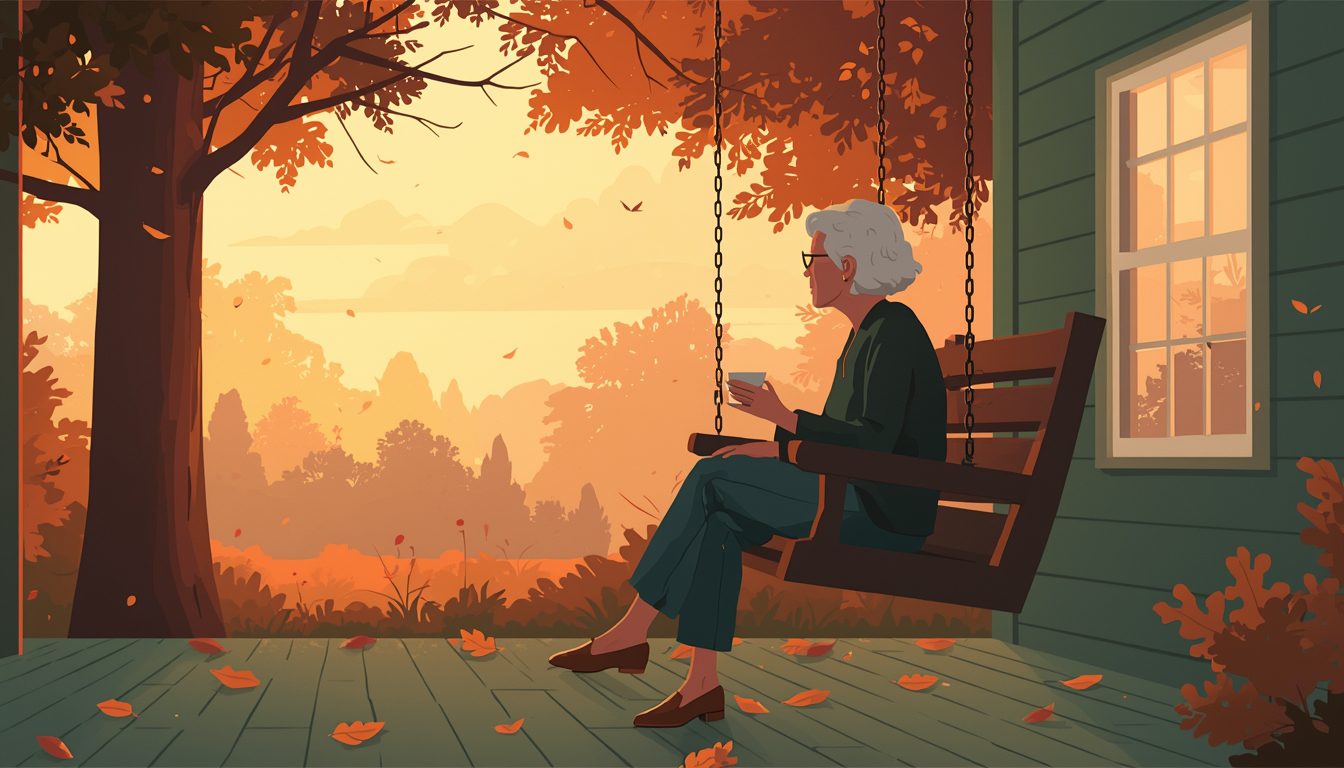
There is a particular kind of grief that arrives quietly — without a funeral or a casserole on your doorstep. It shows up somewhere in your fifties, sixties, or beyond, and it does not announce itself. One morning you reach for the phone to call your mother and remember, all over again, that she is gone. Or you walk past a mirror and genuinely do not recognize the person looking back. Or your best friend of forty years moves away to be closer to her grandchildren, and the silence she leaves behind is louder than anything you have ever known.
The emotional challenges of grief and aging are real, layered, and deeply misunderstood. This article will help you name what you are feeling, understand why it hits differently as you get older, and find grounded ways to move through it — without being told to simply “stay positive.”
Table of Contents
Why Grief Feels Heavier and More Complex in Later Life
When we are young, grief tends to arrive as a single, devastating event. We lose someone, and the whole world stops. But as we move into midlife and beyond, grief starts to accumulate. It becomes less like a storm and more like weather — always present, always changing, sometimes manageable and sometimes overwhelming.
Psychologists call this cumulative grief or bereavement overload — a concept well-documented in gerontological research and increasingly recognized by mental health professionals working with older adults. The American Psychological Association notes that repeated loss without adequate processing time is one of the most significant, and least discussed, mental health risks of aging. It happens when losses pile on top of each other faster than we have had time to process them. A parent dies. Then a sibling gets a frightening diagnosis. Then a close friend passes. Then a beloved neighbor moves away. Then your own health begins to shift in ways you cannot ignore. Each loss is real, but because they arrive so close together, you never quite get the breathing room to grieve any single one of them fully.
This is one of the most significant and least talked-about emotional challenges of grief and aging.
There is also the added weight of watching the world around you change in ways that feel like loss even when no one has died. Neighborhoods transform. Cultural references become unfamiliar. Technology moves faster than feels comfortable. The world you built your identity around begins to feel like a place that is slowly moving on without you.
None of this means life stops being worth living. It absolutely does not. But it does mean that the emotional work of aging is significant, legitimate, and worthy of being taken seriously.
The Many Faces of Loss in Later Life
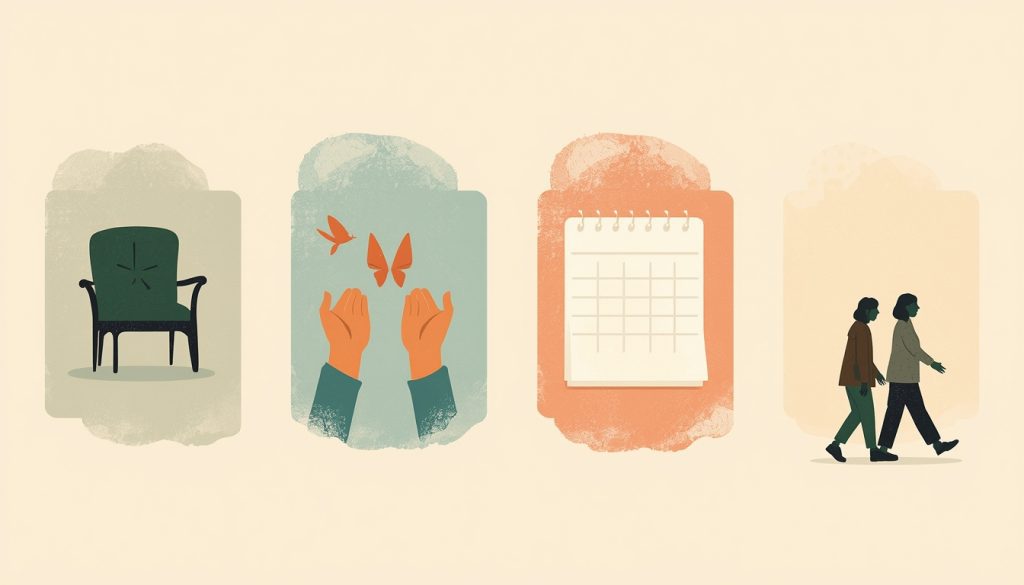
Not all grief comes with an obituary, and this is one of the first things worth saying out loud. In later life, loss wears many faces — and most of them are invisible to the people around you. Here is what those losses actually look like.
The Loss of People
This is the most visible form of grief in aging, and still the hardest. Losing parents, siblings, longtime friends, and eventually partners is a reality of growing older that no amount of preparation truly softens. According to the American Psychological Association, grief affects not just our emotions but our physical health, immune system, sleep, and ability to concentrate.
Margaret, 68, lost her husband of 41 years to a sudden heart attack. She told her daughter afterward that the hardest part was not the big moments — the holidays, the anniversaries — but the small ones. The silence at dinner. Nobody to report the day to. The side of the bed that stayed made.
That kind of grief is not something you “get over.” You learn to carry it differently over time.
The Loss of Identity and Role
For many people, especially those who spent decades as caregivers, professionals, or parents, retirement or the “empty nest” phase can trigger a grief that feels almost shameful to admit. Who are you when the role that gave your days structure is suddenly gone?
Robert, 61, retired after 34 years as a high school coach. He had expected to feel free. Instead, he felt invisible. “I didn’t realize how much of me was tied up in what I did,” he said. “Without it, I didn’t know how to answer the question of who I was.”
This kind of identity grief is real, and it is one of the most underexplored emotional challenges of aging.
The Loss of Physical Ability
There is grief in the body too. The moment you realize your knees will not let you do the hike you used to love. The day you hand over your car keys. The quiet mourning of a body that used to feel capable, strong, and reliable. This is not vanity. It is a genuine loss of autonomy and self, and it deserves to be grieved.
The Loss of Friends to Distance, Illness, and Slow Goodbye
Sometimes the losses are not deaths but rather the slow, painful drift of people who were once central to your life. A best friend develops dementia and can no longer hold a conversation the way they used to. A social circle shrinks because everyone is dealing with their own health challenges. Isolation becomes the silent companion of aging, and the loneliness it breeds can be just as damaging as any other form of grief.
The National Institute on Aging notes that social isolation in older adults is linked to increased risk of depression, anxiety, and even physical health decline.
The Loss of Time Itself
There is a particular grief that comes with the awareness that more of your life is behind you than ahead. This is not morbid — it is deeply human. The philosopher Irvin Yalom called it death anxiety, but it does not have to be so dramatic. It can simply be the quiet ache of looking at old photographs and feeling time slipping through your fingers.
How Grief Manifests Differently in Older Adults
One of the most important things to understand about grief and aging is that its emotional signatures can look quite different from what younger people experience — or from what we have been taught to expect.
Older adults grieving significant losses may experience:
Somatic symptoms. Grief often lives in the body. Unexplained aches, fatigue, changes in appetite, and disrupted sleep are all common physical expressions of emotional pain. If you are experiencing exhaustion that sleep does not fix, grief could be a quiet contributing factor.
Cognitive fog. Difficulty concentrating, forgetting things, or feeling like you are moving through life in a haze is a normal grief response. It is not a sign that something is permanently wrong.
Complicated grief. For some people, grief does not follow the expected timeline. It intensifies rather than gradually easing, a condition sometimes called prolonged grief disorder. The Mayo Clinic describes this as grief that significantly impairs daily functioning for an extended period and may require professional support.
Masked depression. Grief and depression can look very similar, and in older adults, depression is often underdiagnosed because its symptoms are attributed to “normal aging.” Persistent hopelessness, withdrawal from activities you once loved, and an inability to feel pleasure are signs worth paying attention to — not minimizing.
Guilt about moving forward. Many older adults feel a deep, quiet guilt about allowing themselves to experience joy after loss. As if enjoying a sunset or laughing at a dinner with friends somehow dishonors the person they have lost. This guilt is understandable but it is not the truth.
The Identity Question: Who Am I Now?
One of the most profound emotional challenges of grief and aging is the question of identity. When the roles that structured your life are gone — spouse, parent, professional, caregiver — and when the body you inhabited for decades starts to feel like someone else’s, the question “who am I now?” can feel genuinely destabilizing.
Sandra, 72, had been a nurse for 38 years and then a full-time caregiver to her ailing husband for seven more. When he passed and she was no longer either of those things, she described feeling like she had “disappeared from herself.” She was present. She was functioning. But she had no sense of who she was beneath all the roles she had shed.
This is not depression, necessarily. It is a genuine identity crisis — and it is one of the most underacknowledged aspects of growing older and finding your way back to yourself.
The work of this season is not to recapture the identity you had before, but to discover who you are becoming. That shift — from recapturing to becoming — is one of the most liberating reframes available to anyone navigating this territory.
Evidence-Based Coping Strategies for Grief and Aging (What Actually Works)
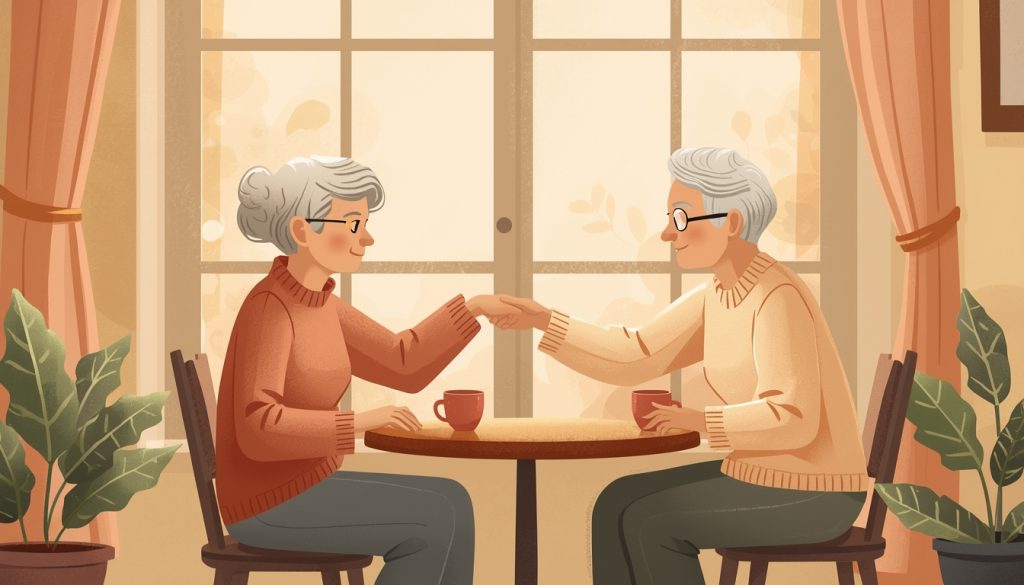
Knowing something is hard is only useful if it comes with something to do about it. Here are grounded, practical approaches that actually make a difference.
1. Name What You Are Grieving — All of It
Give yourself full permission to name every loss you are carrying, not just the deaths. Write them down if that helps. The job you retired from. The neighborhood that changed. The body that used to feel different. The friendship that faded. The person you were in your thirties. Naming losses is not self-pity — it is the first step of real emotional processing.
2. Allow the Non-Linear Nature of Grief
Grief does not proceed in a straight line. You might feel okay for three weeks and then be undone by a song on the radio. This is not backsliding. It is how grief actually works. The five stages of grief — and why they are often misunderstood — denial, anger, bargaining, depression, acceptance — are not a checklist. They are a loose map of emotional terrain you will visit and revisit in no particular order.
3. Resist Isolation, Even When It Feels Safest
When you are grieving, the pull to withdraw from others can be intense. But isolation tends to deepen grief rather than soothe it. Even small acts of connection — a phone call, a walk with a neighbor, attending a community event — can interrupt the spiral. If your social world has shrunk significantly, consider a grief support group, either in person or online. The experience of being truly understood by someone who “gets it” is irreplaceable.
4. Create New Rituals and Meaning
One of the most healing things you can do is create new rituals around your losses. Light a candle on significant dates. Write letters to people you have lost. Start a memory journal. These acts of ongoing relationship with what is gone give grief somewhere to go and keep love alive in a way that does not require pretending the loss did not happen.
5. Talk to Someone — Really Talk
There is a profound difference between talking about your grief and talking around it. Many people have conversations about their losses that stay entirely on the surface — logistics, timelines, other people’s reactions — without ever touching the emotional core. Find someone you trust, whether a close friend, a family member, or a therapist, and let yourself go deeper. If you are unsure whether you need professional support, reading about when it might be time to see a therapist can be a helpful first step.
6. Care for the Body That Is Carrying This
Your body is doing extraordinary work right now. Grief is physically exhausting. Prioritize sleep, gentle movement, hydration, and nourishment — not as performance, but as an act of compassion toward yourself. Your body is not betraying you. It is trying to carry you through something very hard.
7. Reclaim Small Pleasures Without Guilt
Joy and grief are not opposites. They coexist. Allow yourself to enjoy the things that bring you comfort — a good book, a morning walk, a phone call with someone who makes you laugh. These are not betrayals. They are the small, sustaining acts that keep your spirit alive.
8. Consider What You Are Being Called Toward
This is not a suggestion to force optimism. But many people who have moved through the hardest seasons of grief and aging discover, eventually, that their losses changed them in ways they could not have anticipated — deepened their empathy, clarified their priorities, opened them to connections and meanings they would never have found otherwise. The National Alliance on Mental Illness offers resources for those navigating grief that has crossed into mental health crisis territory.
When Grief Becomes Something More
There is a point where grief that is not processed begins to calcify into something harder. Chronic loneliness, persistent depression, social withdrawal, or a complete loss of purpose are signs that the emotional weight has become more than daily coping can manage.
This is not weakness. This is not failure. It is a signal that more support is needed, and more support is available.
Therapists who specialize in grief and in older adult mental health are a valuable resource. So are grief support groups, which create community around shared experience in a way that general social interaction often cannot. The American Foundation for Suicide Prevention also offers resources specifically around grief and loss for those who have lost someone to suicide, which carries its own particularly complex layers of mourning.
There is no shame in needing more support. The bravest thing you can do for yourself is to reach toward it.
You Are Not Just Getting Older — You Are Still Becoming Finding hope, meaning, and identity on the other side of grief
Here is the truth that gets lost in the weight of all this: aging is not the end of becoming. It is a different chapter of it. The losses you are carrying are real. The grief is real. The confusion about identity and purpose is real. And so is your capacity to find meaning, connection, love, and even joy on the other side of all of it.
You are not disappearing. You are being asked to become someone you have not been before — someone with less of the scaffolding of role and routine and other people’s needs, and more of the quiet, difficult, magnificent work of figuring out who you are at your core.
That is hard. It is also profound. And you do not have to do it alone.
Frequently Asked Questions About Grief and Aging
1. Is it normal to feel grief about getting older, even if no one has died? Yes, absolutely. Grief is not limited to death. Aging brings many non-death losses — loss of roles, physical ability, identity, relationships, and time — all of which are legitimate sources of grief. This kind of grief is real, even if it is less socially recognized.
2. How long does grief last in older adults? There is no universal timeline for grief. Research suggests that most people begin to experience a gradual shift within 12 to 18 months, though grief never fully disappears — it transforms. It tends to become less constant and more episodic over time. Prolonged grief disorder — where grief remains debilitating well beyond 12 months — affects an estimated 7–10% of bereaved individuals and responds well to targeted therapy.
3. What is cumulative grief and how does it affect older adults? Cumulative grief — also called bereavement overload — happens when multiple losses occur in close succession, leaving insufficient time to process each one. It is particularly common in older adulthood and can feel overwhelming and exhausting.
4. How do I help an elderly parent who is grieving? Offer presence over advice. Listen without trying to fix or minimize. Acknowledge what they are feeling specifically. Help them maintain connection and routine. Encourage professional support if the grief seems severe. The most powerful thing you can do is simply make them feel less alone.
5. Can grief cause physical symptoms in older adults? Yes. Grief has significant physical manifestations including fatigue, sleep disruption, appetite changes, lowered immune function, and even cardiovascular effects. This is sometimes called “broken heart syndrome.” Physical symptoms during grief are real and should be taken seriously.
6. What is the difference between grief and depression in older adults? Grief tends to come in waves and is often tied to specific triggers and memories. Depression tends to be more persistent and pervasive, with a more generalized loss of pleasure or hope. The two can overlap, which is why it is important to speak with a healthcare provider if you are unsure.
7. Is social isolation a form of grief? Social isolation can both result from grief and intensify it. When social networks shrink in later life due to loss, relocation, or physical limitation, the result is often a grief of its own — a mourning of connection and community.
8. How do I grieve the loss of my identity after retirement? Start by acknowledging that what you are feeling is grief, not weakness. Then give yourself time to explore who you are outside of your professional role. New routines, community involvement, creative pursuits, and volunteering can all help in building a new sense of self.
9. Should older adults seek therapy for grief? Yes, when grief is significantly impacting daily functioning, lasting longer than expected, or accompanied by thoughts of hopelessness or self-harm, therapy can be extremely helpful. Grief-specialized therapists and cognitive-behavioral approaches have strong evidence behind them for older adults.
10. Can you find meaning and purpose after significant loss? Yes. Research in the field of post-traumatic growth suggests that many people emerge from profound loss with deepened values, greater compassion, and a clearer sense of what truly matters to them. This does not diminish the loss — it speaks to the extraordinary resilience of the human spirit.
A Closing Note
Grief and aging will ask things of you that nothing else in life has asked before. They will ask you to let go without forgetting, to move forward without leaving behind, and to find yourself again in a life that looks nothing like what you planned. That is not a small ask. But you have already survived everything that came before this. And somewhere inside you, beneath the weight and the weariness, there is still a person who is capable of being surprised by beauty, moved by kindness, and sustained by love.
That person is not gone. They are just grieving. And grieving, when we let ourselves do it fully and with compassion, is one of the most human and ultimately life-affirming things we will ever do.
You are not alone in this. Not here.
Disclaimer
This article is written for informational and emotional support purposes only. It is not a substitute for professional mental health advice, diagnosis, or treatment. If you or someone you care about is experiencing severe grief, persistent depression, or thoughts of self-harm, please reach out to a qualified mental health professional or a crisis helpline. In the US, you can contact the 988 Suicide & Crisis Lifeline by calling or texting 988. The Crisis Text Line is available by texting HOME to 741741. For grief-specific support, the National Alliance on Mental Illness (NAMI) helpline can be reached at 1-800-950-NAMI. Mindbloom is a personal blog written from lived experience, not a clinical resource.