
Emotional Intelligence: What It Is, Why It Matters, and How to Build It
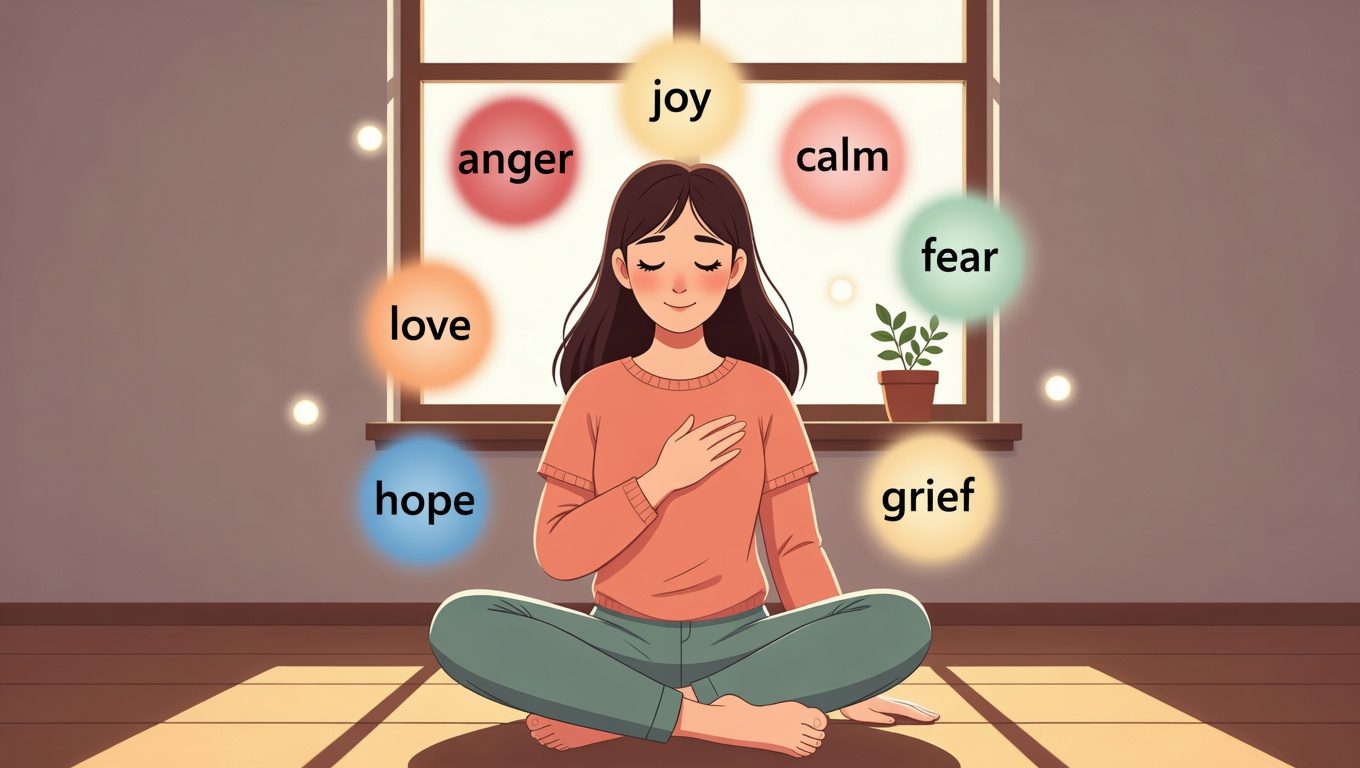
Have you ever said something in anger that you immediately wished you could take back? Or watched someone stay calm and kind in a situation that would have sent you spiraling? That difference, that quiet superpower of understanding and managing emotions, is what emotional intelligence is all about. And the truth is, it might be the single most important skill you can develop for your mental health, your relationships, and your life.
Emotional intelligence is not about performing calm or bottling things up. It is about understanding your emotions clearly enough to respond rather than react — and understanding others’ emotions well enough to build real connection instead of just surface-level interaction. In a world that prizes IQ and academic achievement, emotional intelligence often gets overlooked. But research consistently shows it matters more than most of us realize, touching everything from how we handle stress to how we love.
If you have ever felt like your emotions control you instead of the other way around, this article is for you. Let us break down exactly what emotional intelligence is, why it matters so much, and how you can start building it today.
Table of Contents
What Is Emotional Intelligence, Exactly?
Emotional intelligence (often called EI or EQ, short for emotional quotient) is the ability to recognize, understand, manage, and effectively use emotions, both your own and those of the people around you.
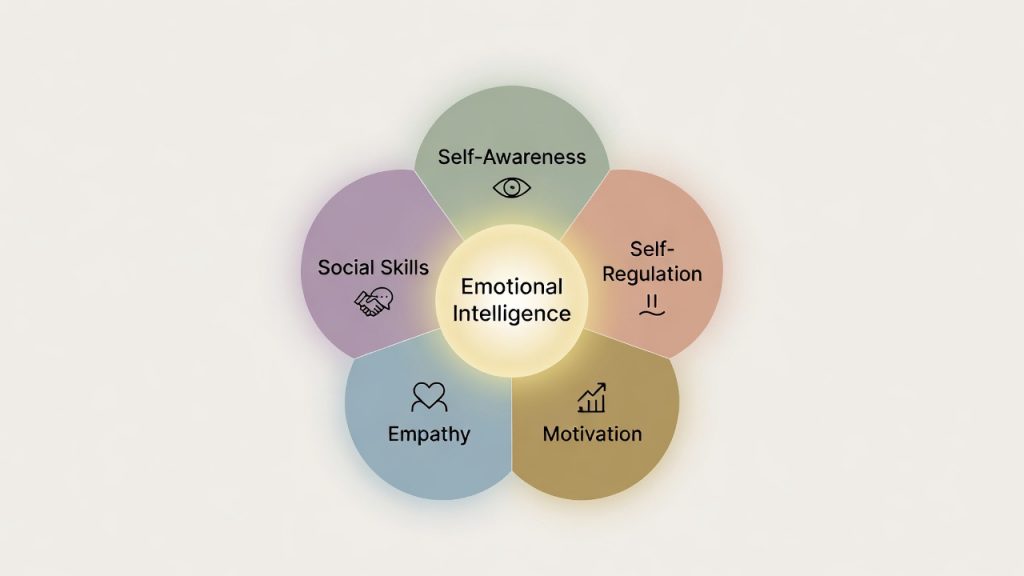
The concept was first introduced by psychologists Peter Salovey and John D. Mayer in the early 1990s, and then popularized by author and science journalist Daniel Goleman in his landmark 1995 book. Goleman identified five core components of emotional intelligence that are widely referenced today.
The 5 Core Components of Emotional Intelligence
1. Self-Awareness This is the foundation. Self-awareness means you can recognize your own emotions as they happen. You notice when you are anxious before a big meeting. You catch yourself getting defensive when someone gives you feedback. You understand why certain situations trigger certain feelings in you.
Without self-awareness, emotions run in the background like software you never knew was installed. They drive your behavior without your conscious input.
2. Self-Regulation Once you can recognize your emotions, self-regulation is your ability to manage them. It does not mean you stuff feelings down or pretend they are not there. It means you choose how to respond rather than simply reacting.
This is the person who takes a deep breath before responding to a frustrating email. The parent who steps away for a moment rather than snapping at a tired, cranky child. The employee who disagrees with their boss professionally instead of blowing up.
3. Motivation People with high emotional intelligence tend to be internally motivated. They pursue goals because they find them meaningful, not just to earn praise or avoid criticism. They can tolerate delayed gratification, push through setbacks, and maintain optimism even when things are hard.
4. Empathy Empathy is the ability to understand and share the feelings of another person. It is not just sympathy (feeling sorry for someone). It is genuinely stepping into someone else’s emotional experience and seeing the world from their perspective.
Empathy is what makes a friend seem truly present when you are struggling. It is what allows a manager to support their team through difficult times. And it is a skill, which means it can be strengthened.
If you want to explore empathy more deeply on its own terms, the section further down in this article dedicated to the connection between emotional intelligence and empathy is worth reading carefully.
5. Social Skills The final component brings it all together. Social skills, in the context of emotional intelligence, mean the ability to build relationships, navigate social situations, manage conflict, and communicate clearly. People with strong social skills tend to be great listeners, good collaborators, and natural connectors.
Why Emotional Intelligence Matters So Much
You might be thinking: sure, this all sounds nice, but why does it matter in real life? The answer is: in almost every area of your life.
Emotional Intelligence and Mental Health
Research published by the American Psychological Association consistently links higher emotional intelligence with lower levels of anxiety, depression, and stress. When you can name what you are feeling, you interrupt the cycle of emotional overwhelm. When you can regulate your response, you avoid the spiraling that so often turns a bad day into a crisis.
A 2020 study in Frontiers in Psychology (Sánchez-Álvarez et al.) found that individuals with higher emotional intelligence reported better psychological well-being and greater resilience in the face of adversity. The full study is available here. This is not a coincidence. EQ is essentially a set of mental health tools built into how you relate to yourself and others.
If you have ever found yourself snapping at people when you are stressed, crying without really knowing why, or feeling emotionally numb after long periods of pushing through, that is your emotional intelligence giving you a signal. It is asking to be developed.
You might also find it helpful to read about how to do an emotional check-in with yourself as a starting point for building this kind of awareness in your daily life.
Emotional Intelligence and Relationships
Think about the most meaningful relationships in your life. Chances are, the people who show up best for you are not necessarily the smartest or the most successful. They are the ones who listen without judgment, who seem to really get you, and who can have honest conversations without it turning into a fight.
That is emotional intelligence in action.
Consider this scenario: Maya and her partner, Daniel, have the same argument over and over about time management. One night, instead of defending himself, Daniel pauses and says, “I can hear that you feel like I am not prioritizing us. Is that right?” Maya bursts into tears, because yes, that is exactly how she has been feeling, but she never had the words for it. That one moment of empathy and emotional attunement breaks a cycle that logic and debate never could.
Emotional intelligence allows you to hear what is underneath what someone is saying. It allows you to express your own needs without weaponizing them. It transforms conflict from a battlefield into a conversation.
For a deeper understanding of how your past shapes the way you connect with others, explore the attachment style in relationships article on Mindbloom.
Emotional Intelligence and Your Career
According to Travis Bradberry and Jean Greaves, authors of Emotional Intelligence 2.0, emotional intelligence is the strongest predictor of job performance, outranking IQ and technical skill in their analysis of over 500,000 people. Their research found that the vast majority of top performers score high in EQ, while most low performers score significantly lower.
In the workplace, emotional intelligence shows up as the ability to handle criticism without shutting down, to collaborate under pressure, to lead with empathy, and to navigate office politics without losing yourself. It is the difference between a manager people respect and one people quietly dread.
Think about Marcus, a project manager who is technically brilliant. He misses deadlines, alienates colleagues, and cannot understand why people do not follow his lead. Meanwhile, his colleague Priya, who may know slightly less about the technical work, consistently delivers because she knows how to read the room, manage tensions within the team, and inspire people to do their best. Priya has the higher emotional intelligence, and it shows in the results.
Emotional Intelligence and Stress
Chronic stress has become one of the defining health challenges of modern life. The American Institute of Stress reports that the majority of Americans experience significant levels of stress regularly.
Emotional intelligence does not make stress disappear. But it dramatically changes your relationship with it. Someone with high EQ can recognize the early signs of overwhelm before they hit breaking point. They can ask for help without shame. They can separate what they can control from what they cannot. They can process difficult emotions rather than suppressing them, which research shows actually increases stress over time.
Signs That Your Emotional Intelligence Might Need Some Work
None of us are born with high EQ. It is developed over a lifetime, and most of us have blind spots. Here are some honest signs that your emotional intelligence might be an area to grow in:
- You often feel misunderstood, even by people close to you
- Conflict tends to escalate quickly and rarely gets fully resolved
- You struggle to name what you are feeling beyond “fine,” “stressed,” or “upset”
- You avoid difficult conversations because they feel too overwhelming
- You sometimes feel like your emotions ambush you out of nowhere
- You find it hard to feel genuinely happy for others’ success
- You replay arguments in your head for days, unable to let them go
- You feel like you have to suppress your emotions to get through the day
Recognizing yourself in any of these is not a failure. It is the beginning of self-awareness, which is itself the first step toward higher emotional intelligence.
Real-Life Scenarios Where Emotional Intelligence Makes All the Difference
Let us look at how emotional intelligence shows up, or does not, in everyday situations.
Scenario 1: The Missed Promotion James finds out a colleague got the promotion he had been working toward. With low EQ, he might stew in resentment, withdraw from the team, or make passive-aggressive comments. With high EQ, he allows himself to feel disappointed without letting it define him. He might schedule time with his manager to understand what he can work on, and he might even genuinely congratulate his colleague. Same situation. Completely different outcome.
Scenario 2: The Parenting Moment Leila is exhausted after a long day when her seven-year-old throws a meltdown over dinner. Low EQ response: she loses her temper and both of them end up crying. High EQ response: she recognizes her own exhaustion, takes a breath, and meets her child’s overwhelm with calm. She says, “I can see you are really upset. Can you tell me what is going on?” The meltdown becomes a moment of connection.
Scenario 3: The Friendship Strain Carlos notices his best friend has been distant lately. Low EQ: he takes it personally and pulls away too, letting the friendship quietly die. High EQ: he texts his friend and says, “Hey, I have noticed you seem like you might be going through something. I am here if you want to talk.” The friendship deepens.
Scenario 4: The Criticism at Work Sana receives blunt feedback from her boss about a presentation that missed the mark. Low EQ: she gets defensive, argues, or goes home and spirals into shame. High EQ: she feels the sting of the feedback, gives herself a moment to process it, then asks her boss for specific guidance on what would have made it stronger. Growth happens.
Scenario 5: The Anxious Night It is 1 a.m. and Tom cannot sleep. His mind is running through every possible way tomorrow’s meeting could go wrong. Low EQ: he goes further down the rabbit hole, eventually scrolling social media until 3 a.m. High EQ: he recognizes what is happening, names the feeling (anxiety), does a brief breathing exercise, and reminds himself he has prepared well. He gets back to sleep.

How to Build Emotional Intelligence: Practical Steps You Can Start Today
The best news about emotional intelligence is that unlike IQ, which is largely fixed, EQ can grow throughout your entire life. Here is how to begin.
1. Start Naming Your Emotions More Precisely
Most of us use a small vocabulary for feelings: happy, sad, angry, stressed. But emotions are far more nuanced than that. Try expanding your emotional vocabulary using tools like the feelings wheel.
Instead of “I am angry,” try “I am feeling dismissed and disrespected.” Instead of “I am sad,” try “I am grieving something I did not even realize I had lost.” This precision creates distance between you and the emotion, and that distance is where your power lives.
2. Practice Pausing Before Reacting
The amygdala, the emotional processing center of your brain, can hijack your behavior before your rational mind gets a chance to weigh in. This is sometimes called an “amygdala hijack,” a term coined by Daniel Goleman himself.
Building the habit of pausing, even for three deep breaths, gives your prefrontal cortex time to come back online and make a conscious choice about how you want to respond. Try it in low-stakes situations first, so it becomes a reflex.
3. Journal About Your Emotional Patterns
Writing helps you see what you cannot always feel in the moment. Try keeping an emotion journal where you note: what happened, what you felt, how you reacted, and what you wish you had done differently.
Over time, patterns emerge. You might notice that you always shut down when you feel criticized by certain people, or that you get irrationally anxious the night before social events. These patterns are gold. They are your emotional intelligence showing you where it wants to grow.
Understanding your core values can also help you make sense of why certain situations trigger strong emotional responses in you.
4. Listen to Understand, Not to Respond
Most of us, when someone is talking, are already forming our response before they have finished speaking. Practice what therapists call “active listening”: give your full attention, do not interrupt, and before responding, reflect back what you heard.
You might say: “What I am hearing you say is… Is that right?” This one shift can transform your relationships almost immediately.
5. Get Comfortable With Discomfort
Emotional intelligence is not about being comfortable all the time. It is about being able to sit with uncomfortable emotions long enough to learn from them.
Try this: the next time you feel a difficult emotion, instead of immediately trying to fix it or escape it, just notice it. Where do you feel it in your body? What thoughts come with it? What does it need from you? This practice, sometimes called mindful emotion labeling, is backed by neuroscience research published on PubMed — including a study by UCLA psychologist Matthew Lieberman showing that naming an emotion in the moment measurably reduces its intensity in the brain.
6. Seek Feedback From People You Trust
Our blind spots, by definition, are the things we cannot see in ourselves. Ask someone you trust: “Is there anything about how I communicate or react that you think I could work on?” It takes courage to ask, but the answers are invaluable.
7. Consider Therapy or Coaching
A skilled therapist can help you identify and work through emotional patterns that have deep roots, often ones that began long before you were an adult. If you have ever felt like your emotions are running the show and you cannot figure out why, professional support can be genuinely life-changing.
If you are wondering where to start, the different types of therapy article on Mindbloom can help you understand your options.

Emotional Intelligence Across Different Stages of Life
It is worth noting that emotional intelligence does not develop the same way for everyone, and life stage matters enormously.
In your teens and early twenties, your prefrontal cortex (the rational, self-regulating part of your brain) is still literally developing. This is why adolescents and young adults can struggle so much with emotional regulation. It is not a character flaw. It is biology. If you want to understand more about the emotional challenges of early adulthood, the article on mental health in young adulthood goes deep on this.
As you move through adulthood, emotional intelligence tends to increase naturally with life experience, but only if you are paying attention and doing the inner work. People who never reflect on their emotional patterns can remain emotionally reactive at fifty the same way they were at twenty.
Older adults, particularly those who have survived significant loss and hardship, often develop some of the deepest emotional intelligence. There is a reason grandparents so often feel like the wisest people in the room.
The Connection Between Emotional Intelligence and Empathy
Of all the components of emotional intelligence, empathy might be the most transformative for both you and the people around you.
Empathy is not just a soft feeling. According to the Greater Good Science Center at UC Berkeley, empathy has been linked to better health, reduced aggression, and stronger communities. It is also teachable.
One of the most powerful ways to build empathy is to expose yourself to perspectives very different from your own. Read books and watch films centered on experiences unlike yours. Have genuine conversations with people from different backgrounds. Volunteer. Travel. Ask questions and actually listen to the answers.
Empathy is the bridge between your inner emotional world and someone else’s. The more you build it, the less alone you feel, and the less alone you make others feel too.
Building Emotional Intelligence Is a Lifelong Practice — Here Is Where to Begin
Here is something I want you to hold onto: the fact that you are reading this, that you are willing to turn toward your emotional life rather than away from it, already says something important about who you are and who you are becoming.
Emotional intelligence is not a destination you arrive at. It is a practice you return to, every single day, in the small moments: the pause before you reply, the breath before you react, the willingness to ask someone if they are really okay and actually mean it.
You do not need to be perfect. You do not need to never lose your temper, or always say the right thing, or feel in control of every emotion. You just need to keep showing up honestly, keep paying attention to what you feel and why, and keep choosing growth even when it is hard.
That is emotional intelligence. And it is something you already have the capacity for. You just have to grow it.
Frequently Asked Questions About Emotional Intelligence
1. What is emotional intelligence in simple terms? Emotional intelligence is the ability to recognize, understand, and manage your own emotions, as well as understand and respond well to the emotions of others. It is essentially the skill of being emotionally aware and thoughtful, both within yourself and in your relationships.
2. Can emotional intelligence be learned? Yes, absolutely. Unlike IQ, which is largely fixed, emotional intelligence can be developed at any age through self-awareness practices, therapy, intentional relationship building, and consistent effort. Research shows EQ continues to grow throughout adulthood.
3. What are the signs of high emotional intelligence? Signs include: staying calm under pressure, being a good listener, taking responsibility for your actions, showing genuine empathy, being able to set boundaries respectfully, recovering quickly from setbacks, and being able to name and process your emotions without being overwhelmed by them.
4. Is emotional intelligence more important than IQ? For most real-world outcomes, including job performance, relationship quality, and mental well-being, emotional intelligence tends to be a stronger predictor than IQ. Both matter, but EQ influences how effectively you apply your intelligence in everyday life.
5. How do you test your emotional intelligence? While there are no perfectly definitive tests, well-known assessments include the Mayer-Salovey-Caruso Emotional Intelligence Test (MSCEIT) and the Emotional Quotient Inventory (EQ-i 2.0). Many free online quizzes can also give you a rough indication, though they are less scientifically rigorous.
6. What causes low emotional intelligence? Low emotional intelligence can result from childhood environments where emotions were suppressed or punished, trauma, lack of emotional modeling from caregivers, certain mental health conditions, or simply never having been taught to reflect on emotional experiences. It is not a permanent state.
7. How does emotional intelligence affect mental health? Higher emotional intelligence is consistently linked to lower rates of anxiety and depression, better stress management, greater resilience, and higher overall life satisfaction. Being able to understand and process your emotions reduces the internal pressure that so often leads to mental health struggles.
8. What is the difference between emotional intelligence and empathy? Empathy is one component of emotional intelligence. Emotional intelligence is a broader set of skills that includes self-awareness, self-regulation, motivation, empathy, and social skills. You can have strong empathy and still struggle with self-regulation, for example.
9. Can you have high emotional intelligence and still struggle with anxiety? Yes. Emotional intelligence can reduce the impact of anxiety, but it does not eliminate it. Anxiety has biological, psychological, and environmental roots. Someone with high EQ might manage their anxiety more effectively and experience less suffering from it, but they can still experience it.
10. How long does it take to improve emotional intelligence? There is no fixed timeline. Small improvements can happen quickly with consistent practice. Deeper shifts, especially those tied to long-standing patterns or past trauma, may take months or years of intentional work, sometimes with professional support. The key is to begin, and to keep going.
Disclaimer
The content on Mindbloom is written for informational and personal support purposes only. It is based on lived experience and general wellness principles, not clinical or medical advice. Mindbloom is not a substitute for professional mental health treatment. If you are experiencing a mental health crisis, persistent emotional difficulties, or symptoms of a mental health condition, please reach out to a qualified mental health professional or helpline. You can find a helpline near you here.