
Dark Night of the Soul: Symptoms, Stages, and How to Find Your Way Through
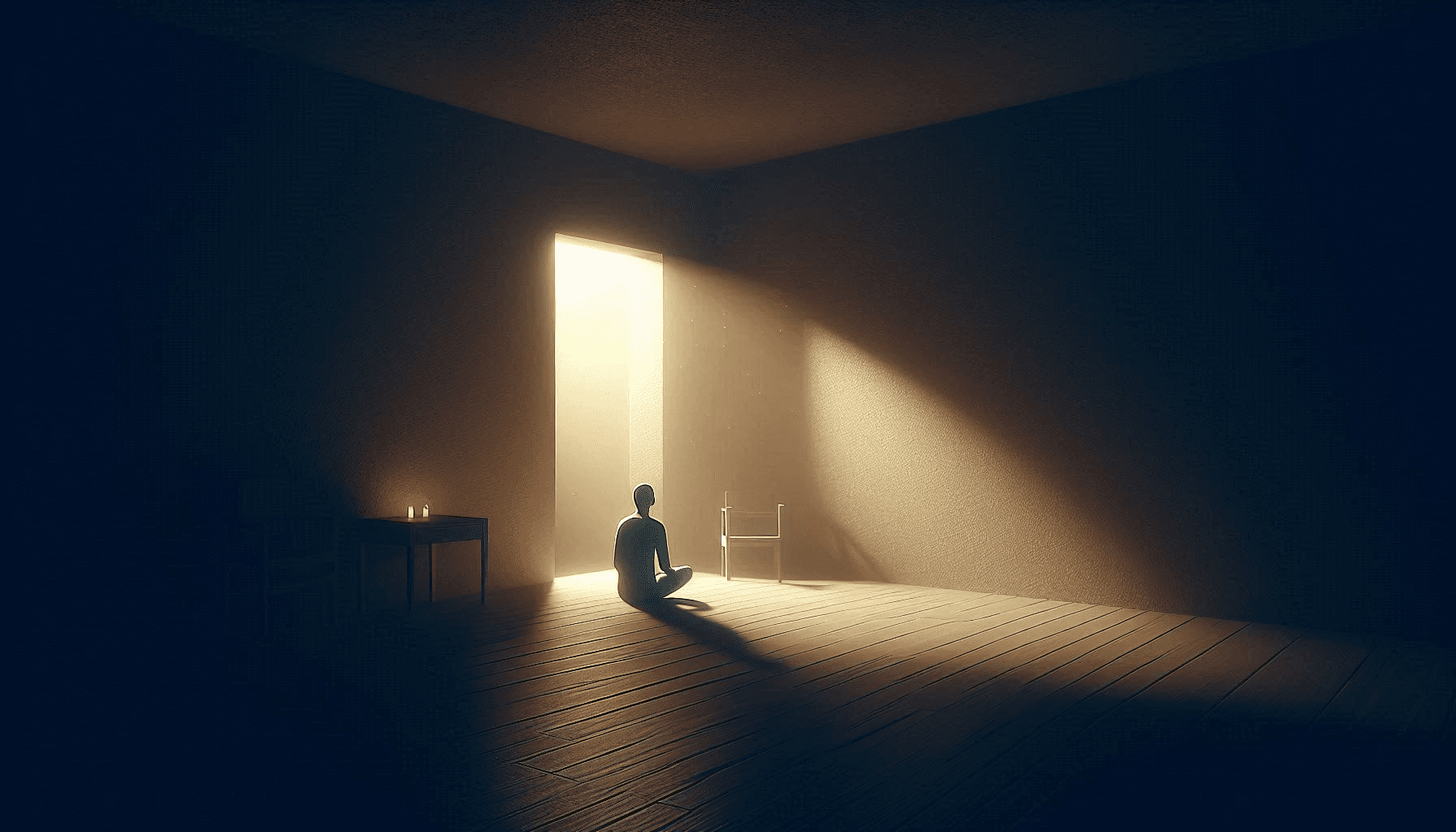
There is a particular kind of suffering that is nearly impossible to explain to someone who has not lived through it, and yet, millions of people quietly searching for the phrase dark night of the soul right now know exactly what it feels like.
It is not just sadness. It is not ordinary depression or a rough patch or burnout, although it can feel like all of those things at once. It is the feeling that something deep inside you — something you used to count on, something you used to be — has gone completely dark.
If you have ever found yourself lying awake at 3 a.m. wondering what any of this is for, feeling utterly hollow despite having a life that looks fine on the outside, questioning everything you once believed, and feeling more alone than you have ever felt in your life — you may be going through what mystics, poets, and spiritual teachers have called the dark night of the soul.
And if you are in it right now, the most important thing I want you to hear first is this: you are not broken. You are not losing your mind. And you are not alone.
Table of Contents
What Is the Dark Night of the Soul?
The dark night of the soul is a profound inner crisis — a period of deep spiritual and existential suffering marked by a loss of meaning, faith, and identity. Unlike ordinary sadness or depression, it carries a distinctly spiritual quality: the feeling that something essential inside you has gone completely dark.
The phrase “dark night of the soul” comes from a 16th-century Spanish poem and mystical text by Saint John of the Cross, a Catholic mystic who wrote about the soul’s painful journey toward a deeper union with the divine. But you do not have to be Catholic, or even particularly religious, to recognize this experience.
In modern spiritual and psychological conversations, the dark night of the soul refers to a profound inner crisis — a period of spiritual awakening that begins not with light, but with complete darkness. It is a kind of ego death, a dissolving of the old self, a stripping away of everything you thought you knew about who you are and what your life is supposed to mean.
It is different from clinical depression, though it can overlap with it. The dark night of the soul has a distinctly existential quality. People going through it often describe it as feeling spiritually abandoned, deeply purposeless, or as though the very ground they were standing on has vanished.
Researchers and spiritual writers like Eckhart Tolle have described it as an essential — if agonizing — part of conscious awakening. The dark night is not the enemy of your spiritual growth. It is your spiritual growth, in its most painful form.
Real People, Real Dark Nights
Before we go any further, let me share a few real and relatable scenarios — because one of the cruelest features of a spiritual crisis is how isolated it makes you feel. Knowing others have walked this road changes something.
Maya, 34, a teacher from Ohio: Maya had done everything right. She had a stable job, a loving partner, a beautiful apartment. Then one morning she woke up and could not get out of bed — not from exhaustion, but from a hollow, aching numbness. She had stopped believing in anything. Her morning prayers felt like speaking into an empty room. She started questioning everything — her faith, her marriage, even her sense of self. “I felt like I had been living in a costume,” she told a friend, “and someone had finally pulled it off.”
James, 41, a former pastor: James spent twenty years building his faith community. Then his best friend died suddenly — no warning, no goodbye — and something in James simply stopped. He could not preach. He could not pray. He sat in his church alone one night and felt nothing but the silence. He described it as “a divorce from God that I never asked for.”
Priya, 29, a graduate student: After years of meditation, yoga, and spiritual practice, Priya hit a wall she had not expected. All of her tools stopped working. Sitting still felt suffocating. She felt more anxious than she had before she started her spiritual journey. She wondered if she had done something wrong — if all of it had been meaningless.
Daniel, 52, an executive: Daniel’s dark night came after a successful career milestone — a promotion he had worked toward for fifteen years. The day after he got it, he sat in his new corner office and felt completely empty. Not grateful. Not proud. Just… blank. He began canceling meetings, avoiding calls, and spending hours staring at the wall. He could not explain it to anyone around him.
Each of these stories is different. But at the center of each one is the same thing: a profound spiritual crisis that arrived uninvited and refused to leave quickly.
Signs You May Be Going Through a Dark Night of the Soul
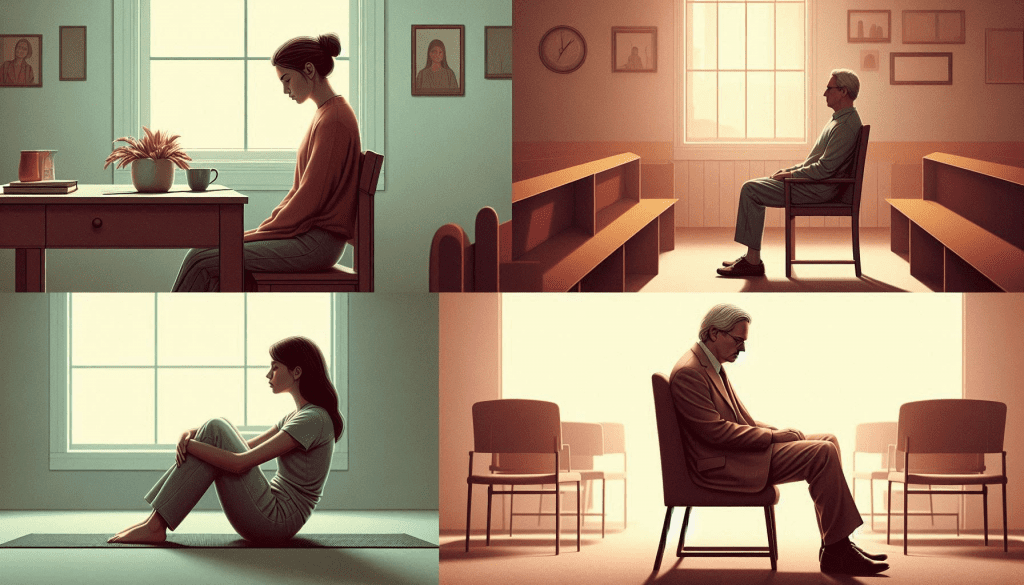
Not every difficult period is a dark night of the soul, but certain signs consistently appear across this experience. Here are the most common symptoms organized by category. But there are some signs that what you are experiencing may be more than just a rough season.
Emotional and Spiritual Signs
- A deep sense of meaninglessness or purposelessness, even when your outer life seems fine
- Loss of faith — in God, in the universe, in people, or in yourself
- Feeling spiritually abandoned or cut off from something larger than yourself
- Questioning beliefs and values you previously held without doubt
- An inability to feel joy, connection, or gratitude, even when you “should”
- A persistent, quiet feeling that you are dying — not physically, but inwardly
Psychological Signs
- Withdrawal from people and activities you used to love
- Feeling like a stranger in your own life
- Intense introspection that feels more like drowning than discovery
- A sense of unreality — like the world or your self is not quite solid
- Long periods of silence, stillness, or numbness that feel different from peace
Physical Signs
- Fatigue that sleep does not fix (if this sounds familiar, you might also find this piece on why you feel exhausted even after a full night’s sleep helpful)
- Loss of appetite or changes in how you relate to your body
- A heaviness in the chest or body that does not come from illness
It is important to note that some of these signs overlap with clinical depression. If you are struggling with your mental health, please reach out to a qualified professional. This article is not a substitute for medical or psychological care. But if you have already explored clinical causes and still feel this particular kind of spiritual emptiness, you are not imagining it — and there is a name for what you are going through.
What Triggers a Dark Night of the Soul?
Spiritual crises do not arrive randomly. They tend to be sparked — or at least uncovered — by specific life events and transitions.
Loss. The death of someone deeply loved, the end of a relationship, the collapse of a dream. Loss strips away the stories we tell ourselves about the world being safe and ordered.
Success. This one surprises people. But reaching a long-chased goal and feeling empty afterward — as Daniel did — is one of the most common triggers. When achieving what we wanted does not give us what we hoped, the entire framework of meaning we have built can collapse.
Spiritual practice taken to its edge. Deep meditation, intense prayer, or advanced spiritual work can sometimes lead practitioners to a threshold where the ego simply cannot hold. Priya’s experience of her tools “stopping working” is a documented phenomenon in contemplative traditions.
Trauma. Abuse, accident, violence, or betrayal can shatter a person’s sense of a meaningful, safe universe — which is often the bedrock of spiritual wellbeing.
Major life transitions. Midlife, retirement, leaving a religion, becoming a parent, or facing mortality can all initiate a deep questioning of identity and meaning.
The American Psychological Association recognizes religious and spiritual struggles as a legitimate area of psychological concern, noting that spiritual crises can significantly affect mental health and overall wellbeing.
The Stages of the Dark Night of the Soul
While every person’s experience is unique, spiritual writers and contemplative traditions tend to describe the dark night as moving through recognizable stages — not always in order, and sometimes cycling back on themselves.
Stage 1: The Unraveling. Something shifts — a loss, a disillusionment, or a quiet hollowness that arrives without warning. The life you built, the beliefs you held, the identity you maintained, begins to feel thin and unconvincing. You keep going through the motions, but something fundamental has come loose.
Stage 2: The Descent. This is the darkest territory. Meaning collapses. Spiritual practices feel empty. The things that used to bring comfort — prayer, community, purpose, even love — seem to reach you through thick glass. You feel profoundly alone, even in a room full of people.
Stage 3: The Void. A strange stillness settles in. It is neither peace nor despair — it is simply emptiness. Many people describe this stage as the hardest to explain and the hardest to tolerate. There is nothing to hold on to, and nothing to push against.
Stage 4: The Turning. A small, quiet shift begins. Not dramatic. Not a sudden light. More like a change in air pressure. You begin to notice moments of presence, fragments of meaning, a tentative willingness to imagine a different kind of life. The old self is gone. Something new — not yet formed — is beginning.
Stage 5: Emergence. You come out the other side not as who you were, but as who you are becoming. The faith or sense of meaning that returns — if it does — is quieter, harder-won, and far less dependent on certainty. Many people describe this stage as a kind of homecoming to themselves.
The Difference Between a Dark Night of the Soul and Clinical Depression
This is one of the most important distinctions to understand — both for your own self-awareness and for knowing what kind of support to seek.
Clinical depression is a medical condition with biological, psychological, and social components. It affects mood, cognition, sleep, appetite, and physical functioning. It responds to therapy, medication, lifestyle changes, and professional treatment. If you are experiencing depression, please seek that support. You can find guidance on when to see a therapist over on Mindbloom.
A dark night of the soul is not a diagnosis. It is a spiritual and existential process. It can coexist with depression — and often does — but it has a distinct quality. People in a dark night often report that they do not feel simply sad or hopeless in a clinical sense. They feel something more like a profound emptiness of meaning. They may function perfectly well outwardly. They may not fit the clinical criteria for depression at all. What they experience is a collapse of the inner architecture of their life — the beliefs, the sense of purpose, the feeling of being held by something larger.
As psychologist and author Dr. Lisa Miller has noted in her research on spirituality and mental health, published by Yale University Press, spiritual experiences — including crisis — activate different areas of the brain and serve different functions than clinical mood disorders.
The key is: both can require support. Neither should be white-knuckled alone.
Why the Dark Night Actually Matters (Even Though It Hurts)
I know that when you are in the middle of it, being told “this is actually good for you” can feel deeply unhelpful, if not outright offensive.
But hear this out.
Every major spiritual tradition in the world has a version of the dark night — a necessary passage through inner dissolution before deeper wisdom or wholeness is possible. In Buddhism, it appears in the “dukkha nanas,” or the dark phases of insight that precede liberation. In Christianity, mystics like Thomas Merton and Teresa of Avila wrote extensively about spiritual desolation as a purifying fire. In Sufism, the annihilation of the self — “fana” — is understood as the gateway to union with the divine.
The dark night strips away what is false. The roles you played that were not truly you. The beliefs you inherited but never truly examined. The version of yourself you performed for other people’s approval. All of that goes into the fire.
What survives is something truer. Quieter. More genuinely yours.
This is why spiritual teachers from Carl Jung to Eckhart Tolle to Pema Chodron have described the dark night not as a catastrophe to be avoided, but as a threshold to be crossed — painful, yes, but ultimately toward something more whole.
How to Navigate a Spiritual Crisis: Practical Steps That Actually Help
You do not have to simply wait out a dark night of the soul in silence and suffering. There are things you can do — gently, carefully, without forcing your way through.
1. Stop Fighting the Dark Night of the Soul
This sounds counterintuitive. But resistance to the dark night almost always makes it worse. The more you try to think your way out of it, force your way back to faith, or perform your way back to okay-ness, the more depleted and lost you tend to feel. Allow yourself to be in the darkness without demanding a resolution. This is not giving up. It is trust.
2. Step Back From Over-Analyzing Your Spiritual Crisis
The dark night tends to arrive precisely because the thinking mind has reached its limit. Reading more books, consuming more spiritual content, analyzing your experience obsessively — these can become ways of avoiding the actual experience. Your mind will try to make sense of this. Let it have its say, then put it down.
3. Anchor Yourself in Your Body
When the inner world becomes unmoored, the body becomes an anchor. Simple, physical things: walking slowly, feeling your feet on the ground, cooking a meal from scratch, sitting in sunlight, holding something warm. The body has not lost faith even when the mind has. Stay close to it. (The connection between emotional states and physical experience is explored beautifully in this piece on the effects of suppressed emotions on the body.)
4. Find One Person Who Can Hold Space
You do not need to explain the dark night to everyone. But find one person — a trusted friend, a spiritual director, a therapist, a counselor — who can hold space without trying to fix you. Being witnessed in your suffering, without being rushed or corrected, is profoundly healing.
5. Release Spiritual Practices That Feel Empty Right Now
This is a hard one. But if your old forms of prayer, meditation, or ritual feel hollow right now, forcing yourself through them can actually increase the suffering. This is not apostasy. It is honesty. New forms of meaning will find you — or you will find them — but they cannot arrive while you are cramming the old ones back into place.
6. Write Without Agenda or Judgment
Not to record progress. Not to figure out what is happening. Just to let what is inside come out onto the page. Stream of consciousness. No editing. No judgment. Writing can become a container for experiences that have nowhere else to go. The brain dump exercises for clarity shared here on Mindbloom can be a gentle starting point.
7. Lower the Bar — Survival Is Enough Right Now
On the hardest days, getting out of bed is enough. Making one small meal is enough. Sitting by a window for ten minutes is enough. The dark night is not a performance. There is no grade for how well or how quickly you go through it.
8. Seek Professional Support Without Shame
There is no spiritual prize for suffering alone. If your functioning is significantly impaired, if you are experiencing thoughts of self-harm, or if the despair feels more clinical than existential, please reach out to a mental health professional. Organizations like the National Alliance on Mental Illness (NAMI) offer free resources and support lines for exactly these moments.
What Spiritual Crisis Can Teach You
Many people who have come through a dark night of the soul describe it as the most transformative experience of their lives — not despite the pain, but because of what the pain made possible.
Here is some of what they often describe on the other side:
A self that is more genuinely theirs. When the performed, constructed version of the self is dissolved, what remains tends to be quieter, more honest, and more grounded in something real.
A faith that has been tested. For those who return to spiritual practice after a dark night, the relationship is often richer, more honest, and less dependent on feeling good all the time.
A deeper compassion for others. Having been in the darkness, many people find they are able to sit with others in their suffering in a way they never could before. There is a kind of authority that comes only from having been truly lost.
A release from what was never truly theirs. Beliefs adopted in childhood without examination. Roles played to please others. Dreams that were never truly their own. The dark night burns through a lot of that — and what remains is lighter.
The Greater Good Science Center at UC Berkeley has published research suggesting that post-traumatic and post-crisis growth — including growth following spiritual crises — is a real and documented phenomenon, not simply spiritual wishful thinking.
You Will Not Feel This Way Forever
I want to say this directly, because when you are inside the dark night it can feel absolutely permanent. Like this darkness is the final truth about you and about life.
It is not.
Every spiritual tradition that describes the dark night also describes what lies beyond it. Not the same life resumed, but a new one — quieter, truer, and somehow more capable of holding both light and darkness at once.
The mystics who wrote about the dark night did not write about it as the end. They wrote about it as a passage. A threshold. A necessary, unavoidable crossing between one version of a life and another.
You are not lost. You are between.
And that is one of the most sacred places a human being can be.
Frequently Asked Questions About Dark Night of the Soul
1. What exactly is the dark night of the soul? The dark night of the soul is a profound spiritual and existential crisis characterized by a deep loss of meaning, faith, or inner direction. It originates in the mystical writings of Saint John of the Cross and describes the painful inner dissolution that often precedes spiritual deepening or transformation.
2. How long does a dark night of the soul last? There is no fixed timeline. Some people move through it in weeks or months; others experience it for years. Its length often depends on how much resistance one brings to it, the depth of the inner work required, and the presence or absence of support.
3. What are the signs of a dark night of the soul? Common signs include a profound loss of meaning or purpose, an inability to feel joy or spiritual connection, a sense of inner emptiness that persists even when outer life looks fine, questioning core beliefs, withdrawal from people and activities you love, and a feeling that your former identity no longer fits. These signs are explored in detail earlier in this article.
4. Is the dark night of the soul the same as depression? Not exactly, though they can coexist. Depression is a clinical mental health condition. The dark night of the soul is a spiritual and existential experience that has a distinct quality of meaninglessness and inner dissolution. If you are unsure, consulting a mental health professional is always a good idea.
5. Can you go through a dark night of the soul more than once? Yes. Many spiritual teachers describe multiple passages of inner crisis across a lifetime, each one stripping away another layer and inviting a deeper level of growth.
6. What triggers a dark night of the soul? Common triggers include significant loss, major life transitions, deep spiritual practice, trauma, or the hollow feeling that can follow achieving a long-held goal. Sometimes it seems to arrive without any obvious cause at all.
7. How do I know if I am in a spiritual crisis or just having a bad period? A spiritual crisis tends to have a distinctly existential quality — a questioning of meaning, purpose, identity, and belief — that goes beyond ordinary stress or sadness. It often persists even when external circumstances improve.
8. Should I see a therapist if I am going through a dark night of the soul? Yes, if your daily functioning is significantly affected, if you are experiencing thoughts of self-harm, or if the experience is overwhelming. A therapist familiar with spiritual and existential concerns can be enormously helpful.
9. Is the dark night of the soul a religious experience? It originated in Christian mysticism, but the experience crosses all religious traditions and is described in Buddhism, Sufism, and other paths. It is also recognized in secular psychological and philosophical frameworks. You do not need to be religious to go through it.
10. What is spiritual bypassing and how is it related? Spiritual bypassing is the use of spiritual practices or beliefs to avoid facing painful emotions or difficult inner work. It is essentially the opposite of the dark night — rather than moving through the pain, bypassing means skipping over it. You can read more about it in this article on spiritual bypassing.
11. Can the dark night of the soul lead to something positive? Many people who have moved through a spiritual crisis describe it as the most transformative experience of their lives. Research on post-crisis growth suggests that moving through — not around — profound inner difficulty can lead to deeper compassion, stronger identity, and a more genuine spiritual life.
A Closing Word
If you are in the dark right now, please know this: the fact that you are searching, reading, reaching out — that is not weakness. That is the bravest thing a person can do.
The dark night of the soul is not a punishment. It is not a sign that you have failed spiritually. It is not proof that there is no meaning, no light, no hope.
It is a fire. And fire, as painful as it is, has always been the oldest form of transformation.
You are being shaped into something. Something that has room for more honesty, more depth, more genuine compassion than the version of yourself that existed before.
Keep going. The morning does come. And when it does, the dark night of the soul will have been the passage — not the destination.
Disclaimer
This article is written for informational and personal support purposes only. It is not a substitute for professional mental health treatment, psychological assessment, or medical advice. The experiences described in this article may overlap with clinical conditions including depression and anxiety. If you are experiencing significant distress, thoughts of self-harm, or an inability to function in daily life, please seek support from a qualified mental health professional. In the United States, you can reach the 988 Suicide and Crisis Lifeline by calling or texting 988. International resources are available at befrienders.org. Mindbloom is a personal blog written from lived experience and is not a clinical resource.