
Codependency vs. Healthy Interdependence: How to Tell the Difference (And Why It Changes Everything)
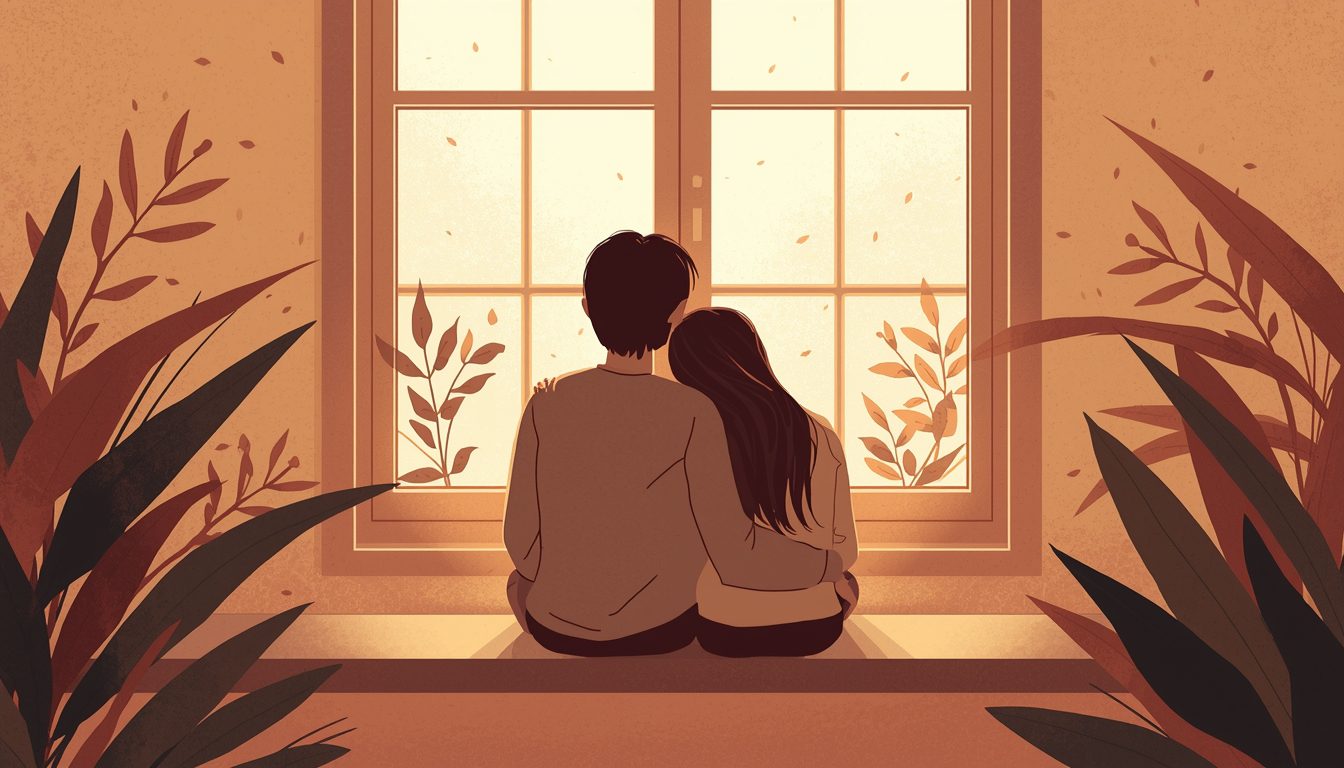
Understanding the difference between codependency and healthy interdependence might be the most important thing you ever learn about love.
You love deeply. You show up. You give, you compromise, you stay. But lately, something feels off — like your whole sense of peace depends on whether they’re happy, whether they text back, whether the relationship is okay. You can’t seem to enjoy your own life without checking in on theirs first. You’ve lost track of where you end and they begin.
If that resonates, you’re not alone — and you’re not broken. But you may be stuck in a codependent pattern rather than a healthy interdependent one. These two relationship dynamics can look and feel surprisingly similar from the inside. The difference, though, is everything.
This isn’t about diagnosing yourself or labeling your relationship. It’s about understanding yourself better — and choosing a love that makes you feel more like you, not less.
Table of Contents
What Is Codependency, Really?
Before you can understand the full codependency vs. healthy interdependence distinction, it helps to get clear on what codependency actually is — because it’s widely misunderstood. It’s not simply “being too clingy” or “loving someone too much.” That’s not quite it.
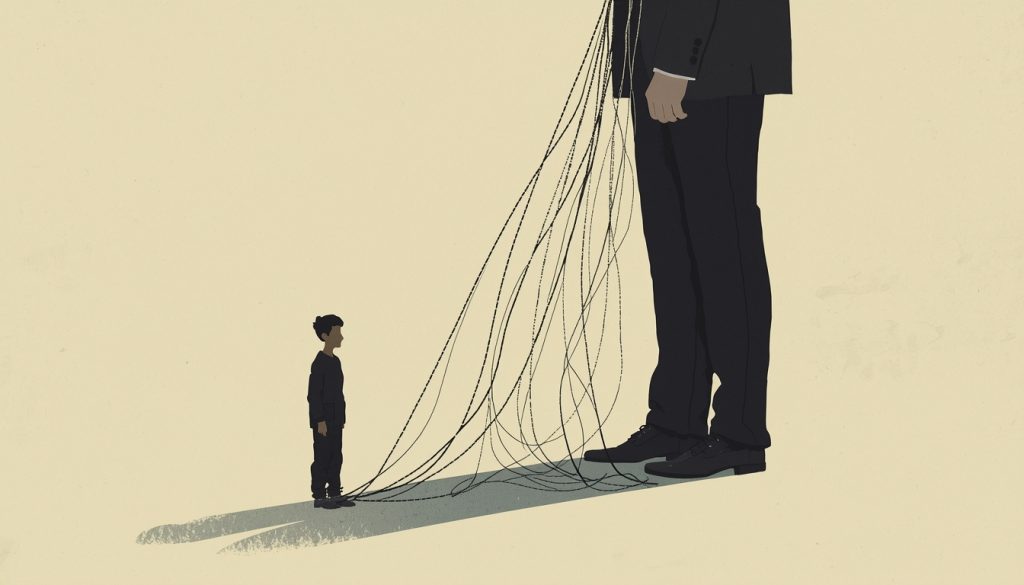
Codependency is a relationship pattern where one person’s emotional well-being becomes excessively reliant on another person — their moods, their approval, their needs, or their behavior. It often develops as a coping mechanism, especially for people who grew up in households where love felt conditional, unstable, or tied to keeping the peace.
According to Mental Health America, codependent people are often highly attuned to everyone else’s emotions but deeply disconnected from their own.
Here’s what that can look like in real life:
- You feel responsible for your partner’s happiness — and anxious when they’re upset, even if it has nothing to do with you.
- You struggle to say no, because you fear losing love or causing conflict.
- You constantly seek reassurance that you’re loved, valued, or “enough.”
- Your mood rises and falls based on the state of your relationship.
- You give and give — even when you’re running on empty — because stopping feels selfish.
Maya’s story: Maya had been with her boyfriend for three years. On paper, the relationship looked solid. But privately, Maya spent every day monitoring his moods. If he seemed distant, she’d spend hours replaying conversations trying to figure out what she’d done wrong. She couldn’t enjoy a girls’ night out if he wasn’t in a good mood first. She didn’t realize it, but she had quietly stopped having her own emotional life. Everything ran through him.
Codependency isn’t a character flaw. It’s usually a wound — a deeply human response to early experiences where love didn’t feel safe or consistent.
What Does Healthy Interdependence Actually Look Like?
Here’s the beautiful truth: needing other people is not a weakness. We are literally wired for connection. The goal was never to become emotionally self-sufficient to the point of not needing anyone — that’s called isolation, and it hurts in its own way.
Healthy interdependence is when two people genuinely support and rely on each other — while both maintaining their own sense of self, identity, and emotional regulation.
Think of it like two trees planted close together. Their roots can intertwine for stability. Their branches may lean toward each other for shade. But each tree still draws its own water, grows toward its own light, and stands independently in a storm.
The American Psychological Association notes that secure, interdependent relationships are associated with better mental health, higher resilience, and longer life satisfaction.
In an interdependent relationship, you might notice:
- You feel safe expressing needs, but you’re not devastated if they can’t always be met immediately.
- Your sense of self doesn’t collapse when your partner is having a hard time.
- You maintain friendships, hobbies, and a life outside the relationship — not as a threat to intimacy, but as an expression of your wholeness.
- You can be emotionally vulnerable without becoming emotionally dependent.
- You give love freely, not out of fear of what will happen if you stop.
James and Priya’s story: James and Priya both had demanding careers. Some weeks, one of them had more capacity than the other. They leaned on each other, shared burdens, and showed up in the hard moments. But they also had their own friendships, their own creative outlets, their own inner lives. When they reconnected after a long day, it felt like a choice — not a compulsion. Like coming home rather than seeking rescue.
That’s interdependence. It’s warm, real, and sustaining.
Codependency vs. Healthy Interdependence: A Side-by-Side Look
Sometimes the clearest way to understand a concept is to see it laid out honestly. Here’s how these two patterns show up differently in everyday relationships:
| Element | Codependency | Healthy Interdependence |
|---|---|---|
| Identity | You lose yourself in the relationship | You remain yourself within the relationship |
| Needs | You suppress your needs to meet theirs | You express your needs openly and expect reciprocity |
| Boundaries | Boundaries feel threatening or impossible | Boundaries are respected and honored by both people |
| Conflict | Conflict feels like the end of the world | Conflict is worked through, not avoided or weaponized |
| Support | You support from fear or obligation | You support from love and genuine care |
| Emotions | Your emotions mirror and follow theirs | Your emotions are your own to feel and regulate |
| Alone time | Time apart feels threatening or unsafe | Time apart feels healthy, natural, and restorative |
| Motivation | You give to prevent loss or abandonment | You give because you genuinely want to |
| Communication | You hint, suppress, or people-please | You express needs directly and kindly |
| Partner’s growth | Their growth feels threatening to you | Their growth genuinely excites and encourages you |
The Hidden Roots: How Codependency Develops
If you recognize codependent patterns in yourself, it’s important to understand — this didn’t come from nowhere.
Codependency often traces back to childhood experiences. Growing up in a home where a parent struggled with addiction, mental illness, or emotional unpredictability can teach a child that love means being hypervigilant. You learned to watch for signs of danger, to manage others’ emotions, to shrink your own needs so you wouldn’t be a burden.
Psychology Today describes codependency as often rooted in attachment patterns developed in early relationships — particularly anxious or disorganized attachment styles.
David’s story: David grew up with a mother who cycled through depression. As a child, he learned to keep the house quiet, to cheer her up, to never be “too much.” As an adult, he found himself doing the same in every romantic relationship — constantly managing, fixing, soothing. He was a wonderful partner, but he had no idea who he was outside of that role.
Understanding these roots doesn’t excuse harmful dynamics, but it does invite compassion — for yourself, most importantly.
For more on how your attachment style shapes your relationships, explore our piece on building a healthy romantic relationship, where we dig into what security in love really looks like day to day.
Warning Signs You May Be in a Codependent Pattern
This isn’t a clinical checklist, and one or two of these experiences doesn’t automatically mean you’re codependent. But if several of these resonate deeply, it may be worth sitting with them honestly.
You Might Be Codependent If…
You feel responsible for fixing their feelings. Not just wanting to comfort them — but feeling like their emotions are literally your job to manage and resolve.
You feel guilty for having your own needs. Asking for what you need feels selfish, demanding, or like you’re being “too much.” So you stay quiet and slowly grow resentful.
You say yes when every part of you means no. You agree to things that drain you, cross your own values, or hurt you — because the alternative (conflict, disappointment, abandonment) feels worse.
Your self-worth is completely tied to the relationship. When things are good between you, you feel like a whole person. When things are rocky, you feel worthless.
You struggle to make decisions without their input. Not because you value their perspective — but because you’ve stopped trusting your own.
You’re always the one giving. Giving time, energy, emotional labor, money, forgiveness — and receiving very little back. But you keep giving because you believe that’s how you keep love.
Reading through those patterns, you may notice some feel uncomfortably familiar. That recognition isn’t something to be ashamed of — it’s exactly the kind of self-awareness that makes change possible. So what does the other side look like? What does it actually take to build the kind of love that holds space for both people? Here’s what healthy interdependence genuinely requires.
What Healthy Interdependence Requires
Healthy interdependence doesn’t just happen by accident. It’s built — deliberately, imperfectly, and with a lot of honest conversation.
1. Self-awareness comes first.
You can’t build a healthy relationship with someone else if you don’t have a working relationship with yourself. This means knowing your values, your emotional triggers, your needs, and your boundaries — not as rules to enforce on your partner, but as truths you’ve made peace with in yourself.
2. Boundaries are not barriers.
One of the biggest misconceptions about interdependence is that boundaries somehow shut people out. Actually, the opposite is true. Boundaries create the safety that makes true closeness possible. When both people know what they need and can communicate it clearly, the relationship becomes a genuinely safe space — not just a comfortable trap.
Understanding where to draw healthy lines is so deeply connected to emotional well-being. Our article on the five love languages explores how clearly communicating your emotional needs — rather than expecting your partner to guess — is one of the most loving things you can do for your relationship.
3. Both people get to have their own emotional experience.
In an interdependent relationship, your partner can feel sad without you taking responsibility for fixing it immediately. You can be struggling without them falling apart. There is empathy, presence, and support — but each person also owns their own emotional world.
4. Dependence is okay in moments of genuine need.
Healthy interdependence doesn’t mean never leaning on each other. Life brings grief, illness, loss, failure, fear. In those seasons, leaning deeply on a partner is not weakness — it’s intimacy. The difference is that it flows both ways, and it doesn’t become the baseline for how both people function every single day.

Practical Steps to Shift from Codependency to Healthy Interdependence
Changing a deeply ingrained relationship pattern is not a weekend project. It is gradual, uncomfortable, and absolutely possible. Here are some places to begin:
Reconnect with yourself first. Make a list of things you genuinely enjoy that have nothing to do with your partner. Hobbies, friends, places, routines. Start showing up for those things, even in small ways.
Practice identifying your own feelings before reaching for reassurance. When you feel anxious or distressed, pause before texting your partner. Ask yourself: what am I actually feeling right now? What do I actually need? Sometimes you already have the answer.
Learn to tolerate discomfort without immediately soothing it. Codependency often involves a very low tolerance for emotional discomfort — so we rush to fix, control, or chase reassurance. Practice sitting with an uncomfortable feeling for a few minutes before acting on it. This builds emotional regulation, which is a cornerstone of healthy relating.
Communicate your needs out loud. This is terrifying for many people who grew up learning to suppress their needs. Start small. Say what you want for dinner. Express that you’re feeling overwhelmed. Work up to the bigger things.
Explore therapy — individually or as a couple. The National Alliance on Mental Illness (NAMI) acknowledges that codependent patterns are often deeply rooted in trauma and benefit greatly from professional support. A therapist can help you identify the patterns that started long before this relationship.
Give your partner the gift of their own experience. When they’re upset, try asking “Do you want support or space?” instead of immediately launching into fix-it mode. This respects their emotional autonomy and frees you from the exhausting role of emotional caretaker.
Celebrate the small shifts. Every time you express a need, hold a boundary, or choose yourself without guilt, that is growth. It may feel uncomfortable. Do it anyway.
When to Consider Getting More Support
Sometimes these patterns run deeper than a blog post can address — and that’s completely okay. Consider reaching out for professional support if:
- You repeatedly end up in relationships that feel one-sided or emotionally exhausting
- You have difficulty functioning or finding peace outside of a relationship
- You recognize codependent patterns that connect to childhood trauma or difficult early experiences
- You and your partner are stuck in cycles that keep repeating no matter how hard you try
The American Association for Marriage and Family Therapy is a trusted resource for finding qualified therapists who specialize in relationship patterns.
The patterns we carry into our relationships are often the same ones that have lived in us for a very long time. Seeking help isn’t failure — it’s one of the most loving decisions you can make for yourself and for the people you share your life with.
Healing from codependency is deeply tied to how you process difficult emotions overall. Many people find that relational pain and grief travel together — you may be grieving a version of love you never fully received. If intense feelings surface as you do this work, our piece on grief and aging explores how emotional cycles shape our closest relationships and offers a compassionate framework for moving through them.
You Deserve a Love That Doesn’t Cost You Yourself
Here’s what I want you to know, more than anything else in this article:
Wanting a deep, close, loving relationship is not the problem. The problem is when love has been the place where we learned to disappear — where we gave up our needs, our voice, and our sense of self just to keep someone close.
You were not designed to be half a person in a relationship. You were designed to be whole.
Healthy interdependence is not a cold or distant love. It’s actually one of the warmest, most freeing kinds of love there is — because when both people feel safe to be fully themselves, the love between them becomes something real. Something chosen. Something that doesn’t require either person to shrink.
Understanding the difference between codependency and healthy interdependence is not about being suspicious of needing people. It’s about learning what you need, honoring that, and building a love that holds space for both of you to grow.
And if you’re in the middle of untangling some of this right now — be gentle with yourself. Growth in relationships is rarely linear. But you’re asking the right questions. That already matters more than you know.
💬 A Question Worth Sitting With
Before you scroll into the FAQs — take a moment with this:
When you think about the relationship patterns described above, which one feels most familiar to you right now?
Leave a comment below. You don’t need to have it all figured out. Sometimes just naming what you’re noticing is the first real step.
And if this piece resonated, you might also find value in exploring how to build a healthy romantic relationship — a companion read that goes deeper into what security in love actually looks like, day to day.
Frequently Asked Questions
1. What is the main difference between codependency and healthy interdependence? Codependency involves losing your sense of self and emotional well-being in a relationship, often taking excessive responsibility for your partner’s feelings. Healthy interdependence involves mutual support and genuine connection while both people maintain their own identity, emotions, and boundaries.
2. Can you be codependent without realizing it? Absolutely. Many people in codependent relationships believe they are simply “good partners” or naturally caring people. Because codependency often develops early in life as a survival mechanism, it can feel completely normal — until you start noticing how much of yourself you’ve quietly given up.
3. Is codependency a mental health disorder? Codependency is not a formal diagnosis in the DSM-5, but it is widely recognized by mental health professionals as a relational pattern that causes significant emotional distress. It frequently co-occurs with anxiety disorders, depression, low self-esteem, and trauma histories — particularly those involving early childhood experiences of emotional unpredictability or conditional love. Many therapists treat codependency through modalities like Cognitive Behavioral Therapy (CBT), Internal Family Systems (IFS), and attachment-based therapy.
4. Can a codependent relationship become healthy? Yes — but it requires both people to recognize the pattern and actively work to change it. This often involves individual therapy, couples therapy, clear communication, and a genuine willingness to allow growth and change in the relationship.
5. What causes codependency in relationships? Codependency most commonly develops in people who grew up in households with emotional unpredictability, addiction, trauma, or conditional love. It’s a learned pattern of relating — which also means it can be unlearned.
6. How do I know if I’m being too needy or if my partner is emotionally unavailable? This is one of the most commonly asked questions — and one of the trickiest to answer, because both dynamics can look identical from the outside. A useful starting point: ask yourself whether your core needs (consistent communication, affection, emotional presence, quality time) are reasonable and consistently going unmet. If so, emotional unavailability in your partner may be the central issue. On the other hand, if you find yourself unable to tolerate any independence in the relationship — panicking when they don’t respond immediately or needing constant reassurance — anxious attachment or codependency may be contributing. In many cases, both are true simultaneously. Individual therapy is one of the most helpful tools for sorting this out clearly.
7. Is it possible to love someone too much? Loving someone deeply is beautiful. The issue isn’t the depth of love — it’s when love becomes something you use to manage your own anxiety, rather than something you offer freely. When love starts to feel like a grip rather than a gift, it may be worth examining what’s underneath it.
8. How do I set boundaries without pushing my partner away? Healthy boundaries, communicated with care and clarity, tend to bring people closer over time — not push them away. Try framing boundaries as an expression of what you need to feel safe and connected, rather than as rejection. A secure partner will respect them. And if they don’t, that tells you something important.
9. What’s the role of self-esteem in codependency? Self-esteem plays a central role. People with low self-esteem often believe they are not inherently worthy of love — so they work hard to earn it, keep it, and prevent losing it. Building self-worth outside of a relationship is one of the foundational steps in healing codependent patterns.
10. Can codependency affect friendships, not just romantic relationships? Yes. Codependency is a relational pattern, not a romantic one. Many people experience codependent dynamics with friends, family members, or even colleagues — particularly people who have difficulty saying no, setting limits, or prioritizing their own needs in any close relationship.
Disclaimer
A gentle note before you go: Everything on Mindbloom is written from lived experience and a genuine desire to be useful — not from a clinical or professional standpoint. I’m not a licensed therapist or psychologist, and nothing here should replace professional mental health support. If you’re carrying something heavy right now, please reach out to a qualified professional. You deserve real, personalized care. In a crisis, a global directory of helplines is available at befrienders.org.