
What Gives Life Meaning: 5 Philosophical Perspectives Worth Knowing

What gives life meaning? It’s one of the oldest and most human questions ever asked — and it tends to surface at exactly the wrong moments. The middle of an ordinary Tuesday. After a loss. After achieving something you worked years for, only to feel surprisingly hollow.
That quiet ache isn’t a sign something is wrong with you. It’s a sign that something is very awake inside you.
For thousands of years, philosophers, spiritual teachers, and scientists have wrestled with this same question. The answer that keeps emerging across all of them is both humbling and freeing: there is no single answer. But there are five perspectives — rich, grounded, deeply human ones — that can genuinely shift the way you experience your own life. That’s exactly what this article walks through.
In this article, you’ll find:
- What the major philosophical traditions say about meaning in life
- How real people in ordinary circumstances have found (and lost and rediscovered) meaning
- Why your own definition of meaning is valid — and how to start building it
- Practical steps you can take today to feel more connected to a sense of purpose
- Answers to the most searched questions about meaning, purpose, and why we are here
Table of Contents
Why Do We Ask “What Gives Life Meaning” in the First Place?
The question of meaning tends to surface at particular moments. When a relationship ends. When a job that once felt important starts to feel hollow. When you lose someone. When you achieve something you worked years for — and feel surprisingly empty afterward.
These are not breakdowns. They are invitations.
Psychologists call this kind of questioning “existential reflection,” and research from the American Psychological Association suggests that people who engage with questions of meaning — even when those questions are uncomfortable — tend to report higher levels of wellbeing over time.
The discomfort is not the enemy. The avoidance of it is.
The Big Philosophical Perspectives on What Gives Life Meaning
Philosophy is not just for lecture halls. These ideas were born from real human suffering and curiosity — and they speak directly to what you might be feeling right now.
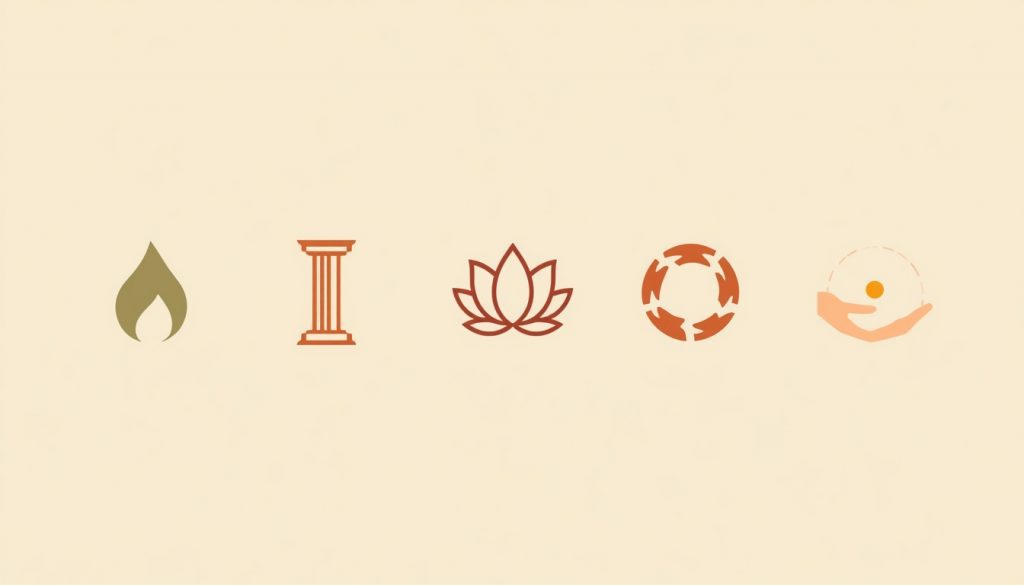
1. Existentialism: You Create the Meaning
Existentialism, developed most famously by philosophers like Jean-Paul Sartre and Simone de Beauvoir, starts with a bold and somewhat terrifying idea: life has no built-in meaning. There is no cosmic plan, no predetermined purpose stamped on your soul before you arrived.
But — and this is the part that changes everything — you get to create it.
Sartre called this “existence precedes essence.” You exist first. Then, through your choices, your commitments, and how you live, you create the essence of who you are and what your life is about.
Think of Maria, a 34-year-old nurse who spent years feeling like her job was just a paycheck. After her mother’s illness, she started sitting longer with patients who had no visitors. No one asked her to. She just did it. Over time, she realized that this small choice — this tiny act of presence — was the most meaningful thing in her life. She did not find meaning. She made it.
Existentialism says: the freedom to choose is both the weight and the gift.
2. Stoicism: Meaning Lives in How You Respond
The ancient Stoics — Marcus Aurelius, Epictetus, Seneca — believed that meaning is not found in what happens to you, but in how you meet what happens.
You cannot always control your circumstances. Your health, your losses, the way others treat you — much of this is outside your reach. What is always within your reach, the Stoics said, is your response. Your virtue. Your integrity in the face of difficulty.
Marcus Aurelius, who was a Roman emperor facing wars, personal losses, and plague, kept a private journal (now known as Meditations) where he reminded himself daily to act with reason, compassion, and calm. He was not performing for anyone. He was training himself to find meaning in how he lived, regardless of outcomes.
This perspective is deeply relevant today, especially when life hands you circumstances you never asked for. Meaning, in the Stoic view, is not a destination. It is a practice.
3. Buddhism: Meaning Through Letting Go
Buddhism approaches meaning from a completely different angle. It does not ask “what is the purpose of life?” so much as it asks: “why do you suffer, and how do you become free?”
The Buddhist path suggests that much of our suffering comes from clinging — to identities, to outcomes, to the idea that things should be different from how they are. Meaning, in this framework, is not found by accumulating more experiences or achievements. It is found by becoming more present, more compassionate, and more awake to the reality of each moment.
Think of Daniel, a 40-year-old who had built what looked like a perfect life from the outside. Career, family, house. But he was never fully in any of it. He was always somewhere in his head — planning, worrying, performing. When burnout finally brought him to his knees, a meditation teacher suggested he try sitting quietly for ten minutes a day, just noticing what was there without trying to change it.
He described what happened after several months as “falling into my own life.” The meaning had been there all along. He had just been too distracted to feel it.
The Greater Good Science Center at UC Berkeley has documented how mindfulness practices — rooted in Buddhist thought — are linked to increased feelings of meaning and life satisfaction.
4. Logotherapy: Meaning Even in Suffering
Viktor Frankl was a psychiatrist who survived the Nazi concentration camps. What he observed — both in himself and in the other prisoners around him — led him to develop a philosophy he called Logotherapy, described in his landmark book Man’s Search for Meaning.
His central insight: even in the most extreme suffering, human beings can choose their attitude. And within that freedom of attitude, meaning is still possible.
Frankl identified three pathways to meaning: what we create or give to the world (work, creativity), what we receive from the world (beauty, love, truth), and the stance we take when we face unavoidable suffering.
This perspective is not about toxic positivity. It is not about telling yourself that everything happens for a reason. It is about recognizing that even within pain, you are still a person who can choose what this moment means for you.
The National Institutes of Health (NIH) has published research supporting Frankl’s framework, finding that meaning-making is one of the most powerful buffers against depression and trauma.
5. Indigenous and Relational Worldviews: Meaning Through Connection
Many Indigenous philosophies — from Native American traditions to African Ubuntu philosophy — locate meaning not primarily in the individual, but in the web of relationships and community that a person belongs to.
Ubuntu, a concept from Southern African philosophy, is often translated as: “I am because we are.” Meaning is not something you find alone. It emerges through your belonging to others, your role in a community, your responsibility to your ancestors and descendants.
This perspective gently pushes back against the hyper-individual culture many of us live in, which often asks us to find meaning entirely on our own. What if some of your meaning is already held for you — in your family, your community, your culture, the people who need what only you can offer?
What Psychology and Science Say About Meaning and Purpose
Philosophy and science increasingly agree on some key points. Research published by the American Psychological Association suggests that having a strong sense of purpose is linked to longer life, better physical health, lower rates of depression, and greater resilience in the face of adversity.
Meaning is not a luxury. It is a health factor.
Dr. Martin Seligman, the founder of positive psychology, identified meaning as one of the five core pillars of wellbeing in his PERMA model. Not pleasure. Not success. Meaning — being part of something larger than yourself.
If you have been struggling and wondering why nothing quite fills the emptiness, it may not be that something is wrong with your life. It may be that you have not yet found — or built — the layer of meaning that makes the rest of it feel alive.
Real-Life Scenarios: Where People Find Meaning
Sarah’s Story: Meaning After Loss
Sarah lost her younger brother to addiction when she was 28. For two years, she moved through life like a ghost — going through motions, eating, working, sleeping, but not really there. Then she started volunteering at a grief support group. She did not feel ready. She went anyway.
She says: “The first time someone told me that my story made them feel less alone, I felt something I hadn’t felt in years. I felt like I was for something.”
Her grief did not disappear. But it became part of something larger.
James’s Story: Meaning in the Mundane
James is a 52-year-old elementary school teacher who has never written a book or started a company or traveled to every continent. By almost every cultural metric of significance, his life is “ordinary.”
But James knows the name of every student who has ever sat in his classroom. He remembers their fears and their breakthroughs. Several former students have written to him as adults to tell him he changed their lives.
He says: “I used to feel like I should be doing something bigger. Then I realized — this is big. I just couldn’t see it because it didn’t look like what magazines say meaning looks like.”
Priya’s Story: Meaning Through Crisis
Priya had a panic attack in the grocery store at age 31 and could not understand why. She had everything she thought she wanted. After months of therapy and journaling, she realized she had been living someone else’s version of a good life. The career her parents were proud of. The apartment that looked good on Instagram. The relationship that made sense on paper.
She started asking harder questions. What did she actually care about? Not what she should care about. What she actually did.
Three years later, she runs a small ceramics studio. She earns less. She is more alive.
If you are in a season of questioning like Priya, you might find it helpful to read about existential anxiety — that particular discomfort is often the beginning of a meaningful transformation, not a sign that something is broken.

How Meaning and Mental Health Are Deeply Connected
When we feel disconnected from meaning, it does not just feel philosophical. It feels like depression. Like numbness. Like going through the motions.
Research from the Journal of Positive Psychology shows that people who score high on “presence of meaning” report significantly lower levels of anxiety and depression. And importantly, even people who do not yet feel meaning but are actively searching for it tend to have better mental health outcomes than those who have stopped asking entirely.
If you have been through a dark night of the soul — that disorienting period when everything you built your life on seems to collapse or stop making sense — what you are experiencing is often not a breakdown. It is a stripping away. And what comes after, when you are ready, is often a much more authentic understanding of what actually gives your life meaning.
The question “what gives life meaning” is not just philosophical. It is deeply personal and deeply connected to your emotional wellbeing. Sometimes, what looks like depression or emptiness is really a soul asking to be reorganized around something that actually matters to you.
How to Build a More Meaningful Life: 6 Practical Starting Points
You do not have to resolve the entire question of meaning today. But here are some genuinely useful starting points:
Step 1: Notice What Already Matters
Before adding anything new, pay attention to what already quietly calls to you. What do you do that makes you lose track of time? What topics make your eyes light up in conversation? What stories move you to tears or fill you with energy?
These are not random. They are data about your particular kind of meaning.
Step 2: Ask Better Questions
Instead of “What is the meaning of life?” try “What gives my life meaning?” Instead of “What should I do with my life?” try “What would I be doing if I trusted what I already know about myself?”
The shift from abstract to personal is where the real work happens.
Step 3: Invest in Relationships Deliberately
Research consistently shows that relationships are among the strongest predictors of reported meaning. Not social media connections — real, seen, heard human contact. Call someone. Show up. Ask how they actually are and wait for the real answer.
If your relationships have felt thin or draining, exploring the Love & Relationships section of Mindbloom can offer some gentle guidance on building the kinds of connections that genuinely nourish you.
Step 4: Contribute Something
Frankl was right: giving something to the world — your time, your skill, your presence, your creativity — is one of the most reliable paths to felt meaning. Volunteer. Teach someone something. Make something beautiful. Write a letter to a person who changed your life.
Contribution does not have to be grand to be real.
Step 5: Practice Presence
Many people miss the meaning that is already in their lives because they are rarely fully in them. A mindfulness practice — even just five minutes of intentional quiet per day — can help you notice what is already there.
Spiritual practices for everyday mental health do not require you to be religious or adopt any particular belief system. They simply ask you to slow down enough to experience your own life.
Step 6: Revisit Your Values
Not the values you inherited, but the ones you actually live by when you are at your best. What kind of person do you want to be? What kind of world do you want to help create, even in the small sphere of your own relationships?
Living in alignment with your values — even imperfectly — is one of the most stabilizing, meaning-generating things a human being can do.

What Gives Life Meaning: It Is Probably Not What You Think
Here is something the philosophers and the researchers seem to agree on: meaning is rarely found in the spectacular. The moments people describe as the most meaningful in their lives are almost always deeply ordinary.
Watching a child sleep. A long conversation with an old friend. Making something with your hands. Being genuinely useful to someone who needed you.
Our culture tells us meaning lives in achievements, in recognition, in becoming someone impressive. But most people, at the end of their lives, do not describe their job title or their bank account as what made it all worth it. They describe love. Presence. Service. Growth.
This is not a cliché. It is a pattern that shows up across cultures, across centuries, and across every philosophical tradition that has ever tried to answer this question.
If you have been chasing meaning in places it was never hiding, you are not alone. And it is never too late to look somewhere more honest.
A Closing Note: Your Life Is Already Asking You Something
The fact that you are reading this — that this question lives in you with enough weight to make you seek it out — tells you something important. You are not indifferent. You care about your life. You want it to mean something.
That caring is itself a kind of answer.
You do not need to have it all figured out. You do not need to make a dramatic change by next week. You just need to keep asking the question honestly, to keep showing up to your own life, and to trust that meaning is not something to be found fully formed somewhere out there.
It is something you are building — one small, faithful, present moment at a time.
And if the weight of it ever feels too heavy, if the questions feel less like invitations and more like a spiral you cannot escape, please know that support is available. The National Alliance on Mental Illness (NAMI) offers free resources and guidance for anyone struggling with their mental health.
You are worth the question. You are worth the answer.
Frequently Asked Questions About What Gives Life Meaning
1. What does “meaning in life” actually mean?
Meaning in life refers to the sense that your existence matters, that your actions and experiences have significance, and that you are part of something larger than yourself. It is different from happiness — you can have meaning even in difficult circumstances, and you can feel happy without feeling that your life means anything in particular.
2. Is there one universal answer to what gives life meaning?
No — and that is actually liberating. Philosophers, spiritual traditions, and researchers all agree that meaning is deeply personal. What fills one person’s life with purpose may feel hollow to another. The goal is not to find the “right” answer but to discover your own honest one.
3. Why does my life feel meaningless?
Feelings of meaninglessness are more common than most people admit. They often arise after major life transitions, losses, burnout, or when you have been living according to someone else’s values for a long time. It is a signal worth listening to, not a permanent verdict on your life.
4. Can you have meaning without a religious belief?
Absolutely. Many of the richest philosophical frameworks for meaning — Existentialism, Stoicism, secular humanism — are entirely non-religious. Meaning can come from relationships, creativity, contribution, personal growth, and countless other sources that have nothing to do with religion.
5. What gives life meaning according to psychology?
Research points to several consistent sources: relationships and belonging, personal growth, contributing to something beyond yourself, engaging in work or activities you find absorbing and valuable, and living in alignment with your personal values.
6. How do I find meaning and purpose in my life?
Purpose is rarely found in a single dramatic moment. It tends to emerge gradually through honest self-reflection, trying different things, paying attention to what energizes you versus what drains you, and asking what need you are particularly well-placed to meet in the world.
7. What does Viktor Frankl say about meaning?
Viktor Frankl, in his book Man’s Search for Meaning, argued that human beings can find meaning even in the most extreme suffering — through what we create, what we experience, and the attitude we choose toward unavoidable pain. He believed the search for meaning is the primary human motivation.
8. Is meaning in life related to mental health?
Yes, strongly. Research consistently links a sense of meaning and purpose to lower rates of depression and anxiety, greater resilience, better physical health, and even longer life. Conversely, a lack of felt meaning is often a contributing factor in depression, burnout, and existential despair.
9. Can meaning change over time?
Yes — and it should. The things that gave your life meaning at 22 may feel insufficient at 40. This is not failure. It is growth. Meaning is a living thing that evolves as you do. Regularly revisiting the question is not a sign of confusion; it is a sign of a thoughtful, examined life.
10. What gives life meaning when you are grieving or in pain?
This is one of the hardest questions, and there is no easy answer. Frankl’s Logotherapy suggests that even within suffering, we can choose our response — and that choosing to find some form of purpose within pain (advocacy, art, helping others who face similar struggles) can be genuinely healing. Grief does not erase meaning. Sometimes, it deepens it.
What gives your life the most meaning right now — or what are you searching for? I’d genuinely love to hear where you are. Drop it in the comments below.
Disclaimer
This article is written for informational and personal growth purposes only. It is not a substitute for professional mental health care, therapy, or medical advice. If you are experiencing persistent feelings of emptiness, hopelessness, or a crisis of meaning that is affecting your daily functioning, please reach out to a qualified mental health professional. If you are in crisis, contact a helpline such as the 988 Suicide and Crisis Lifeline (call or text 988 in the US) or the International Association for Suicide Prevention for international resources.